
Bilingual Labelling for Canadian Hotel Amenities: English and French
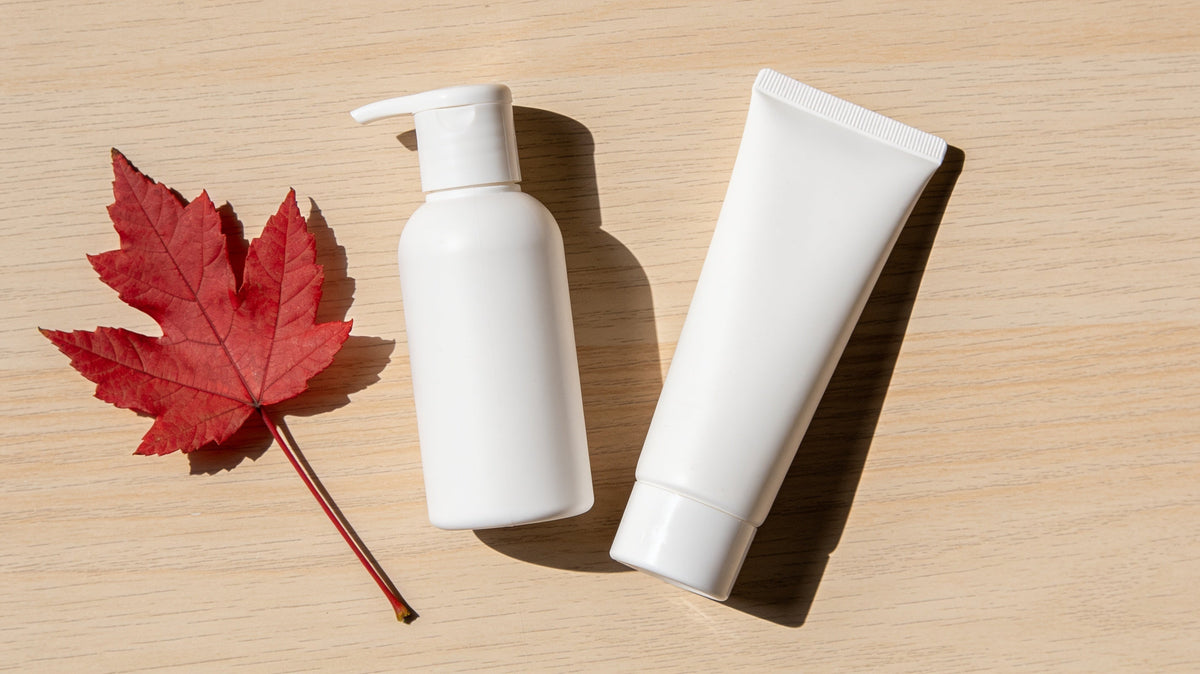
Mandatory label information on cosmetics sold in Canada must appear in English and French, with metric net quantity, an INCI ingredient list and the dealer's name and address. Quebec's Charter of the French Language adds its own French requirements. Whether complimentary amenities qualify for any exemption should be checked, not assumed.
Cosmetics sold in Canada, including hotel shampoo, shower gel and lotion, must show mandatory label information in both English and French, with the net quantity in metric units, an ingredient list using INCI names and the dealer's name and address. Products sold in Quebec must also meet the Charter of the French Language.
This guide walks through each element for hotel amenities, from 30 mL minis to 5 L refills. It is general information, not legal advice, and you should confirm final artwork with your importer or a regulatory consultant. For regions and logistics, see our Canada hotel amenities hub.
Where the rules come from
Two sets of federal rules shape a cosmetic label in Canada. The Cosmetic Regulations, made under the Food and Drugs Act, set out what a cosmetic label must say, including the ingredient list and any required warnings. The Consumer Packaging and Labelling Act and its regulations set out general rules for prepackaged consumer products, such as how net quantity is shown and the requirement for English and French. Quebec's Charter of the French Language then adds provincial requirements for products sold there.
What a Canadian cosmetic label carries
| Element | Where it usually goes | Language |
|---|---|---|
| Product identity, such as "Shampoo / Shampooing" | Principal display panel | English and French |
| Net quantity in metric units (mL or g) | Principal display panel | Metric symbol is bilingual |
| Ingredient list | Outer label, or tag or leaflet where permitted | INCI names, generally used as they are |
| Dealer's name and principal place of business | Any panel | Generally either official language |
| Directions and warnings, where required | Any panel | English and French |
The dealer is the business responsible for the product in Canada, often the importer or distributor. Using their name and address keeps the label consistent with the Health Canada notification.

English and French
Mandatory label information must appear in both official languages. In practice that means the product identity, directions, warnings and any other required statements appear in English and in French. Brand names and the hotel's own name do not usually need translating, but descriptive words around them do. "Shampoo" on its own is not enough; "Shampoo / Shampooing" is the usual approach.
Front-of-bottle space on a mini is tight. Common solutions are a bilingual front label with a short product identity, the remaining text on the back label, and careful use of symbols. Because we print hotel branding and decorate packaging in-house, we can lay out both languages together rather than squeezing French into a design made for English. See our custom packaging page.
Quebec
The Charter of the French Language requires French on products sold in Quebec. In general terms, another language may accompany the French but should not be given greater prominence. The rules on trademarks and generic terms have been tightened in recent years, so ask your importer or a consultant to review Quebec artwork, and check the guidance of the Office québécois de la langue française. Our Quebec hotel amenities page covers the market itself.
Many groups find it simpler to design one French-first label for the whole country than to run separate Quebec stock, especially where the same range also goes to Atlantic Canada, where New Brunswick is officially bilingual.
INCI ingredient lists
Canadian cosmetic labels list ingredients using the International Nomenclature of Cosmetic Ingredients (INCI). Because INCI is an international system, the names are generally used as they are rather than translated. Ingredients are normally listed in descending order of concentration, with ingredients below a set level allowed in any order; your consultant can confirm the exact convention.
We supply the INCI list for every formula, and we update it whenever a fragrance or raw material changes.
Net quantity
Net quantity is shown in metric units, usually millilitres for liquids and grams for creams, on the principal display panel. There are rules on type size and placement, and some small containers have specific provisions. Confirm the net quantity format for each pack size with your consultant, particularly for very small minis and sachets.
Fragrance allergens
Health Canada has amended the Cosmetic Regulations to require disclosure on the label of certain fragrance allergens when they are present above set concentrations, with a transition period for existing products. Until then, many labels simply said "parfum" or "fragrance".
For hotels, this matters because signature scents are often complex. Rinse-off products such as shampoo and shower gel and leave-on products such as body lotion may be treated differently. We ask our fragrance suppliers for allergen data on every scent, so your consultant can decide which allergens must be named on each label. Allow space for them in the artwork now.
Minis, sachets and complimentary amenities
Very small containers can make full labelling hard. Canadian rules allow some information, such as the ingredient list, to appear on a tag, leaflet or outer packaging in certain cases. Whether a particular mini or sachet qualifies is a question for your consultant.
A common question is whether amenities given free to guests are exempt from labelling rules because they are not sold separately. We do not assume that they are. The answer can depend on how the products are supplied and to whom, so check with your importer or a regulatory consultant before you design a label on that basis. Labelling fully is the safer default.
Dispensers and refills
A 5 L refill sold to a hotel is a cosmetic container and is normally labelled as one. The wall dispenser in the room raises different questions, because the guest sees the dispenser, not the refill. Many hotels put the product identity in English and French and the hotel's branding on the dispenser, and keep the full label on the refill. Agree the approach with your consultant.
Checking artwork before print
Labels are expensive to fix once stock is in Canada. Before we print, send the draft to whoever will review it on your side, usually your importer or a regulatory consultant, and check it against a simple list: product identity in both languages, metric net quantity, INCI list matching the current formula, dealer name and address matching the Health Canada notification, any Hotlist warning, space for fragrance allergens, and French prominence for Quebec. We hold artwork, bottles and print in-house, so changes at this stage are quick.
Other marks hotels ask for
Some hotels ask for a Halal mark or statement for guests who prefer it. Our facility is Halal certified; see our Halal hotel toiletries guide for how certification and marks work. Any environmental or "dermatologically tested" claim on the label must be accurate and supported. We supply test reports on request for formulas supplied as dermatologically tested.
Frequently asked questions
Does every hotel amenity label in Canada need French?
Federal rules require mandatory cosmetic label information in English and French across Canada. Whether any exemption applies to complimentary amenities is not something to assume; confirm with your importer or a regulatory consultant.
Do INCI names need translating into French?
Generally no. INCI names are an international naming system and are commonly used as they are on Canadian labels. Check any ingredient without an INCI name with your consultant.
Is Quebec different?
Yes. The Charter of the French Language requires French on products sold in Quebec, and in general another language should not be given greater prominence than French. Plan French-first artwork if you sell there.
What goes on a 5 L refill?
Refills sold to a hotel are normally labelled like any other cosmetic container. What appears on the wall dispenser itself is worth checking with your consultant.
Ready to design labels? Start a brief on our private-label hotel toiletries page.
Related service: Hotel amenities supplier for Canadian hotels →
Tell us your idea. An account manager replies within 1 business day.
More from Harrods Insights
Keep reading
Shipping Hotel Amenities from India to China and Hong Kong: Consignee, Broker, Customs Inspection, Documents and Seasonal Planning

Supplying Hotels in Hong Kong and Macau: How the Rules Differ from the Mainland, Safety and Trade Descriptions Law, Labelling and Practical Buying
