
Cosmetic Surfactants, Emollients and Conditioning Agents: What Each Does and How to Choose
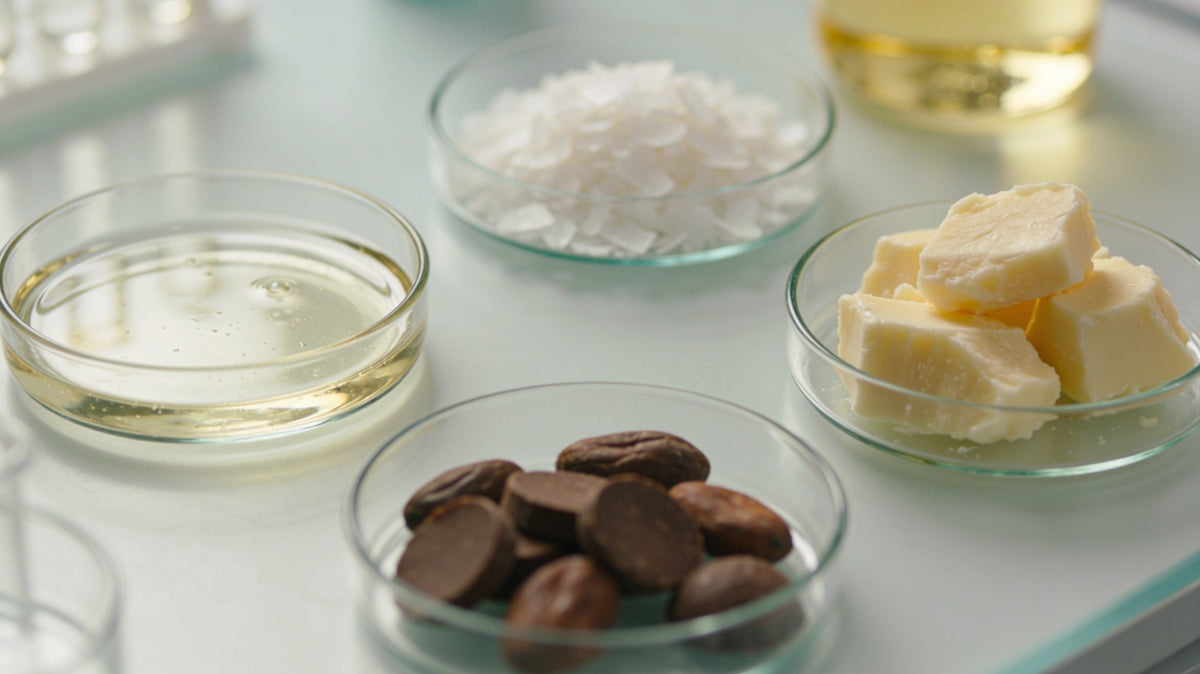
Surfactants clean and foam, emollients soften and smooth, and conditioning agents improve feel and manageability. Wash-off products usually pair a primary anionic surfactant with a milder co-surfactant and a conditioning polymer. Creams rely mainly on emollients held in an emulsion.
Surfactants clean and foam, emollients soften and smooth, and conditioning agents improve the feel and manageability of hair and skin. Most shampoos and body washes combine a primary surfactant with a milder co-surfactant and a conditioning agent, while creams and lotions rely mainly on emollients held in an emulsion.
These three groups make up the functional core of most personal-care formulas. Knowing what each does, and which families sit inside each group, makes it much easier to read a competitor's ingredient list, brief a formulator or choose raw materials for a new range. As a cosmetic raw materials manufacturer in India, we supply all three groups. This guide explains them in general terms.
Surfactants: the cleansing system
A surfactant molecule has a water-loving head and an oil-loving tail. In water, surfactants reduce surface tension and gather around oil and dirt in clusters called micelles, which rinse away. The same property lets surfactants create foam, help emulsify oils and solubilise fragrance into clear products.
The four surfactant families
| Class | Head charge | Main role | Example INCI families |
|---|---|---|---|
| Anionic | Negative | Primary cleansing and foam | Sulfates (Sodium Laureth Sulfate), isethionates (Sodium Cocoyl Isethionate), sarcosinates (Sodium Lauroyl Sarcosinate), glutamates, taurates, sulfosuccinates |
| Amphoteric | Depends on pH | Mildness, foam boosting, viscosity | Betaines (Cocamidopropyl Betaine), amphoacetates (Sodium Cocoamphoacetate) |
| Non-ionic | None | Gentle cleansing, solubilising | Alkyl glucosides (Decyl Glucoside, Coco-Glucoside), polysorbates (Polysorbate 20) |
| Cationic | Positive | Conditioning rather than cleansing | Quaternary ammonium compounds (Behentrimonium Chloride, Cetrimonium Chloride) |
Most wash-off products combine an anionic primary surfactant with an amphoteric or non-ionic secondary surfactant. The secondary surfactant softens the overall system, improves foam quality and often helps build viscosity. The sulphate versus sulphate-free choice is covered in our guide to sulphate-free vs SLES body wash surfactants, foam and cost.
Practical points when buying surfactants
- Active matter: surfactants are sold as solutions or pastes at different concentrations. Compare on active content, not on product weight.
- pH: specifications usually quote pH for a diluted solution; check it fits your target formula pH.
- Thickening: some systems thicken with salt up to a point, then thin again; others need polymer thickeners.
- Physical form: some mild surfactants are solids or pastes that need heating or pre-dispersion.
Browse our surfactants for cleansing systems.
Emollients: softness and skin feel
Emollients soften and smooth the skin and hair surface. They are often confused with two related groups: occlusives, which form a barrier that slows water loss, and humectants, such as glycerin, which attract water. Many ingredients do more than one job, and a good formula balances all three.
| Family | Example INCI | Typical feel and use |
|---|---|---|
| Esters | Caprylic/Capric Triglyceride, Isopropyl Myristate, Coco-Caprylate | Light to medium, fast-spreading; lotions, serums, make-up |
| Fatty alcohols | Cetyl Alcohol, Cetearyl Alcohol | Body and creaminess; also thicken emulsions and conditioners |
| Plant oils and butters | Butyrospermum Parkii (Shea) Butter, plant seed oils | Rich, nourishing feel; balms, body creams |
| Hydrocarbons | Squalane | Silky, non-greasy; face care |
| Silicones | Dimethicone | Slip, smoothness and a powdery finish |
Spreadability is the property formulators adjust most often. A blend of a fast-spreading ester with a slower, richer butter usually feels better than either alone. Emollient polarity also affects how easily an emulsion forms and how stable it is, so changing an emollient can mean adjusting the emulsifier. Plant oils behave very differently by fatty-acid profile; our guide to carrier oils for cosmetic manufacturing covers that in detail. See our emollients range for esters and related materials.

Conditioning agents: manageability and feel
Hair, especially damaged hair, carries a negative surface charge. Positively charged (cationic) ingredients are attracted to it and stay on after rinsing, reducing friction, static and tangles. That is the basis of most conditioning.
- Cationic surfactants, such as behentrimonium and cetrimonium compounds, are the backbone of rinse-off conditioners and hair masks. Combined with fatty alcohols they form a creamy gel network.
- Cationic polymers, such as Polyquaternium-10 and Guar Hydroxypropyltrimonium Chloride, are used in shampoos and body washes. They deposit on hair or skin as the product is diluted during rinsing.
- Hydrolysed proteins add a perceived strengthening feel and film.
- Silicones and emollient esters add slip and shine.
Our conditioning agents cover rinse-off and wash-off applications.
Choosing for each product type
| Product | Surfactant system | Emollients | Conditioning |
|---|---|---|---|
| Shampoo | Anionic primary with amphoteric secondary | Low; light oils optional | Cationic polymer |
| Sulphate-free shampoo | Isethionate, glutamate or sarcosinate with betaine or glucoside | Low | Cationic polymer |
| Body wash | Anionic with amphoteric | Lipid-replenishing oils or esters | Optional polymer |
| Face wash | Milder amino-acid or glucoside systems | Low | Usually none |
| Rinse-off conditioner | Cationic surfactant (conditioning, not cleansing) | Fatty alcohols, esters | The cationic itself |
| Cream or lotion | Emulsifier rather than cleanser | Esters, butters, oils | Optional |
A typical build sequence for a wash-off product
Formulators work in different ways, but a general sequence for a shampoo or body wash looks like this. It is a teaching outline, not a recipe; follow supplier guidance for each material.
- Disperse any cationic polymer in water first, so it hydrates fully before surfactants are added.
- Add the primary surfactant, then the secondary surfactant, mixing gently to avoid trapping air.
- Add emollients or oils, pre-mixed with a solubiliser if a clear product is needed.
- Add extracts, fragrance and preservative at the stage and temperature each supplier recommends.
- Adjust pH to the target range for the system and preservative.
- Build viscosity last, adding salt or thickener in small steps and checking after each addition.
Record every quantity and observation. The same order of addition should then be written into the production instruction, because changing it at scale can change clarity, viscosity and foam.
Compatibility pitfalls
- Anionics and cationics attract each other and can form complexes or precipitates. Shampoos combine them deliberately, but levels and order of addition matter.
- pH shifts change the charge of amphoterics and the behaviour of some preservatives.
- Salt thickening has a peak; overshoot and viscosity drops.
- Fragrance and essential oils can thin a surfactant base or cloud a clear gel; test with the final fragrance.
- Claims such as "mild" or "sulphate-free" must be accurate for the whole formula.
Buying and documentation
For each material, ask for a specification covering appearance, active matter, pH and viscosity where relevant, plus documentation such as COA and SDS, available on request. Small packs are useful for R&D trials before you commit to bulk. If you would rather have a finished shampoo, wash or cream developed for you, our custom formulation service works from the same materials.
Frequently asked questions
What is the difference between a primary and a secondary surfactant?
The primary surfactant, usually anionic, does most of the cleansing and foaming. The secondary surfactant, usually amphoteric or non-ionic, makes the system milder, improves foam texture and often helps build viscosity.
Are emollients the same as moisturisers?
Not exactly. Emollients soften and smooth the skin surface. Humectants attract water and occlusives slow its loss. A moisturising cream normally combines all three.
Why do conditioners use cationic ingredients?
Hair carries a negative surface charge, especially when damaged. Positively charged cationic ingredients are attracted to it and remain after rinsing, reducing friction, static and tangling.
Can I mix anionic and cationic ingredients in one formula?
Yes, with care. Conditioning shampoos combine them deliberately, but levels, pH and order of addition must be controlled to avoid cloudiness or precipitation. Test stability in the finished product.
Building a full ingredient list? Start at our raw materials manufacturing hub.
Related service: Raw materials manufacturing and supply →
Tell us your idea. An account manager replies within 1 business day.
More from Harrods Insights
Keep reading

Shipping Hotel Amenities from India to China and Hong Kong: Consignee, Broker, Customs Inspection, Documents and Seasonal Planning

Supplying Hotels in Hong Kong and Macau: How the Rules Differ from the Mainland, Safety and Trade Descriptions Law, Labelling and Practical Buying
