
Ayurvedic Massage Oil Manufacturing for Export: AYUSH Licence, Labelling and Claims
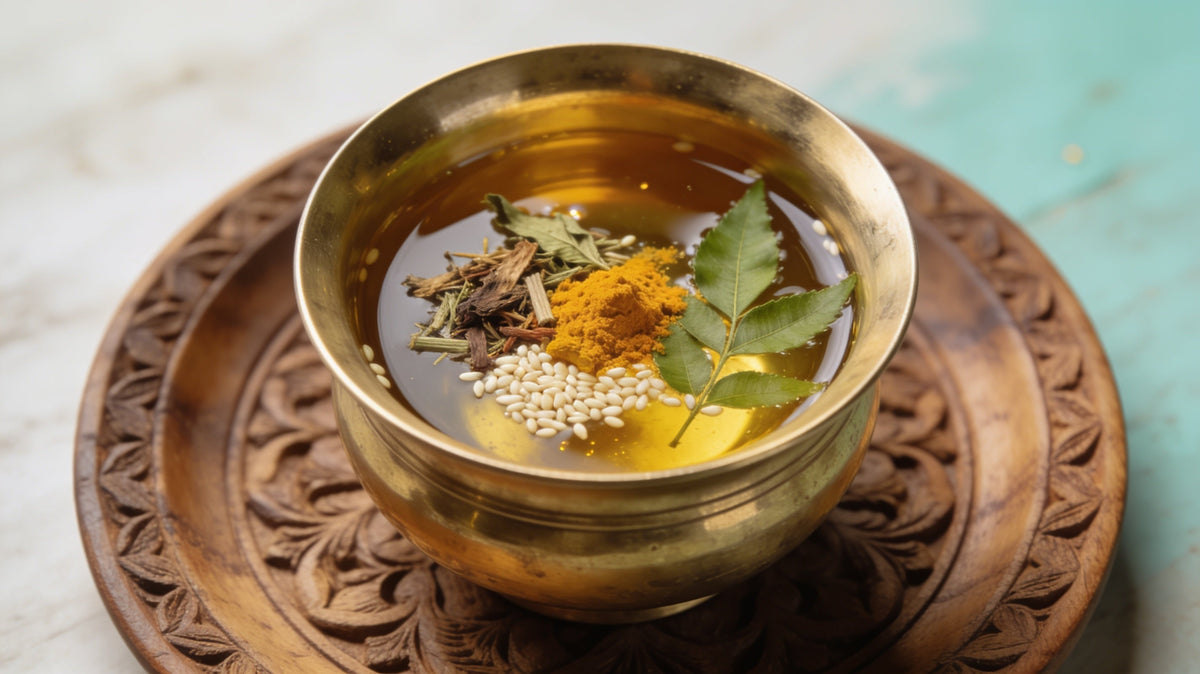
Ayurvedic massage oils can be sold either as Ayurvedic medicines, which follow the AYUSH licensing route in India, or as cosmetics inspired by Ayurveda, which carry cosmetic claims only. Most overseas markets treat an exported abhyanga oil as a cosmetic unless it is registered as a medicine there. Decide the category first, because it sets the formula, the label and every claim you make.
An Ayurvedic massage oil can be made and sold either as an Ayurvedic medicine under an AYUSH licence or as a cosmetic inspired by Ayurveda. For export, most brands choose the cosmetic route with cosmetic claims, because medicinal claims trigger separate registration in most destination countries.
Herbal-infused oils for abhyanga, the Ayurvedic practice of daily self-massage, are among India's most recognisable wellness products. Spa groups in the Gulf, Ayurveda clinics in Europe and wellness founders in Australia and South-East Asia regularly ask us how to bring these oils to their markets. Working with an experienced massage oil manufacturer in India helps, but the first decision is regulatory rather than technical: what category is your product?
What makes a massage oil "Ayurvedic"
In everyday marketing, "Ayurvedic" is used loosely. In manufacturing terms, there are two quite different products:
- Traditional tailas. Herbal oils prepared by the classical method of taila paka, in which a base oil, usually sesame, is gently cooked with a herbal paste and a herbal decoction until the water evaporates and the oil carries the herbs' character. These follow formulations described in traditional texts.
- Ayurveda-inspired massage oils. Cosmetic oils built on carriers traditionally used in India, such as sesame and coconut, with botanical extracts, infusions or essential oils chosen for scent, skin feel and storytelling.
Both can be beautiful products. They are regulated differently.
The AYUSH route versus the cosmetic route in India
In India, Ayurvedic medicines are manufactured under a licence issued by the state licensing authority for Ayurveda, Siddha and Unani drugs, commonly called an AYUSH licence, and must follow the good manufacturing practice requirements that apply to those medicines. Within this category there are classical formulations, prepared according to recognised authoritative texts, and proprietary Ayurvedic medicines, which are a manufacturer's own formulations using ingredients from those texts.
Cosmetics, by contrast, are manufactured under a cosmetic manufacturing licence issued by the state drug control authority. A cosmetic is intended to cleanse, beautify, promote attractiveness or alter appearance; it is not intended to treat or prevent disease.
| Ayurvedic medicine (AYUSH route) | Ayurveda-inspired cosmetic | |
|---|---|---|
| Purpose | Traditional therapeutic use | Care for the skin, appearance and sensory experience |
| Typical claims | Indications based on traditional texts, subject to rules | Moisturises, softens, glides, helps skin feel relaxed |
| Manufacturing licence in India | AYUSH licence for Ayurvedic drugs | State cosmetic manufacturing licence |
| Typical export position | Often needs medicine or traditional herbal registration abroad | Usually notified or listed as a cosmetic |
Harrods Health holds both an AYUSH licence and a state FDA cosmetic manufacturing licence, so we can discuss either route with you. Details of our approvals are on the quality and certifications page. Because medicinal categories and their rules change and differ by country, we always suggest confirming your chosen route with a regulatory adviser before you finalise artwork.

How destination markets tend to see Ayurvedic oils
Regulators abroad generally classify a product by its intended use and claims, not by what it is called in India. A product presented as an Ayurvedic medicine in India may be a medicinal product, a traditional herbal medicine or an unauthorised drug elsewhere. The same oil presented with cosmetic claims may be a straightforward cosmetic.
- EU and UK: a herbal product making medicinal claims usually falls under medicines law, which has its own registration routes. Cosmetic massage oils follow cosmetics regulation, with a responsible person, a safety assessment and notification.
- United States: intended use decides whether a product is a cosmetic or a drug. A therapeutic claim can turn a massage oil into an unapproved drug.
- GCC: cosmetics and herbal or complementary products follow different registration paths, and Arabic labelling is generally expected.
- Australia and South-East Asia: complementary medicines and cosmetics are regulated separately, and claim wording decides which applies.
For this reason, most of our export customers launch Ayurveda-inspired cosmetic oils and keep medicinal positioning for markets where they hold the necessary registrations.
Writing claims that travel
Cosmetic claims for a massage oil should describe what it does to the skin and the experience. Wording that generally sits comfortably within cosmetic rules includes:
- "Moisturises and softens the skin."
- "Glides smoothly for an unhurried massage."
- "Helps skin feel relaxed and comfortable."
- "Inspired by the Ayurvedic tradition of abhyanga."
- "Made with a sesame oil base and botanical extracts."
Avoid wording that suggests the oil treats, prevents or alleviates a condition, affects joints or muscles, or changes body function. Traditional concepts such as dosha balancing are part of Ayurveda's heritage, but how they may be expressed on a cosmetic label varies by market, so check this point specifically with your adviser.
Labelling an Ayurvedic massage oil for export
Ingredient names
Export cosmetic labels normally use INCI names. Herbs familiar in India by their Sanskrit or Hindi names, such as ashwagandha or manjistha, should appear under their botanical INCI names (for example Withania Somnifera Root Extract). You can still use the traditional name in marketing copy, provided the ingredient list is correct.
Fragrance allergens
Essential oils used in many Ayurvedic blends contain fragrance allergens that may need to be declared on the label above set thresholds in some markets. Your fragrance supplier and safety assessor should confirm the list for each destination.
Other label elements
- Product function, net quantity, batch number and expiry or period-after-opening, as each market requires.
- Name and address of the responsible person or importer where required.
- Usage and precautions, such as "for external use only" and advice to patch test.
- Translations required by the destination market.
Quality points specific to herbal oils
- Herb identity and quality. Raw herbs should be identified, cleaned and tested against a specification.
- Contaminant testing. Importers commonly ask for tests on botanical raw materials, such as heavy metals and microbial quality. Agree the test list early.
- Batch consistency. Natural variation in herbs can change colour and odour between batches. A reference sample and colour standard help manage expectations.
- Stability. Herb-infused oils can darken or change scent over time. Stability checks in the final pack support your printed shelf life.
Our facility is ISO certified, a GMP-compliant facility, Halal certified, holds an AYUSH licence, is a US FDA registered facility and holds a state FDA cosmetic manufacturing licence. Formulas are dermatologically tested, with reports available on request. You can explore existing bases in our massage oil range or brief a new herbal blend through custom formulation.
When you are ready to ship, our guide to exporting massage and body oils from India covers documents and packaging.
Frequently asked questions
Do I need an AYUSH licence to sell an Ayurvedic massage oil?
In India, oils sold as Ayurvedic medicines must be made under an AYUSH licence. Oils sold as cosmetics inspired by Ayurveda are made under a cosmetic manufacturing licence and carry cosmetic claims. Your manufacturer's licences and your chosen category should match.
Can I sell an Ayurvedic taila as a cosmetic abroad?
Often yes, if the label and marketing use cosmetic claims only and the formula meets the destination's cosmetic rules. Medicinal claims usually require separate registration. Confirm the route with a regulatory adviser for each country.
Can I use Sanskrit herb names on the label?
You can use traditional names in marketing copy, but export ingredient lists normally need INCI botanical names. Many brands show both, with the INCI name in the ingredient list.
What claims can an Ayurvedic massage oil make as a cosmetic?
Cosmetic claims describe skin feel and experience: moisturises, softens, glides smoothly and helps skin feel relaxed. Claims about treating conditions, joints or muscles fall outside cosmetic rules.
Developing an Ayurveda-inspired range for export? Talk to our massage oil manufacturing team.
Related service: Massage oil manufacturing for your brand →
Tell us your idea. An account manager replies within 1 business day.
More from Harrods Insights
Keep reading
Shipping Hotel Amenities from India to China and Hong Kong: Consignee, Broker, Customs Inspection, Documents and Seasonal Planning

Supplying Hotels in Hong Kong and Macau: How the Rules Differ from the Mainland, Safety and Trade Descriptions Law, Labelling and Practical Buying
