
Building a Haircare Range: Hero Product, Routine, Concern Lines, Price Ladder and Unit Cost Drivers
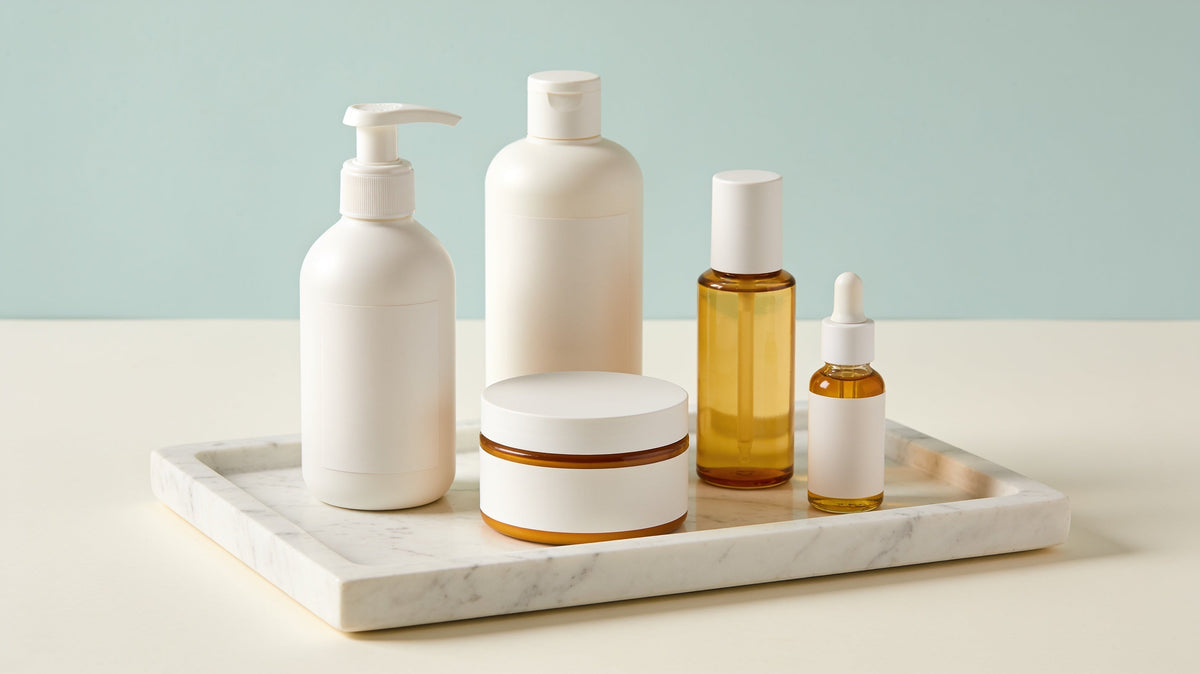
Strong haircare ranges start with one hero product, then add a routine around it and expand into concern lines once demand is proven. Unit cost is driven mainly by formula complexity, active and fragrance choices, packaging and decoration, fill size and order quantity. Ready formulas from 500 units per product keep the first launch lean.
A successful haircare range usually starts with one hero product, builds a simple routine around it and only then expands into concern lines and premium treatments. Unit cost is shaped by formula complexity, actives and fragrance, packaging and decoration, fill size and order quantity, so range planning and costing should happen together.
Founders often arrive with a list of fifteen products. Launching all of them at once ties up cash in stock and packaging, spreads marketing thin and makes it hard to tell what customers actually want. This guide explains how to structure a range and what drives cost, so that your plan with a haircare manufacturer in India is commercially realistic. If you are also setting up the company itself, our general guide on how to start a brand in India covers the wider launch steps.
Step 1: choose a hero product
A hero product carries the brand story, gets most of the marketing and usually brings in first-time customers. In haircare, strong hero candidates are:
- A hair oil, often with a botanical story and strong repeat purchase.
- A shampoo with a clear point of difference, such as scalp care or a distinctive fragrance.
- A scalp serum or tonic, which supports a premium, modern positioning.
- A hair mask, which photographs well and suits gifting.
Choose the hero by asking which product best expresses your promise, which is easiest to explain in one line and which customers will notice working after the first use.
Step 2: build a routine around the hero
A routine gives customers a reason to buy more than one product and makes bundles easy. Keep it short at launch.
| Hero | Routine partners |
|---|---|
| Hair oil | Gentle shampoo to wash it out; light conditioner |
| Shampoo | Matching conditioner; weekly mask |
| Scalp serum | Scalp-friendly shampoo; lightweight conditioner |
| Hair mask | Shampoo and conditioner in the same fragrance |
Matching fragrance across the routine is a simple way to make three products feel like one brand. Browse starting points across our haircare collection.

Step 3: add concern lines
Once the core routine is selling, concern lines let you speak to specific customers. Common haircare concerns include:
- Dry and frizzy hair.
- Hair fall due to breakage and fine or thinning-looking hair; see our fine and thinning hair collection.
- Oily scalp and visible flakes.
- Colour-treated hair.
- Curly and coily hair.
- Damaged and heat-styled hair.
Each concern line should use cosmetic claims. If hair fall is on your list, read our guide to hair growth ingredients and cosmetic claims before writing copy.
Step 4: set a price ladder
A price ladder helps customers trade up and gives you room for promotions without discounting the hero. A simple ladder might include:
- Entry: travel sizes or minis that lower the cost of trying the brand.
- Core: standard shampoos, conditioners and oils at your main price point.
- Treatment: masks, serums and tonics at a higher price, with richer textures and more actives.
- Value and refill: larger sizes, refills and bundles that reward loyal customers.
- Gift and professional: gift sets and salon sizes where relevant.
Remember that each size counts as a separate product for minimum orders, so add sizes only where the channel needs them.
Plan the range by channel
The same range can look quite different depending on where it is sold. Shape the product list around your main channel rather than trying to serve every channel on day one.
| Channel | What tends to matter |
|---|---|
| Own D2C website | A clear hero, routines and bundles, strong storytelling and repeat purchase |
| Marketplaces | Searchable concern-led products, robust transit packaging, compliant listings |
| Salons and spas | Back-bar 1 L and 5 L packs alongside retail sizes, consistent performance |
| Retail and pharmacy | Shelf impact, barcodes, outer cartons and stable supply |
| Export and importers | Market-specific labels, documents and claims that hold across borders |
Keep product names and variants disciplined
A tidy range is easier to sell and cheaper to run. Use a consistent naming system that tells customers the concern, the format and the size at a glance, and avoid near-duplicate products that compete with each other. Each new fragrance, size or variant brings its own artwork, packaging components, stock to hold and minimum order, so add one only when it opens a new customer or channel rather than simply filling a gap on a page.
What drives unit cost
Unit cost is the sum of formula, packaging, decoration, filling and packing, testing and documentation, divided across the order. The main drivers are qualitative and interact with each other.
Formula
- Base system: some surfactant systems and conditioning agents cost more than others; sulphate-free systems often sit higher.
- Actives and botanicals: the choice of hero ingredients and how much of them is used.
- Fragrance: fragrance quality and dosage have a direct effect; custom fragrance adds development work.
- Ready or custom: ready formulas avoid development cost; custom formulation adds sampling rounds and specific raw materials.
Packaging
- Component type: a pump or dropper generally costs more than a flip-top cap; glass more than plastic.
- Stock versus custom: custom moulds, colours and finishes add tooling, minimums and lead time.
- Decoration: printed labels, sleeves, direct printing, metallic finishes and cartons each add cost.
- Recycled content: PCR options can change availability and minimums.
Our bottle collection shows the range of stock packaging options.
Size and quantity
- Fill size: larger packs usually cost less per millilitre, while minis cost more per millilitre.
- Order quantity: larger runs spread set-up, changeover and component minimums across more units.
- Number of variants: many fragrances or sizes at low volumes increase changeovers and component minimums.
Compliance and logistics
- Testing, such as dermatological testing or claim substantiation.
- Export documentation, registrations and language-specific labels.
- Secondary packing, kitting of bundles and dispatch to multiple locations.
Keeping the first launch lean
- Launch with three to five products: a hero and its routine.
- Use ready formulas, from 500 units per product, adapted with your fragrance and packaging.
- Choose stock packaging with labels before investing in custom moulds.
- Limit sizes and fragrances until demand shows where to expand.
- Move the best seller to custom formulation once you know what customers value.
Learn how quotes are built on our MOQ and pricing page. Samples are supplied before any order, and a single account manager coordinates formula, packaging, production and dispatch.
Frequently asked questions
How many products should a new haircare brand launch with?
Many brands start with three to five: a hero product and the routine around it. This keeps stock and packaging investment manageable and makes it easier to learn what customers want.
What makes a haircare product cost more to manufacture?
Formula complexity, active ingredients, fragrance, packaging type and decoration, fill size and order quantity are the main drivers. Custom formulas and custom packaging add development and component minimums.
Does each size count separately for MOQ?
Yes. A product for MOQ purposes is one formula, one fragrance and one pack size. Ready formulas start from 500 units per product.
Can I start with ready formulas and switch to custom later?
Yes. Many brands launch on ready formulas adapted with their fragrance and packaging, then move proven products to custom formulation.
Planning your range? Start at our haircare manufacturer in India page.
Related service: Haircare manufacturing for your brand →
Tell us your idea. An account manager replies within 1 business day.
More from Harrods Insights
Keep reading

Shipping Hotel Amenities from India to China and Hong Kong: Consignee, Broker, Customs Inspection, Documents and Seasonal Planning

Supplying Hotels in Hong Kong and Macau: How the Rules Differ from the Mainland, Safety and Trade Descriptions Law, Labelling and Practical Buying
