
Hair Growth Ingredients and Cosmetic Claims: Rosemary, Onion, Peptides, Caffeine and Biotin
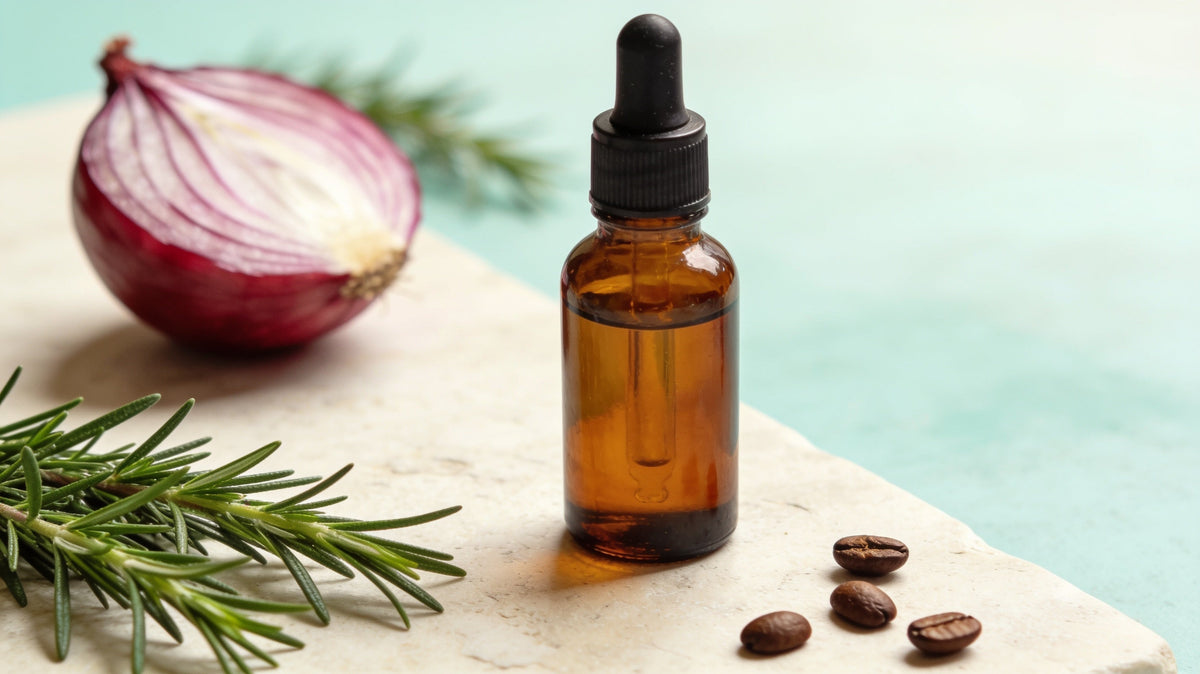
Ingredients such as rosemary, onion, peptides, caffeine and biotin are popular in hair-fall-focused cosmetics, but cosmetic products should make cosmetic claims. Wording such as reduces breakage, strengthens or nourishes the scalp is cosmetic; regrows hair or stops hair loss is drug-like in most markets. Every claim needs evidence that matches its strength.
Rosemary, onion, peptides, caffeine and biotin are popular in haircare marketed around hair fall, but a cosmetic product can only make cosmetic claims about them. Wording such as "reduces breakage", "strengthens hair" or "nourishes the scalp" is cosmetic; "regrows hair" or "stops hair loss" is a drug-like claim in most markets and needs a medicinal route.
Few haircare categories attract as much attention as hair fall. Founders see demand for rosemary oils, onion shampoos and peptide serums, and naturally want to build a range around them. The opportunity is real, but so is the risk: the words on the label decide whether a product is treated as a cosmetic or a medicine. This guide explains the distinction for brands working with a haircare manufacturer in India. It is general guidance, not legal advice; check the rules in every market you sell in.
The cosmetic line, in one sentence
In most markets, a cosmetic is used to cleanse, perfume, protect, change the appearance of or keep the body in good condition, while a medicine is intended to treat, prevent or cure a disease or to restore, correct or modify a physiological function. Hair growth from the follicle is a physiological function. That is why claims about regrowth or stopping hair loss usually belong to medicines, while claims about the condition, strength and appearance of the hair fibre and the feel of the scalp belong to cosmetics.
Claims at a glance
| Usually cosmetic | Usually drug-like (avoid on a cosmetic) |
|---|---|
| Reduces hair breakage from combing and brushing | Regrows hair |
| Helps reduce hair fall due to breakage | Stops hair fall or hair loss |
| Strengthens hair and makes it feel thicker | Treats alopecia or thinning |
| Nourishes and conditions the scalp | Stimulates follicles to grow new hair |
| Hair looks fuller and denser | Increases hair count |
| Refreshing, invigorating scalp feel | Blocks hormones linked to hair loss |
Note the subtle shift in some pairs. "Helps reduce hair fall due to breakage" refers to hair snapping along its length, which conditioning can help with. "Stops hair fall" implies action at the root. Precise wording matters.

Ingredient by ingredient
Rosemary
Rosemary oil and extract have become the defining trend ingredient in haircare. They bring a fresh, herbal aroma and an invigorating feel, and fit well in oils, tonics and shampoos. Cosmetic claims might focus on scalp feel, nourishment and the condition of the hair. For a consumer view of the category, see our article on rosemary shampoo.
Onion
Onion extract and onion seed oil carry strong traditional associations with hair care in South Asia. They are usually used as story ingredients in oils and shampoos, often with fragrance to soften their natural aroma. Keep claims to conditioning and nourishment.
Peptides
Cosmetic peptides are increasingly used in scalp serums. Supplier literature may describe laboratory or ex vivo results; that evidence supports the supplier's ingredient story, not automatically a claim on your finished product. Claims on your pack should reflect evidence relevant to your product and stay within cosmetic language.
Caffeine
Caffeine features in shampoos and tonics positioned as energising. It works well as a sensory and story ingredient. Avoid implying that it blocks hormones or prevents hair loss on a cosmetic.
Biotin
Biotin is better known as a supplement, but appears in shampoos and conditioners as a conditioning and story ingredient. Topical claims should describe hair condition and feel, not nutritional effects.
Substantiating cosmetic claims
Every claim needs support that matches its strength. A modest sensory claim needs less than a measurable performance claim. Typical forms of support include:
- Ingredient evidence: supplier data and published literature, used carefully and not stretched beyond what it shows.
- Consumer perception studies: panellists use the product and report how their hair looks and feels.
- Instrumental assessments: for example combing-force or breakage measurements on hair tresses, arranged with a testing partner.
- Safety evidence: such as dermatological testing, which supports safety-in-use statements but not efficacy claims.
Do not use "clinically proven" or "dermatologist recommended" unless you hold the specific evidence those phrases imply and your market allows them. Formulas can be supplied as dermatologically tested, and test reports are available on request; see our testing and quality page.
Building a hair-fall-focused cosmetic range
A credible cosmetic range treats hair fall from the angle that cosmetics can genuinely address: breakage, strength of feel, scalp comfort and the look of fuller hair.
- Shampoo: gentle cleansing with a hero botanical and a fresh scalp feel.
- Conditioner: reduces combing friction, which is where much visible breakage happens.
- Scalp tonic or serum: lightweight leave-on with peptides, caffeine or botanical extracts.
- Hair oil: pre-wash nourishment with rosemary, onion or Ayurvedic herbs.
- Mask: a weekly strengthening-feel treatment for lengths.
The formula library includes hair-fall-focused cosmetic formulas across these formats. Explore our fine and thinning hair collection and serums and tonics for starting points. For oil formats specifically, see our hair oil private label manufacturing guide.
Where Ayurvedic and medicinal routes fit
Some brands choose a medicinal or traditional-medicine route so that they can make different claims. In India, Ayurvedic products are regulated under the AYUSH framework, with their own licensing and labelling rules, and Harrods Health holds an AYUSH licence. A product's classification can still differ in export markets, and medicinal hair-loss products require separate approval routes. Take regulatory advice before choosing this path.
Claims beyond the label
Regulators and marketplaces judge the overall impression a product creates, not just the words printed on the bottle. Product names, images, social media captions, influencer scripts, customer review highlights and marketplace bullet points can all turn a cosmetic into something that looks like a medicine. A product named in a way that promises regrowth, or a video showing dramatic before-and-after scalp images, can undo careful label wording. Build a single approved claims sheet for each product and share it with everyone who writes about it, including agencies and creators, so the message stays consistent across every channel.
A practical claims checklist
- Does the claim describe the hair fibre, scalp feel or appearance, rather than follicle activity?
- Is there evidence for this specific product, not just the ingredient?
- Do images, before-and-after visuals and influencer content say the same as the label?
- Have marketplace listing rules been checked, as some restrict hair-loss language?
- Has the wording been reviewed for each export market?
Frequently asked questions
Can a cosmetic hair oil claim to regrow hair?
In most markets, no. Regrowing hair or stopping hair loss acts on a physiological function, which places the claim in medicinal territory. Cosmetic claims focus on breakage, strength of feel, scalp nourishment and appearance.
Is rosemary oil a cosmetic ingredient?
Yes, rosemary oil and extracts are widely used in cosmetic haircare. The claims made about the finished product, rather than the ingredient itself, determine how the product is classified.
What evidence do I need for a breakage claim?
Support should match the claim. Breakage or combing claims are often supported by instrumental testing on hair tresses or by consumer perception studies, arranged on the finished product.
Do you make hair-fall-focused cosmetic formulas?
Yes. The formula library includes hair-fall-focused cosmetic shampoos, oils, tonics and masks, available from 500 units per product with custom fragrance and packaging.
Developing a hair-fall range? Start with our private label haircare manufacturing page.
Related service: Haircare manufacturing for your brand →
Tell us your idea. An account manager replies within 1 business day.
More from Harrods Insights
Keep reading

Shipping Hotel Amenities from India to China and Hong Kong: Consignee, Broker, Customs Inspection, Documents and Seasonal Planning

Supplying Hotels in Hong Kong and Macau: How the Rules Differ from the Mainland, Safety and Trade Descriptions Law, Labelling and Practical Buying
