
Hair Oil Private Label Manufacturing: Base Oils, Herbal Infusions, Non-Sticky Blends and Packaging
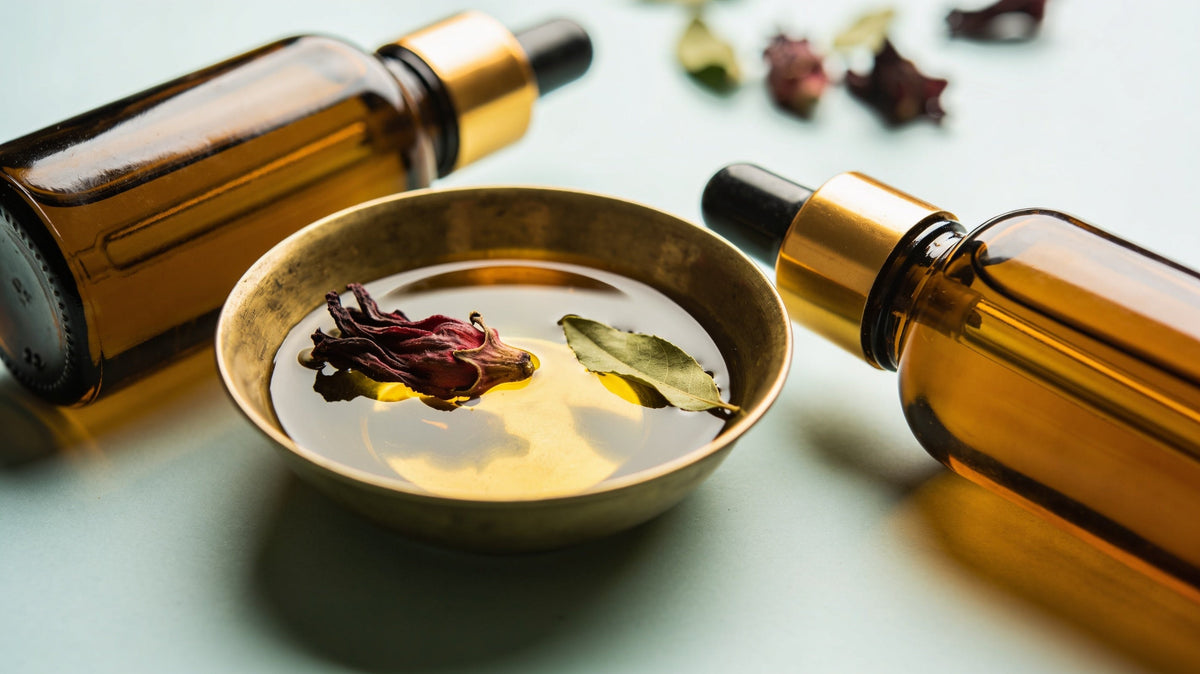
A private label hair oil is defined by its base oils, its herbal or active additions and how heavy it feels on hair. Brands must decide early whether the oil is sold as a cosmetic or under an Ayurvedic (AYUSH) route, because that shapes claims and labelling. Ready hair oil formulas at Harrods Health start from 500 units per product.
Private label hair oil manufacturing combines a blend of base oils with herbal infusions, botanical extracts or fragrance, filled into your packaging under your brand. The key decisions are the oil blend, how sticky or light it feels, whether it is sold as a cosmetic or an Ayurvedic product, and the pack. Ready hair oil formulas start from 500 units per product.
Hair oil is one of the most familiar haircare formats in India and across South Asia, the Gulf and the diaspora markets beyond. It is also crowded, which makes the details matter: how the oil spreads, how quickly it absorbs, whether it leaves pillows stained and how it smells the next morning. As a haircare manufacturer in India, we see the same questions from founders each time, and this guide answers them in order.
Base oils: the foundation of the blend
The base oils set the texture, the price and much of the story. Most hair oils use a blend rather than a single oil, so that richness and lightness can be balanced.
| Base oil type | Feel on hair | Common use |
|---|---|---|
| Coconut oil | Rich; can solidify in cool weather | Traditional pre-wash oiling, heritage blends |
| Sesame oil | Medium, warming | Classic base for Ayurvedic infusions |
| Almond oil | Light to medium, smooth slip | Everyday and nourishing oils |
| Mustard oil | Heavy, distinctive aroma | Regional and traditional blends |
| Argan, jojoba, camellia | Light, quick to absorb | Premium leave-in and finishing oils |
| Castor oil | Very thick, viscous | Used in small proportions for density of feel |
| Light esters and triglycerides | Very light, dry finish | Non-sticky blends and serums |
Seasonality matters for some bases. Coconut-heavy oils can turn cloudy or set in winter, which is fine for a traditional product but may read as a defect to a customer expecting a clear premium oil.
Herbal infusions and botanical additions
Herbs can be brought into an oil in several ways, and the method affects colour, aroma, cost and how you can describe the product.
- Traditional oil processing: herbs and decoctions are cooked into the oil over time, following classical Ayurvedic methods. This gives a deep colour and characteristic aroma.
- Infusion: dried herbs are steeped in warm or room-temperature oil, then filtered. Gentler, often lighter in colour.
- Oil-soluble extracts: standardised extracts are added directly, which helps batch-to-batch consistency.
- Essential oils and fragrance: rosemary, peppermint, lavender or a custom fragrance, used for aroma and sensory experience within safe use levels.
Familiar botanicals include amla, bhringraj, brahmi, hibiscus, fenugreek, curry leaf, neem, onion and rosemary. For a consumer view of the category, see our article on Ayurvedic hair oil manufacturing.
Onion and rosemary in particular are often marketed with growth language. Before you write pack copy around them, read our guide to hair growth ingredients and the cosmetic claims they can support, because the wording on an oil decides how it is regulated as much as the ingredients inside it.

Making a non-sticky hair oil
"Non-sticky" is one of the most requested briefs, especially for leave-in oils and urban customers. It is achieved through formulation rather than by simply using less oil.
- Lighten the base: blend heavier oils with lighter oils, esters or triglycerides that spread easily and feel dry to the touch.
- Control the heavy hitters: keep castor and mustard oil to the level that delivers the story without dominating the feel.
- Consider a dry-oil finish: some blends include volatile or fast-spreading emollients for a silky, quick-absorbing finish.
- Test in use: apply to dry hair, leave overnight, and check pillow transfer and how many washes it takes to remove.
If your oil is designed to be left on and styled, you may be closer to a hair serum than a traditional oil; compare options in our hair serums and tonics collection.
Cosmetic route or AYUSH route
This is the decision founders most often leave too late. In general terms, a hair oil can be sold in India as a cosmetic, or as an Ayurvedic product under the AYUSH framework, and each route carries its own licensing, formulation references, labelling and claim rules.
- Cosmetic route: the oil is presented for cleansing, conditioning, nourishing or improving the appearance of hair. Claims stay cosmetic, such as "nourishes the scalp", "adds shine" or "helps reduce breakage from combing".
- AYUSH route: the product is made and labelled as an Ayurvedic preparation under the relevant licence, typically referencing classical texts or approved formulations. The rules on what can be said, and how, differ from cosmetics.
Harrods Health holds an AYUSH licence alongside its state FDA cosmetic manufacturing licence, so both routes can be discussed. The right one depends on your formula, your claims and your markets. Export destinations may classify the same product differently, so take regulatory advice for each market before finalising labels.
Fragrance, colour and clarity
Traditional oils often carry their natural herbal aroma; modern oils frequently add a light fragrance to soften it. Decide whether the oil should look green, golden or clear, because colour signals the story. Clear packaging shows off a beautiful oil but also reveals sediment and colour change, so herbal oils may need filtration and stability checks before you commit.
Packaging for hair oil
Oils are unforgiving on packaging: they find weak seals, can soften some plastics and make labels slip if they leak.
| Pack | Best for | Watch-outs |
|---|---|---|
| Flip-top or disc-cap bottle | Everyday family-size oils | Check compatibility of plastic with your oil blend |
| Dropper bottle | Premium scalp oils and concentrates | Glass weight and breakage in transit; dose per drop |
| Nozzle or comb applicator | Direct-to-scalp application | Leak testing for transit |
| Pump bottle | Leave-in and light oils | Pump output must suit oil viscosity |
| Bulk packs | Salon and spa massage use | Dispensing and storage away from heat |
See options in our dropper packaging range, and our full hair oil collection for formula starting points.
Quality and documentation
Hair oils are produced in a GMP-compliant, ISO certified facility that is Halal certified and a US FDA registered facility. Formulas can be supplied as dermatologically tested, with reports on request. For export, you will usually need a full ingredient list in INCI names, a certificate of analysis per batch and safety documentation appropriate to the destination.
What to put in your hair oil brief
- Use: pre-wash treatment, overnight oil, leave-in finishing oil or scalp oil.
- Feel: rich and traditional, or light and non-sticky.
- Hero herbs or ingredients, and how prominently they should feature.
- Route: cosmetic or Ayurvedic.
- Fragrance: natural herbal aroma, light fragrance or a signature scent.
- Pack type, size and target markets.
Frequently asked questions
What is the MOQ for private label hair oil?
Ready hair oil formulas start from 500 units per product, meaning one formula, one fragrance and one pack size. Custom blends and decorated packaging are quoted per project.
Can a hair oil be both non-sticky and herbal?
Yes. Herbal infusions or extracts can be carried in a lighter blend of oils and esters, so the product keeps its botanical story while feeling less greasy. Samples let you judge the balance on real hair.
Should my hair oil be sold as a cosmetic or an Ayurvedic product?
It depends on your formula, claims and markets. Each route has its own licensing, labelling and claim rules, and export markets may classify products differently. Take regulatory advice before finalising labels.
Can you match the fragrance of my existing products?
Custom fragrance is available, so a hair oil can be developed to sit alongside your shampoo, conditioner and other products in a consistent scent family.
Ready to develop your oil? Visit our haircare manufacturer in India page to start.
Related service: Haircare manufacturing for your brand →
Tell us your idea. An account manager replies within 1 business day.
More from Harrods Insights
Keep reading

Shipping Hotel Amenities from India to China and Hong Kong: Consignee, Broker, Customs Inspection, Documents and Seasonal Planning

Supplying Hotels in Hong Kong and Macau: How the Rules Differ from the Mainland, Safety and Trade Descriptions Law, Labelling and Practical Buying
