
Pigments and Mica Powders for Cosmetics, Soaps and Candles: Cosmetic-Grade vs Craft-Grade, Colour Rules and Responsible Sourcing
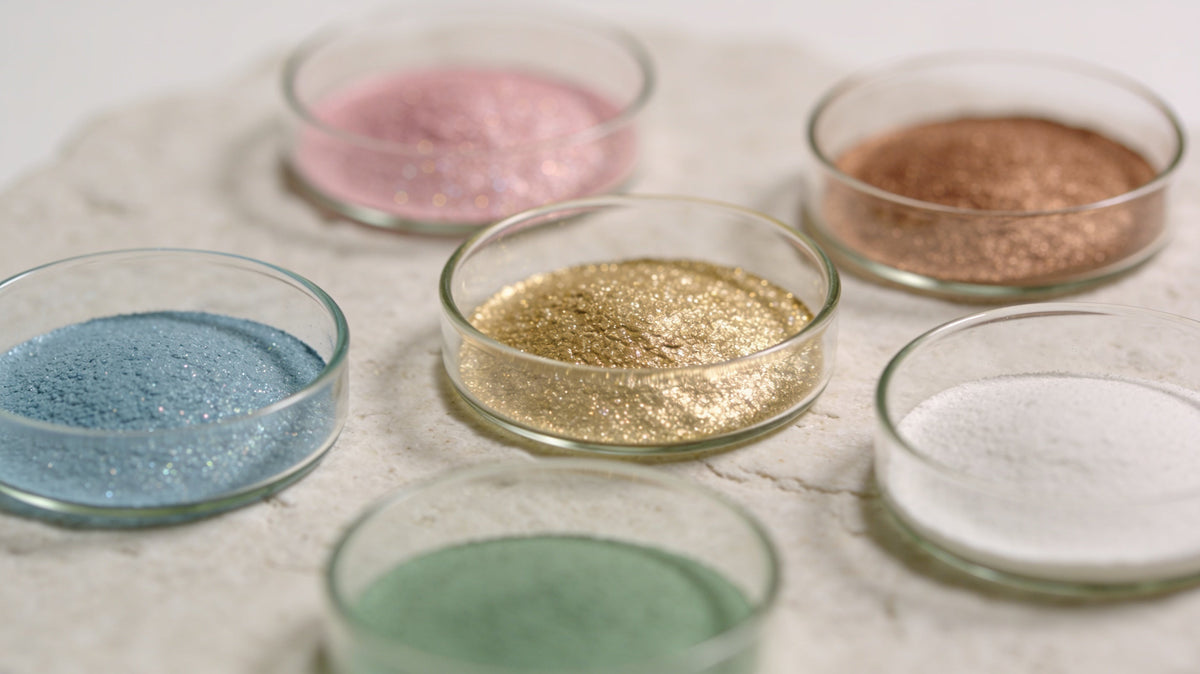
Cosmetic-grade pigments and micas use colourants permitted in the market of sale and come with documentation for skin contact; craft-grade powders may not. Soap and candles add their own challenges, from high pH to wick clogging. Ask suppliers about mica traceability as well as grade.
Cosmetic-grade pigments and mica powders are made and documented for skin contact, using colourants that appear on the permitted lists of the market where the product is sold; craft-grade powders may not be. For soaps and candles, also choose colourants for how they behave in high-pH soap or hot wax, not just for their grade.
Colour is often the last decision in product development and the first thing a customer notices. It also attracts regulatory scrutiny, because colourant rules are specific about which substances are allowed, and where. As a cosmetic raw materials manufacturer in India, we supply pigments and mica powders to make-up, soap, bath and candle makers. This guide focuses on grades, practical behaviour and sourcing; for make-up regulation in more depth, see our existing guide to cosmetic pigments, colourants and make-up regulations.
What is in a mica powder?
A pearlescent or shimmer powder is usually a platelet substrate coated with a thin layer of metal oxide. The substrate is either natural mica (CI 77019) or synthetic fluorphlogopite, a lab-made mica-like mineral. The coating is typically titanium dioxide (CI 77891), iron oxides (CI 77491, CI 77492, CI 77499), or both. The thickness of the coating controls the colour you see through light interference, which is why the same chemistry can look silver, gold, pink or green.
Other common cosmetic colourants include ultramarines (CI 77007), chromium oxide greens (CI 77288), manganese violet (CI 77742) and organic lakes. In the EU and many other markets, colourants are declared on ingredient lists by their Colour Index (CI) numbers.
Cosmetic-grade versus craft-grade
| Aspect | Cosmetic-grade | Craft-grade |
|---|---|---|
| Colourants used | Permitted cosmetic colourants with CI numbers | May include dyes not permitted in cosmetics |
| Impurities | Tested against limits for heavy metals and other impurities | Often untested |
| Documentation | Composition, INCI or CI declaration, COA and SDS | Often minimal |
| Particle form | Controlled platelet or powder | May include plastic glitter or uncontrolled particles |
| Suitable for | Make-up, soap, bath products, lip products if permitted for lips | Decorative items with no skin contact |
The rule of thumb is simple: if the finished product touches skin, including soap, bath bombs, body scrubs and lip balms, use cosmetic-grade colourants permitted for that use. Craft-grade powders belong in items such as resin art or packaging decoration.

Permitted colour rules by market
Colourant rules differ by market, and they often restrict where on the body a colourant can be used, not just whether it is allowed. In general terms:
- European Union: permitted colourants are listed in Annex IV of the Cosmetics Regulation (EC) No 1223/2009, with conditions that can limit use to rinse-off products or exclude the eye area or mucous membranes. Great Britain has a closely aligned list.
- United States: colour additives must be approved by the FDA for cosmetic use, some require batch certification, and approvals specify permitted uses such as eye area or lips. Some colourants accepted elsewhere are not approved for every use in the US.
- India: cosmetics are regulated under the Cosmetics Rules, 2020, which reference Indian standards for colourants permitted in cosmetic products.
- GCC: Gulf standards for cosmetics broadly align with international practice, and importers frequently ask for full composition and halal status.
Because these lists change and their conditions matter, confirm the status of each colourant for your exact product and market with your importer or a regulatory specialist before launch.
Colour in soap
Cold-process soap is highly alkaline while it saponifies, and that environment can change or destroy some colourants. Many iron oxides, ultramarines and chromium oxide greens hold well. Some micas, especially those whose colour depends on added dyes or particular coatings, can fade, morph or turn grey. Melt-and-pour bases are gentler, but some colourants can bleed between layers.
- Disperse powders in a little oil or glycerin before adding them to the batch to avoid specks.
- Test every new colourant in a small batch and let it cure fully before judging the colour.
- Titanium dioxide gives a bright white but can cause streaking if poorly dispersed.
- Record the batch number of every colourant used so a colour can be repeated.
Colour in candles
Pigments and micas do not dissolve in wax. In a burning candle they settle in the melt pool and can clog the wick, causing poor burn, tunnelling or smoking. Candle makers therefore usually colour wax with wax-soluble candle dyes, and use mica powders for surface decoration, painted vessels or the outside of pillar candles where they will not reach the melt pool. Fragrance load and flash point also matter in candles; our guide to raw materials for soap, candles and lip balms covers those safety points.
Colour in bath products and lip balms
Bath bombs, salts and bubble bars bring colour into the bath water, so customers notice staining on tubs and towels. Water-dispersible colourants and lakes give colour to the water, while micas and insoluble pigments tend to float or settle and can leave a ring. Test in a white bath before launch.
Lip balms need colourants permitted for lip use in your market, and the rules for lips are often stricter than for other skin products. Pigments must be finely dispersed in the oil phase to avoid a gritty feel. If a tinted balm is part of your range, confirm the status of every colourant for lips before you finalise the shade.
Responsible mica sourcing
Natural mica is mined in several countries, and reports have linked parts of the informal mining sector to child labour and unsafe working conditions. Brands and retailers increasingly ask suppliers to show where their mica comes from and how that supply chain is checked.
- Ask about traceability: where the mica was mined or processed and what supply-chain documentation exists.
- Ask about audits and participation in industry responsible-sourcing programmes.
- Consider synthetic fluorphlogopite where traceability is hard to establish; it also gives a cleaner, brighter base for some shades.
- Keep records of what you were told and when, so your own disclosures stay accurate.
Ask us what documentation is available for any mica you are considering.
Handling fine powders safely
Pigments and micas are fine powders that should not be inhaled. Work with local extraction or a dust mask, avoid blowing or shaking powders in open air, and keep containers closed. The SDS for each powder sets out the recommended protective equipment.
Our facility credentials are on the quality and certifications page, and the wider range sits in our cosmetic raw materials collection.
Frequently asked questions
Can I use craft-grade mica in soap or lip balm?
No. Anything that touches skin should use cosmetic-grade colourants permitted for that use in your market. Craft-grade powders may contain dyes or impurities that are not permitted in cosmetics.
Why does my mica change colour in cold-process soap?
Cold-process soap is highly alkaline during saponification. Some micas, especially those relying on added dyes or certain coatings, fade or morph in that environment. Test each colourant in a small batch and allow it to cure before judging.
Can I put mica powder in candle wax?
It is generally not advised in the melt pool, because powders do not dissolve in wax and can clog the wick. Use wax-soluble candle dyes for the wax, and mica for surface or vessel decoration.
Is synthetic mica better than natural mica?
It is different rather than better. Synthetic fluorphlogopite offers consistent whiteness and avoids natural-mica supply-chain questions, while natural mica remains widely used. Choose based on look, documentation and your sourcing policy.
Browse our pigment and mica powders, with documentation such as COA and SDS available on request.
Related service: Raw materials manufacturing and supply →
Tell us your idea. An account manager replies within 1 business day.
More from Harrods Insights
Keep reading

Shipping Hotel Amenities from India to China and Hong Kong: Consignee, Broker, Customs Inspection, Documents and Seasonal Planning

Supplying Hotels in Hong Kong and Macau: How the Rules Differ from the Mainland, Safety and Trade Descriptions Law, Labelling and Practical Buying
