
Essential Oils vs Absolutes vs Fragrance Oils vs Blends: Differences, Uses, Labelling and Safety
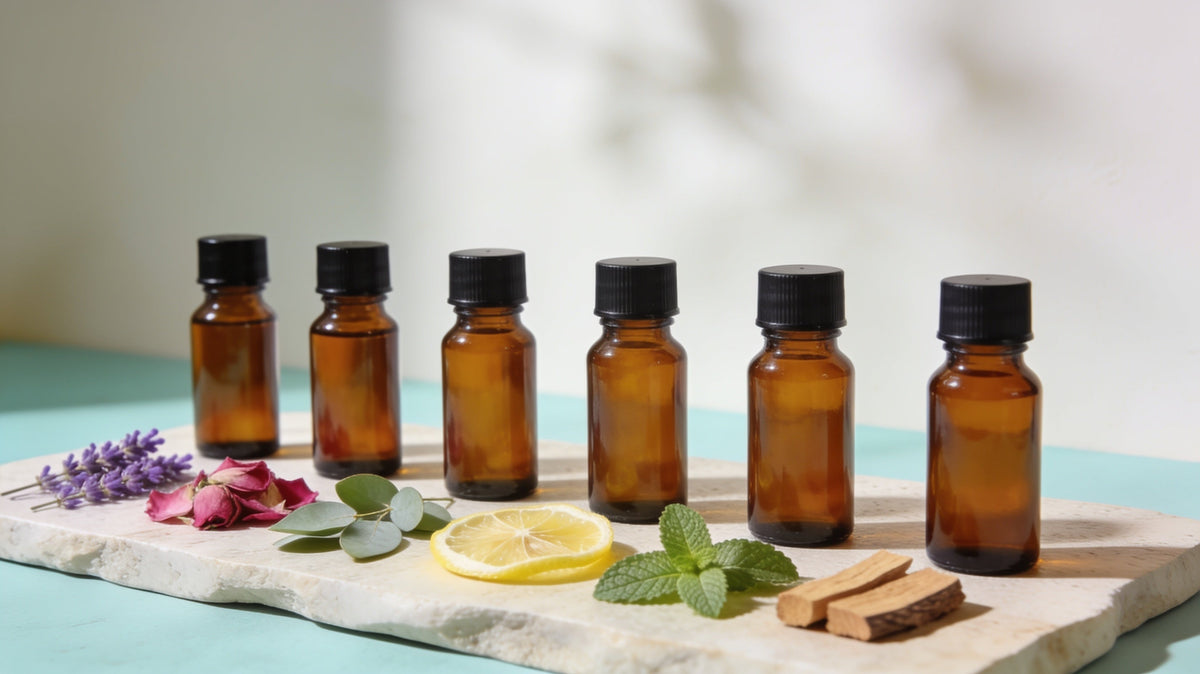
Essential oils are distilled or pressed from one plant, absolutes are solvent-extracted, fragrance oils are composed scents, and blends combine several aromatic materials. Each needs accurate naming on labels, allergen declarations where required, and use levels within IFRA standards. None should be sold with medical claims.
Essential oils are distilled or cold-pressed from a single plant; absolutes are solvent-extracted, usually from delicate flowers; fragrance oils are composed scents that may combine synthetic and natural materials; and blends are mixtures of essential oils, sometimes with absolutes. Each behaves differently in a formula and carries different labelling and safety obligations.
Buyers often use these terms interchangeably, and that causes problems later: a product marketed as "essential oil" that actually contains a fragrance oil, or an absolute dosed as if it were a light top-note oil. As an essential oil manufacturer in India producing essential oils, absolutes, blends and diffuser oils in-house, we see these mix-ups regularly. This guide sets out the differences clearly so your formulation, labels and marketing stay accurate.
The four types at a glance
| Type | How it is made | Composition | Typical uses | Key labelling point |
|---|---|---|---|---|
| Essential oil | Steam or water distillation, or cold pressing of citrus peel | Volatile compounds from one plant species | Aromatherapy products, natural fragrance, soaps, candles | Named by botanical source |
| Absolute | Solvent extraction to a concrete, then alcohol washing | Volatile and some heavier aromatic compounds, intense and often viscous | Perfumery, premium blends at low dose | Named by botanical source; describe as an absolute |
| Fragrance oil | Composed by a perfumer from aroma chemicals and naturals | Designed, reproducible scent | Soaps, candles, body care, home fragrance | Declared as fragrance or parfum, never as essential oil |
| Blend | Mixing of finished aromatic materials | Two or more essential oils, sometimes with absolutes | Ready-to-use aromatherapy and diffuser ranges | Each component and its allergens must be accounted for |
Essential oils
An essential oil comes from one plant species and one plant part, extracted by distillation or, for citrus peel, by cold pressing. Its scent is the plant's own volatile chemistry, so it varies a little between harvests. Essential oils suit products where the natural origin of the scent is part of the proposition, such as aromatherapy ranges, natural soaps and massage oils.
On cosmetic ingredient lists, essential oils are identified by INCI names built from the genus, species and plant part, for example Citrus Aurantium Dulcis Peel Oil for sweet orange peel oil. Market practice differs on whether essential oils are listed individually or within the fragrance declaration, so confirm what your target market expects. The production methods are covered in our guide to essential oil manufacturing and GC-MS reports.

Absolutes
Some flowers are too delicate to survive distillation, or their scent changes badly with heat. For these, plant material is washed with a solvent that dissolves the aromatic compounds along with waxes and pigments. Removing the solvent leaves a waxy mass called a concrete. The concrete is then washed with alcohol, chilled to drop out the waxes, filtered, and the alcohol removed. What remains is the absolute.
Absolutes are concentrated, often deeply coloured and viscous, and much closer to the smell of the living flower than a distilled oil could be. They are mainly used in perfumery and in premium blends at low levels. Because a solvent is involved, ask for the residual solvent position in the specification. Browse our absolute oils if you work in fine fragrance or high-end body care.
Fragrance oils
A fragrance oil is a designed scent. A perfumer combines aroma chemicals, natural materials and sometimes solvents to create a smell that may not exist in nature, such as a specific fruit or bakery note, or to reproduce a natural scent at a more stable cost. Fragrance oils are consistent from batch to batch and often perform strongly in soaps and candles.
Their limitation is in claims, not performance. A fragrance oil is not an essential oil and must not be described as one. On cosmetic ingredient lists it is declared as fragrance or parfum, with specified allergens listed separately where the market requires it.
Blends and diffuser oils
A blend combines essential oils, and sometimes absolutes, to achieve a profile no single oil can deliver. Blends save formulation time for brands that want a finished aromatic ready to dilute or fill. The important point is that the allergen content and IFRA compliance of a blend are calculated from its full composition, so the supplier's documents must cover the blend as a whole. See our essential oil blends for ready-made options.
Diffuser oils are a related category prepared for reed and electric diffusers and home fragrance. They are designed for air, not skin, so do not repurpose a diffuser oil for a skin product unless the supplier confirms it is suitable. Our diffuser oils are sold for that home-fragrance use.
Labelling requirements
Ingredient lists and allergens
Every aromatic material in a cosmetic must appear correctly on the ingredient list. Many essential oils and absolutes naturally contain substances regulated as fragrance allergens, such as linalool, limonene, citral, geraniol and eugenol. In the EU, specified allergens above set thresholds must be named on the label, and that list was expanded by Regulation (EU) 2023/1545. The UK and several other markets have similar rules. Our existing guide to dilution, IFRA and allergens for aromatherapy massage oils explains the arithmetic for finished products.
Hazard labelling on the material itself
When you sell an undiluted oil or blend in a bottle, the product itself may need hazard labelling under GHS-based rules, such as the CLP Regulation in the EU and Great Britain. Many oils carry classifications for skin sensitisation, aspiration hazard, flammability or aquatic toxicity. Section 2 of the SDS sets out the classification and label elements.
Marketing language
"Pure" and "natural" must be true for the exact material you sell. "Therapeutic grade" has no regulatory definition. Claims that an oil cures, treats, or is antibacterial or antiviral can make a cosmetic or aromatherapy product an unapproved medicine in many jurisdictions. Describe scent, origin and method instead.
Safety considerations
- Natural does not mean risk-free. Essential oils and absolutes contain allergens and can irritate or sensitise skin at high concentrations.
- IFRA standards apply to all fragrance materials, natural or synthetic, and set maximum levels by product category, so a level acceptable in a candle may be too high for a lip balm.
- Some expressed citrus oils are phototoxic and have limits in leave-on skin products.
- Oxidation increases sensitisation risk for some oils, so storage matters.
- No ingestion advice. Essential oils, absolutes and blends are not to be swallowed.
Choosing the right type for your product
- Aromatherapy or natural-positioned range: essential oils or essential-oil blends, labelled by botanical name.
- Fine fragrance or luxury body care: absolutes and essential oils, at low and carefully calculated levels.
- Soap or candle with a scent that does not exist in nature: a fragrance oil, declared as fragrance.
- Home fragrance: diffuser oils prepared for air diffusion.
Frequently asked questions
Can I call a fragrance oil an essential oil?
No. A fragrance oil is a composed scent and must be declared as fragrance or parfum. Describing it as an essential oil misleads customers and can breach consumer protection and cosmetic labelling rules.
Are absolutes stronger than essential oils?
Absolutes are usually more concentrated and intense, and they capture heavier aromatic compounds that distillation can miss. They are typically used at lower levels than essential oils, within IFRA standards for the product category.
Do essential oil blends need allergen labelling?
Yes, where the market requires it. Allergen content is calculated from the full composition of the blend and the level in the finished product. Ask your supplier for the blend's allergen information.
Can diffuser oils be used in skin products?
Not by default. Diffuser oils are prepared for air diffusion. Only use an aromatic material on skin if the supplier confirms it is suitable and you stay within the limits for that product category.
Compare single oils across our essential oils collection, with documentation such as COA and SDS available on request.
Related service: Raw materials manufacturing and supply →
Tell us your idea. An account manager replies within 1 business day.
More from Harrods Insights
Keep reading

Shipping Hotel Amenities from India to China and Hong Kong: Consignee, Broker, Customs Inspection, Documents and Seasonal Planning

Supplying Hotels in Hong Kong and Macau: How the Rules Differ from the Mainland, Safety and Trade Descriptions Law, Labelling and Practical Buying
