
Exporting Cosmetic Raw Materials and Essential Oils from India: Documents, Dangerous Goods, Labelling and CITES
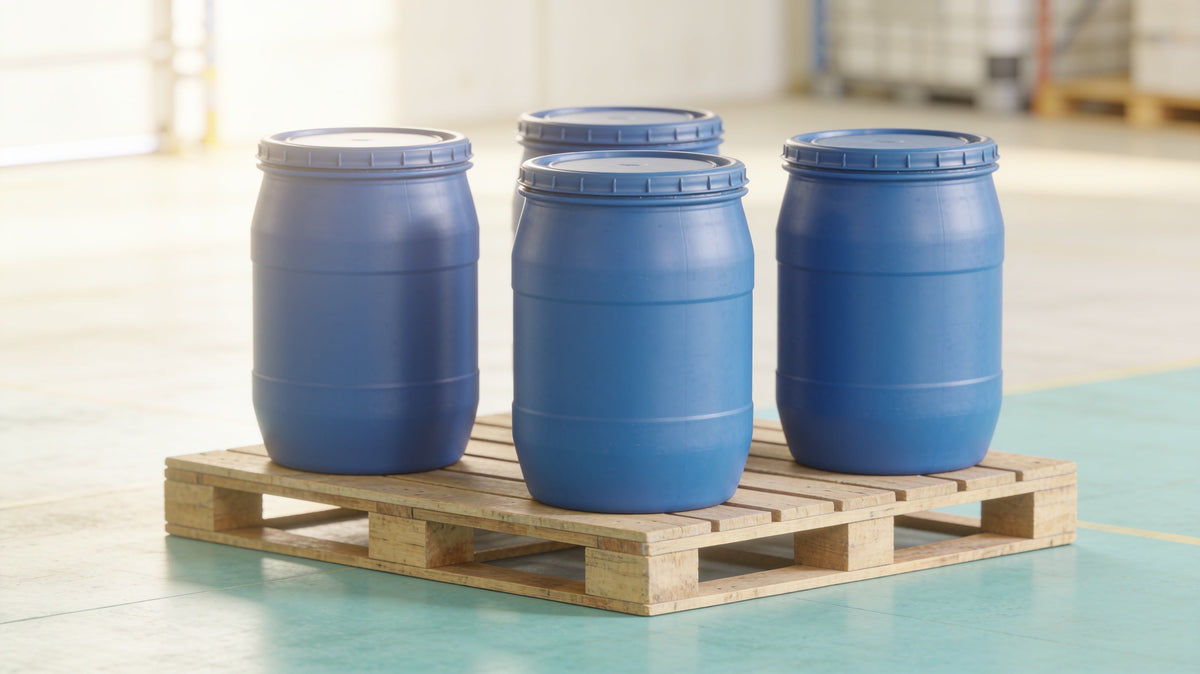
An export shipment of raw materials needs commercial documents, product documents such as COA and SDS, and often a certificate of origin. Many essential oils are flammable liquids and must be classified, packed and labelled as dangerous goods, confirmed with the freight forwarder. CITES-listed botanicals need permits before they move.
Exporting raw materials from India needs commercial documents (invoice, packing list and shipping bill), product documents (COA and SDS) and often a certificate of origin. Many essential oils are flammable and travel as dangerous goods, so classification, packaging and labels must be confirmed with your freight forwarder before booking, and any CITES-listed botanical needs permits.
For an importer, a delayed raw material shipment can stop a production line. Most delays come from paperwork rather than the product: a missing document, a wrong classification or a label the destination will not accept. As an essential oil manufacturer in India that exports cosmetic raw materials, we have written this general guide for buyers in the GCC, the UK and EU, the US, Africa and South-East Asia. Regulations change and vary by route, so always confirm specifics with your forwarder, customs broker and importer of record.
The core document set
| Document | Purpose | Prepared by |
|---|---|---|
| Commercial invoice | Value, Incoterms, product description and HS code | Exporter |
| Packing list | Contents, quantities, weights and packaging per package | Exporter |
| Shipping bill | Indian customs export declaration | Exporter through a customs broker |
| Bill of lading or air waybill | Contract of carriage and receipt | Carrier or forwarder |
| Certificate of origin | Proves where goods were made; a preferential certificate can reduce duty under a trade agreement | Authorised issuing body |
| Certificate of Analysis (COA) | Batch quality against specification | Manufacturer |
| Safety Data Sheet (SDS) | Hazards, handling and transport information | Manufacturer |
| Dangerous goods declaration | Required when goods are classified as dangerous | Shipper, with forwarder support |
Depending on the product and destination, you may also need a halal certificate, a food-grade or health statement for food flavour oils, or an import permit held by the buyer. Documentation such as COA and SDS is available on request from us for each material. Our fulfilment and export page explains how shipments are prepared.
Classifying goods for customs
Every line on the invoice needs a Harmonized System (HS) code. Essential oils, resinoids and similar aromatic extracts commonly fall under heading 3301, while mixtures of odoriferous substances used in industry, such as compounded fragrance or flavour bases, commonly fall under 3302. Surfactants, pigments and mineral powders sit in other chapters. The correct code depends on the exact product and its composition, so confirm it with your customs broker; a wrong code can mean the wrong duty, delays or penalties.

Dangerous goods: flammable essential oils
Many essential oils, especially terpene-rich oils such as citrus and some leaf oils, have flash points low enough to be classed as flammable liquids for transport.
How classification works in general
- Under the UN model regulations for transport, liquids with a flash point at or below 60°C (closed cup) are generally Class 3 flammable liquids.
- The packing group depends on the flash point and the initial boiling point, and determines packaging strength and quantity limits.
- Essential oils are often shipped under entries such as UN1169 (extracts, aromatic, liquid) or UN1197 (extracts, flavouring, liquid), but the correct entry depends on the product, so it must be confirmed.
- Some oils are also classed as environmentally hazardous, which can make them marine pollutants for sea freight even when they are not flammable.
Mode-specific rules
- Air: IATA Dangerous Goods Regulations set quantity limits per package, and limits differ for passenger and cargo-only aircraft.
- Sea: the IMDG Code governs packaging, segregation and documentation.
- Road and rail: regional agreements apply at origin and destination.
Dangerous goods must travel in UN-specification packaging with the right marks and hazard labels, and the people preparing them must be trained. Limited-quantity and excepted-quantity provisions can ease requirements for small packs, but courier and postal services often refuse flammable liquids regardless. Section 14 of the SDS gives the transport information and is the starting point, but your freight forwarder makes the final classification check before booking. That is why we confirm dangerous-goods status for each material before quoting a shipping method. The flash point appears on the COA or SDS; our guide to reading an essential oil COA and GC-MS report explains where to find it.
Labelling for export
Outer packaging
Outer cartons and drums carry shipping marks, the consignee details, package numbering and, for dangerous goods, the UN number, proper shipping name and hazard labels.
Product labels
Each container should identify the product name and botanical or INCI name, batch number, net quantity, manufacturing and retest or expiry dates, the manufacturer and the country of origin. In the EU and Great Britain, chemical hazard labelling under the CLP Regulation applies to hazardous substances and mixtures, in the language of the market. Some GCC buyers need Arabic labelling. Agree the label content with your importer before production so containers do not need relabelling at the port.
Destination regulatory checks
- EU and UK: chemical substances imported above set annual tonnages generally need REACH or UK REACH registration, which is the importer's responsibility unless a non-EU manufacturer appoints an only representative. Essential oils are treated as substances under these regimes.
- United States: food flavours are subject to FDA food import requirements. Harrods Health operates a US FDA registered facility. Chemical substance rules may apply to some materials depending on use.
- GCC: halal certification is often requested; Harrods Health is halal certified. Conformity requirements vary by country.
- Africa and South-East Asia: requirements vary widely; rely on your local importer for registration and labelling rules.
CITES-listed botanicals
The Convention on International Trade in Endangered Species (CITES) controls trade in listed plant and animal species. Some aromatic plants and woods are listed, including agarwood species used for oud and certain rosewood species. Each listing carries an annotation that defines which parts and derivatives are covered, and for some species that includes extracts or oils. Where a material is covered, export and sometimes import permits are required from national CITES authorities before the goods move.
Separately, national export policies can restrict certain botanicals regardless of CITES. Before ordering any aromatic derived from a wood, root or rare plant, ask the supplier to confirm its CITES status and any national restrictions, and check import permit requirements in your own country.
A practical export sequence
- Confirm product specifications, HS codes and dangerous-goods status.
- Agree Incoterms, such as EXW, FOB, CIF or DAP, and who arranges insurance.
- Collect COA, SDS and any certificates the destination requires.
- Pack in suitable, and where needed UN-specification, packaging and label it.
- Book with a forwarder approved for the hazard class and mode.
- File the shipping bill and share documents with the importer before arrival.
Our certifications, including ISO certification, a GMP-compliant facility and halal certification, are listed on the quality and certifications page. New buyers can start with our overview of what we manufacture and how ordering works.
Frequently asked questions
Are essential oils dangerous goods for shipping?
Many are, because their flash points make them flammable liquids for transport. Some are also environmentally hazardous. Classification depends on the specific oil, so confirm it with the SDS and your freight forwarder before booking.
Which documents should an importer expect with a raw material shipment?
Typically a commercial invoice, packing list, bill of lading or air waybill, certificate of origin where needed, and product documents. Documentation such as COA and SDS is available on request, plus a dangerous goods declaration where applicable.
Can essential oils be sent by courier?
Often not, because many courier and postal services restrict flammable liquids. Small packs may qualify for limited-quantity provisions with some carriers. Check with the carrier before dispatch.
How do I know whether an aromatic material is CITES-listed?
Ask the supplier for the botanical name and confirm its status against the current CITES listings and annotations, and check any national export restrictions. Agarwood and certain rosewood species are examples of listed aromatic sources.
Planning an import? Talk to us through our raw materials manufacturing and export hub.
Related service: Raw materials manufacturing and supply →
Tell us your idea. An account manager replies within 1 business day.
More from Harrods Insights
Keep reading

Shipping Hotel Amenities from India to China and Hong Kong: Consignee, Broker, Customs Inspection, Documents and Seasonal Planning

Supplying Hotels in Hong Kong and Macau: How the Rules Differ from the Mainland, Safety and Trade Descriptions Law, Labelling and Practical Buying
