
Ingredients to Avoid in Cat Grooming Products
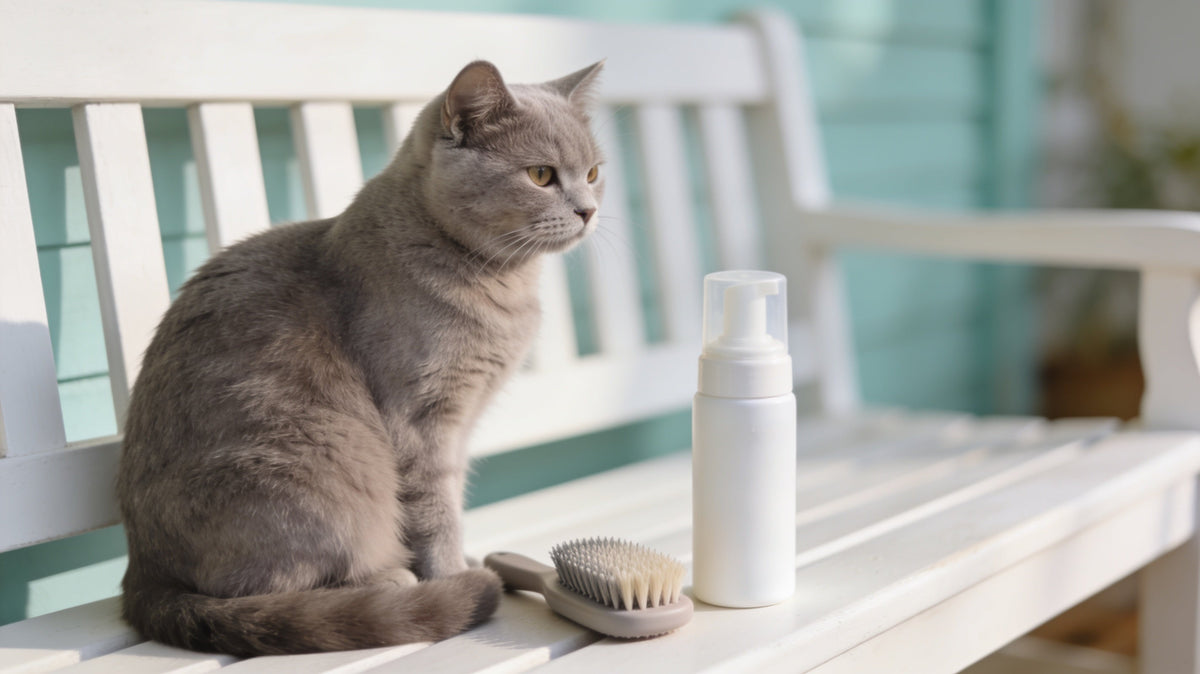
Cat grooming products should avoid or tightly limit essential oils, phenols, salicylates, strong fragrance and ingredients risky if licked, such as zinc oxide and xylitol. Cats process many of these poorly and groom constantly, so leave-on products in particular need cat-specific formulas.
Cat grooming products should avoid or tightly limit essential oils, phenols and phenol-type compounds, salicylate-based ingredients, strong fragrance and anything risky if licked. Cats process many of these substances poorly and groom constantly, so what goes on the coat often ends up being swallowed.
Cats are not small dogs. Their metabolism, grooming habits and sense of smell all call for a more cautious approach to formulation. This guide explains which ingredients brands should avoid or restrict in cat grooming products, and why. If you are building a feline range, our page on pet care third-party manufacturing explains how we approach species-specific formulas.
A note before we start: this is general formulation guidance for grooming products, not veterinary advice. Brands should rely on their manufacturer's safety assessment and seek veterinary input for anything outside routine grooming.
Why cats need different formulas
They process some compounds poorly
Cats have a limited ability to break down certain compounds in the liver, particularly through a pathway known as glucuronidation. Many phenols, some essential oil constituents and salicylates rely on that pathway, so they can build up in a cat's body more readily than in a dog's or a person's.
They groom themselves thoroughly
A cat may spend a large part of its waking day grooming. Anything left on the coat, whether from a spray, a waterless foam or a balm, is likely to be licked off and swallowed.
They have a keen sense of smell
Fragrance that seems light to a person can be overwhelming to a cat. Strong scent can make a cat stressed, reluctant to be handled or eager to groom the product off immediately.
Their skin can absorb what sits on it
Leave-on products remain in contact with the skin for hours. The longer the contact, the more important it is that every ingredient is suitable.
Ingredients to avoid or restrict in cat grooming products
Essential oils
Essential oils are concentrated plant extracts and many contain phenols, terpenes or other compounds that cats handle poorly. Oils frequently flagged as risky for cats include tea tree, eucalyptus, peppermint, wintergreen, clove, cinnamon, citrus oils, pine, pennyroyal, ylang ylang and sweet birch. Tea tree oil in particular is risky for cats and also for dogs at higher concentrations. The safest approach for cat products is to leave essential oils out entirely, or to rely on the manufacturer's safety assessment for any very low-level use.
Phenols and phenol-type compounds
Phenolic disinfectants and phenol-type ingredients have a long history of causing problems in cats. They have no place in a cat grooming product, and brands should also be careful when making home hygiene products intended for areas where cats live, sleep or use a litter tray.
Salicylates
Salicylic acid and salicylate-containing ingredients, including methyl salicylate in wintergreen oil, are best avoided in products for cats because of the same processing limitation.
Insecticidal ingredients meant for dogs
Some ingredients used in dog parasite products are dangerous to cats. Permethrin is the best-known example. Grooming products should not contain insecticidal ingredients at all, as those belong to a separately registered category, but brands should be especially careful never to suggest a dog product can be used on cats.
Heavy fragrance
Even fragrance materials considered acceptable can be a problem at high levels. Cat products should use little or no fragrance. Fragrance-free versions are often the best sellers in feline ranges because owners trust them.
High levels of alcohol
Alcohol-heavy sprays can feel cold and sting, smell strongly and dry the skin. For cats, water-based sprays with gentle conditioning ingredients are a better choice.
Ingredients risky if swallowed
Because cats lick everything, leave-on cat products should avoid ingredients that are concerning when ingested. Zinc oxide, often used in human balms, deserves caution in anything lickable. Propylene glycol is restricted in cat food in some markets because cats are sensitive to it, so many brands choose to avoid it in leave-on cat products too. Xylitol is a known risk for dogs and has no place in any lickable pet product.
Strong cleansing agents and harsh preservatives
Cat skin is delicate, and a harsh cleanser can leave it feeling dry. Mild cleansing systems and well-chosen preservatives used at suitable levels are the norm in good cat formulas.
| Ingredient group | Why it matters for cats | Typical approach in cat products |
|---|---|---|
| Essential oils | Many contain compounds cats process poorly | Leave out, or very low levels only after a safety assessment |
| Phenols and phenol-type compounds | Long-recognised risk for cats | Avoid |
| Salicylates | Processed poorly by cats | Avoid |
| Insecticidal ingredients | Some dog parasite ingredients are dangerous to cats | Never in grooming products |
| Strong fragrance | Stressful and likely to be licked off | Fragrance-free or very light |
| Zinc oxide, propylene glycol, xylitol | Concerns when swallowed | Avoid in leave-on and lickable products |

What a good cat grooming product looks like
Cat products tend to be short and simple. A typical feline range might include:
- A gentle rinse-off shampoo for occasional baths, with a mild cleansing system, little or no fragrance and a thorough rinse-out.
- A waterless or foam cleanser for cats that dislike water, formulated with lickability in mind. Our guide to waterless pet shampoo explains the format.
- A light detangling spray for long-haired breeds, water-based and fragrance-light.
- Gentle wipes or an ear cleanser for routine hygiene, kept to cosmetic cleansing claims.
You can see the formats we offer in our cat care and ear, eye and oral care collections.
How to brief your manufacturer on a cat product
- State clearly that the product is for cats, or for cats and dogs, so the formula is designed for the more sensitive species.
- Ask for an ingredient list and confirm that no essential oils, phenols or salicylates are included unless specifically assessed.
- Request a fragrance-free option alongside any scented version.
- Ask how lickability has been considered for any leave-on product.
- Confirm that the label will carry clear directions and a "for external use" style warning.
- Request samples and test on willing cats, with owners' consent, watching for reluctance or excessive grooming.
If you want a product built from scratch rather than adapted from a ready base, our custom formulation service covers species-specific briefs.
Labelling cat products responsibly
Labels should make it obvious which species a product is for. If a product is only suitable for dogs, say so prominently, and consider adding "not for use on cats" where relevant. Keep claims to grooming language such as "cleanses gently", "freshens" and "helps detangle". Avoid medical claims, and add a sensible instruction to stop use and consult a vet if the cat shows any sign of discomfort. For a wider view on claims, see our guide to labelling pet grooming products.
Frequently asked questions
Are any essential oils safe for cats?
Many essential oils contain compounds cats process poorly, so the cautious approach is to leave them out of cat grooming products or to use only very low levels after a proper safety assessment.
Can I sell one spray for both cats and dogs?
You can, but the formula must be designed around the more sensitive species, which means cat-safe ingredients, light or no fragrance and attention to licking.
Is tea tree oil suitable for pet products?
Tea tree oil is risky for cats and can also be risky for dogs at higher concentrations, so it is best avoided in cat products and used with great care, if at all, in dog products.
What should a cat owner do if a cat reacts to a product?
Stop using the product, rinse it off with plain water if it is safe to do so, and contact a vet for advice.
Building a cat grooming range? Talk to us about pet care third-party manufacturing and cat-suitable formulas.
Related service: Pet grooming third-party manufacturing →
Tell us your idea. An account manager replies within 1 business day.
More from Harrods Insights
Keep reading

Shipping Hotel Amenities from India to China and Hong Kong: Consignee, Broker, Customs Inspection, Documents and Seasonal Planning

Supplying Hotels in Hong Kong and Macau: How the Rules Differ from the Mainland, Safety and Trade Descriptions Law, Labelling and Practical Buying
