
Waterless Pet Shampoo: The Format Explained for Brands
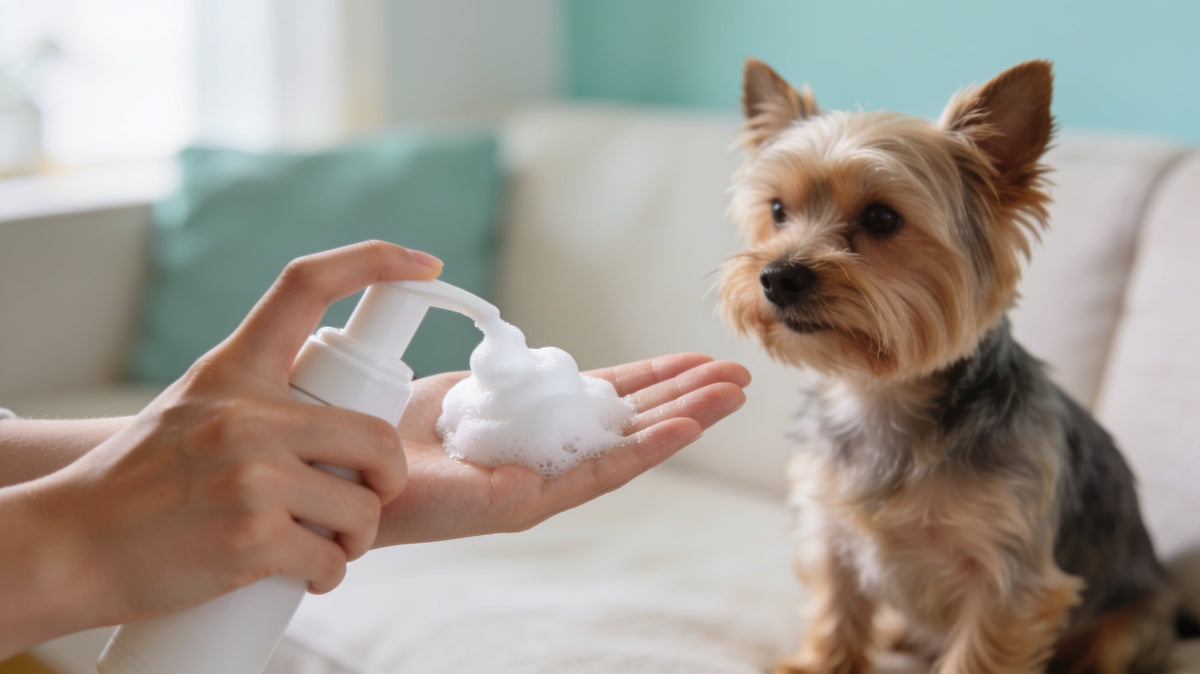
Waterless pet shampoo is a no-rinse foam, spray or mousse that freshens and lightly cleans the coat between baths. Because it stays on the coat and gets licked, it needs mild cleansing, low fragrance and cat-suitable ingredients where relevant.
A waterless pet shampoo is a no-rinse cleanser, usually a foam, spray or mousse, that freshens and lightly cleans the coat between full baths. For brands, it is a useful add-on format, but because it stays on the coat and is often licked, the formula needs more care than a rinse-off shampoo.
Waterless or dry shampoo appeals to owners of cats that hate water, older or nervous dogs, travellers and anyone who wants a quick freshen-up after a muddy walk. This guide explains how the format works, what to look for in a formula and how to position it. For how we develop and produce pet products, see our pet care third-party manufacturing page.
What "waterless" actually means
Waterless shampoos are not dry in the sense of having no water in them. Most are water-based liquids or foams. "Waterless" refers to how they are used: the owner applies the product, works it through the coat and towels or brushes it off, without a full bath or rinse. Powder-style dry shampoos also exist, but foams and sprays are more common in pet care because they are easier to control and less likely to be inhaled.
Common waterless formats
Foam or mousse
Dispensed from a foam pump, the product comes out as a soft foam that is massaged into the coat and towelled off. Foam is easy to place exactly where it is needed, such as paws, chin or rear end, and makes less noise than a spray, which suits cats and nervous dogs.
Spray
A no-rinse spray is misted onto the coat, worked in and brushed or towelled. Sprays cover large areas quickly and suit bigger dogs. A fine-mist sprayer is kinder than a loud jet.
Powder
Powders absorb oil and odour and are brushed out. They can be messy and create dust, so many brands prefer liquid formats for pets.
Pre-moistened wipes
Wipes are a close relative of waterless shampoos and are handy for paws and faces. They are a separate format with their own packaging requirements.
| Format | Best for | Points to consider |
|---|---|---|
| Foam or mousse | Cats, small dogs, spot cleaning | Quiet, precise, needs a good foam pump |
| No-rinse spray | Medium and large dogs, full-coat freshen-up | Fast coverage, sprayer noise and mist quality matter |
| Powder | Oily coats, some groomer uses | Dust and mess, less popular with owners |
| Wipes | Paws, face, quick clean-ups on walks | Separate packaging and moisture-retention needs |

Why waterless formulas need extra care
A rinse-off shampoo spends a short time on the skin before being washed away. A waterless product stays on the coat until the animal is towelled and brushed, and some of it inevitably remains. Animals then lick their coats, so the formula must be designed with that in mind.
Formulation priorities
- Mild cleansing: gentle cleansing agents at levels that do not need rinsing to avoid residue or stickiness.
- Light conditioning: so the coat feels soft and is easy to brush once dry.
- Low or no fragrance: especially for cat versions; strong fragrance encourages licking and can stress the animal.
- Cat-suitable ingredients: no essential oils, phenols or salicylates in cat products. Our guide to ingredients to avoid in cat grooming products explains why.
- Lickability: avoid ingredients that are a concern if swallowed. Xylitol, for example, has no place in any pet product that may be licked.
- Low alcohol: high alcohol levels dry the skin, sting and smell strong.
- Robust preservation: waterless formulas are often water-based and are handled a lot, so a suitable preservative system is essential.
- pH suited to the species: as with any pet product applied to skin.
How to position a waterless shampoo
Waterless shampoo works best as a between-bath product rather than a replacement for regular washing. Clear, honest positioning builds trust:
- "Freshens the coat between baths."
- "No-rinse cleanser for quick clean-ups."
- "Ideal for paws and muzzles after walks."
- "Gentle foam for pets who dislike bath time."
Avoid suggesting the product removes parasites, treats skin conditions or replaces veterinary care. Those claims change how a product is regulated. See our guide to labelling pet grooming products for detail.
Where waterless shampoo fits in a range
Waterless shampoo pairs naturally with a standard shampoo and a deodorising spray. Together they cover bath day, quick clean-ups and freshening. Many brands also offer it in a travel size or as part of a gift set. Explore the wider format range in our pet care collection and see related freshening products in our deodorising sprays collection.
Ideas for range building
- A dog version and a separate, fragrance-free cat version.
- A paw-focused foam for after walks.
- A groomer-size refill alongside the retail pack.
- A travel kit with waterless shampoo, a detangling spray and a paw balm.
Packaging for waterless shampoos
The pack strongly affects the experience. Foam pumps need to produce a consistent, rich foam from the formula you choose, so the two should be tested together. Spray bottles need a fine, quiet mist. In both cases, check leak resistance for e-commerce and make sure the directions explain how much to use. Our custom packaging page explains component options.
Common mistakes with waterless products
- Treating it as a rinse-off shampoo without water. Simply leaving out the rinse step from a standard shampoo can leave a sticky, dull coat. The formula must be designed as a leave-on product from the start.
- Too much fragrance. A scent that seems pleasant in the bottle can be overpowering once it sits on a warm coat all day, and it encourages the animal to lick.
- Unclear dosing. Owners tend to over-apply. Say how many pumps or sprays suit a small, medium or large animal.
- One product for every species. A dog formula with essential oils is not suitable for cats. Offer separate versions and label them clearly.
- Overpromising. Calling it a full bath replacement sets the wrong expectation and invites poor reviews.
Testing before launch
- Request samples of the base formula in the intended pack.
- Test on different coat types: short, long, double and curly.
- Check how the coat looks and feels once towelled and dry, and again the next day.
- Watch for stickiness, flaking or residue.
- Note how animals respond to the sound and smell during application.
- Confirm the foam or spray performs consistently from the first dose to the last.
We provide samples before any order. Ready formulas start from 500 units per product, with custom fragrance, colour and packaging available. Details are on our ready-to-market page.
Frequently asked questions
Is waterless shampoo as good as a bath?
It is designed for freshening and light cleaning between baths, not as a full replacement. Regular baths with a rinse-off shampoo remain part of a good routine.
Is waterless shampoo safe for cats?
It can be, if the formula is designed for cats: no essential oils, phenols or salicylates, little or no fragrance and attention to what may be licked.
Foam or spray: which should a brand launch first?
Foam suits cats, small dogs and spot cleaning, while sprays suit larger dogs. Many brands start with a foam because it is quiet and easy to control.
Can waterless shampoo be sold for professional groomers?
Yes. Groomers use no-rinse products for quick tidy-ups and finishing, and larger refill packs are a common addition to a retail range.
Adding a no-rinse product to your range? Talk to us about pet care third-party manufacturing.
Related service: Pet grooming third-party manufacturing →
Tell us your idea. An account manager replies within 1 business day.
More from Harrods Insights
Keep reading

Shipping Hotel Amenities from India to China and Hong Kong: Consignee, Broker, Customs Inspection, Documents and Seasonal Planning

Supplying Hotels in Hong Kong and Macau: How the Rules Differ from the Mainland, Safety and Trade Descriptions Law, Labelling and Practical Buying
