
Private Label Serum Manufacturing: Vitamin C, Niacinamide, Hyaluronic Acid and Retinol Serums
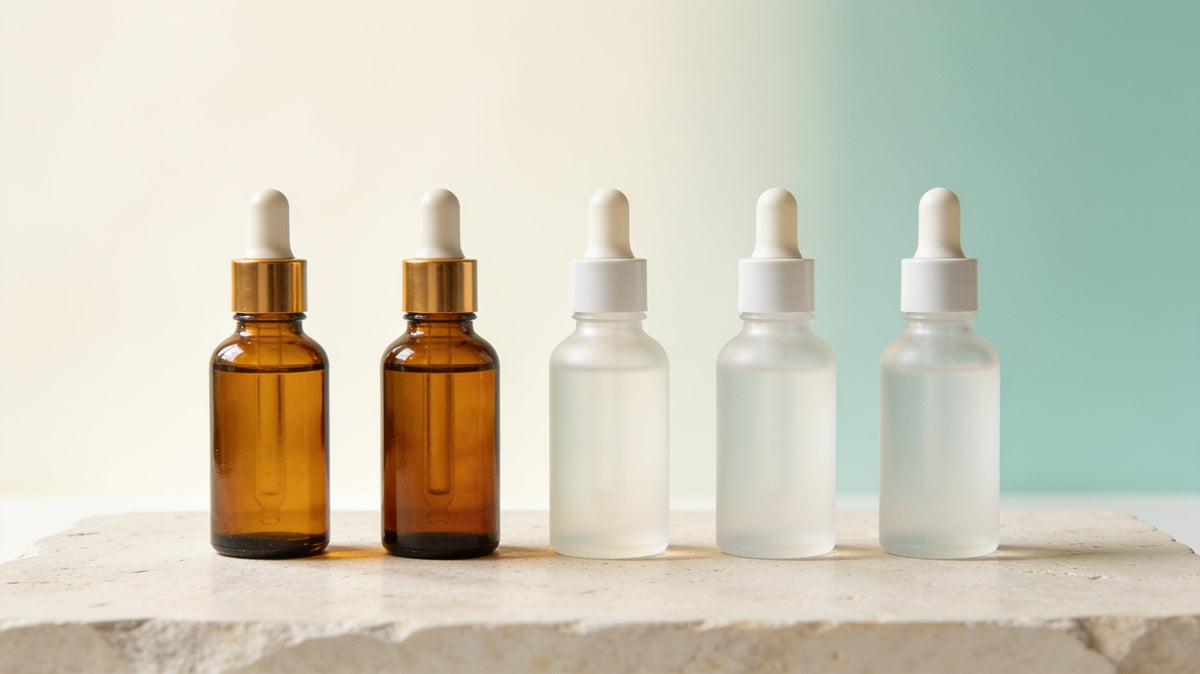
A private label serum is built around one or two actives in a base that keeps them stable, delivered in packaging that protects them from air and light. Vitamin C and retinol need the most protection; niacinamide and hyaluronic acid are more forgiving. Ready serum formulas at Harrods Health start from 500 units per product, with samples before you order.
Private label serum manufacturing means a factory supplies a proven serum formula, fills it into your chosen packaging and labels it under your brand. The decisions that matter most are the active and its concentration, the base that keeps it stable, and packaging that shields sensitive actives from air and light.
Serums are usually the product a new skincare brand is judged on. They carry the active ingredient story, they sit at the top of the price ladder and they are the item customers reorder or abandon. As a skincare manufacturer in India, Harrods Health produces vitamin C, niacinamide, hyaluronic acid, retinol and bakuchiol serums for D2C founders, marketplace sellers, salon and dermatologist-led brands, retailers' own labels and importers. This guide explains what sits behind each serum type, so you can brief a manufacturer with confidence.
What makes a serum different from other skincare
A serum is a lightweight, concentrated leave-on product designed to deliver an active ingredient in a small dose, usually a few drops. Compared with a moisturiser, it typically has less oil, a thinner texture and a higher share of the active in the formula. That concentration is what makes serums attractive to customers, and it is also what makes them technically demanding: the more active you load into a formula, the more you must think about pH, solubility, oxidation and skin comfort.
Most serums fall into three base types:
- Water-based (aqueous) serums – clear or slightly hazy gels and fluids; the natural home for niacinamide and hyaluronic acid.
- Anhydrous or oil-based serums – no water, which helps protect water-sensitive actives such as some retinoids and certain vitamin C derivatives.
- Emulsion serums – light milky textures that can carry both oil- and water-soluble ingredients.
Formulation basics by active
Vitamin C serums
Vitamin C is the serum most brands want and the one that needs the most care. Pure L-ascorbic acid is effective in cosmetic use but oxidises readily once exposed to water, air, light and heat; it is commonly formulated at a low pH and in concentrations often quoted in the 10–20% range. Oxidation usually shows up as the serum turning yellow, then orange or brown.
Many brands instead choose a vitamin C derivative, such as sodium ascorbyl phosphate, magnesium ascorbyl phosphate, ascorbyl glucoside or ethyl ascorbic acid. Derivatives are generally more stable and work at a skin-friendlier pH, though the claim language must name the derivative accurately. Antioxidant partners such as vitamin E and ferulic acid are often added to support the formula.
Niacinamide serums
Niacinamide (vitamin B3) is water-soluble, comparatively stable and compatible with most other ingredients, which makes it a reliable first serum for a new range. It is commonly used at 2–5%, and sometimes up to 10%. Higher percentages sell well on a label, but they can feel less comfortable on sensitive skin, so the right level depends on your customer, not only on the headline number. Zinc PCA is a frequent partner in oil-control positioning; browse our niacinamide formulas for ready options.
Hyaluronic acid serums
Hyaluronic acid (usually as sodium hyaluronate) is a humectant that holds water at the skin surface, giving a plumping, hydrated feel. It is used at low percentages because even a small amount thickens a formula. Many brands combine different molecular weights for a layered hydration story, often with glycerin, panthenol or ceramides. Hyaluronic acid serums are forgiving on stability but need a sound preservative system, since water-rich gels are prone to microbial growth. Our hyaluronic acid formulas include several textures.
Retinol and bakuchiol serums
Retinol is sensitive to light and oxygen and can cause dryness or irritation, so formulations commonly use low concentrations, often well below 1%, sometimes in encapsulated form, with soothing ingredients alongside. Concentration rules differ by market: the EU, for example, has introduced limits on retinol and its esters in cosmetics, so export brands must check the destination's current rules. Bakuchiol is a plant-derived ingredient often positioned as a gentler alternative, and it can be used on its own or with retinol. Explore our retinol and bakuchiol formulas.

Stability: the question every serum brief must answer
A serum that looks perfect on day one can change colour, separate or lose its scent within weeks if the formula and pack are not matched. Before you commit to a production run, ask how the formula behaves over time. A manufacturer should be able to explain:
- the stability work behind the formula, including storage at elevated temperatures and over a longer real-time period;
- whether colour change is expected and acceptable (some vitamin C serums darken slightly by nature);
- which packaging the formula was checked in, because results in glass do not automatically apply to plastic;
- how preservative efficacy has been confirmed.
Our guide to stability and compatibility testing for skincare sets out what to ask for in detail.
Packaging that protects the active
Packaging is part of the formula's protection system, not just its presentation.
| Serum type | Common packaging | Why |
|---|---|---|
| Vitamin C (L-ascorbic acid) | Amber or opaque dropper; airless pump | Limits light and air exposure that drive oxidation |
| Retinol | Opaque airless pump | Light- and oxygen-sensitive; airless avoids repeated exposure |
| Niacinamide | Dropper or pump bottle | Stable active; packaging chosen for dosing and brand look |
| Hyaluronic acid | Dropper or pump | Gel texture doses well; hygiene favours pumps for larger sizes |
| Face oils and bakuchiol | Amber or frosted dropper | Oils can be light-sensitive; droppers suit small doses |
Glass droppers look premium but let air in every time the bottle is opened. Airless pumps reduce air exposure and contamination risk, and are a sensible choice for the most sensitive actives. Compare formats in our dropper bottle and airless ranges.
Ready formula or custom serum?
A ready formula from an existing library is the quickest route to market. It has already been developed and produced before, so the lead time is mainly about packaging and artwork. Harrods Health's serum library covers vitamin C, niacinamide, hyaluronic acid, retinol and bakuchiol, and ready formulas start from 500 units per product. You can still adjust fragrance, colour, texture and packaging within a ready formula.
A custom serum makes sense when you need a specific active combination, a distinctive texture or a positioning your competitors cannot copy. It takes longer, because the formula must be developed, sampled, refined and checked for stability before the first batch. Read more on custom formulation, or the broader trade-offs in our comparison of private label vs white label vs OEM vs ODM.
MOQ and how serum orders are structured
Minimum order quantity is usually counted per product, where a product means one formula, one size and one packaging specification. For ready serum formulas, Harrods Health starts from 500 units per product. Custom formulas, special actives and decorated packaging can carry their own minimums, because raw materials and components are bought in set quantities. Your account manager will explain how each quote is built.
A practical approach for a first launch is to order two or three serums at the minimum, prove demand, then increase batch sizes for the winners. Samples are supplied before you order, so you can test texture, scent and pack fit with real users.
Claims on serum labels
Serum marketing leans heavily on percentages and active names, so claims need discipline. If you print "10% niacinamide", the formula must contain that amount. Keep claims cosmetic: words like "brightening appearance", "hydrating", "smoothing" and "helps skin look more even" are typical, while claims to treat skin conditions belong to medicines. Formulas can be supplied as dermatologically tested, with test reports on request.
A simple serum brief checklist
- Target customer and skin type.
- Hero active and the claim you want to make.
- Ready formula or custom development.
- Texture, fragrance (or fragrance-free) and colour.
- Packaging type, size and decoration.
- Target markets, so the formula and label suit local rules.
- Launch quantity per product and reorder expectations.
Frequently asked questions
What is the minimum order for a private label serum?
Ready serum formulas start from 500 units per product, where a product is one formula, one size and one packaging specification. Custom formulas and decorated packaging are quoted per project because raw materials and components carry their own minimums.
Which serum is easiest to launch first?
Niacinamide and hyaluronic acid serums are usually the most forgiving because both actives are comparatively stable and compatible with many ingredients. Vitamin C and retinol need more careful formulation and protective packaging.
Why does my vitamin C serum change colour?
L-ascorbic acid oxidises when exposed to air, light, heat and water, which turns the serum yellow and then darker. Derivatives, antioxidant partners, the right pH and opaque or airless packaging all help slow this change.
Can I get samples before placing a serum order?
Yes. Samples are provided before you order so you can assess texture, scent and packaging fit, and formulas can be supplied as dermatologically tested with reports on request.
Ready to brief your serum range? Start with our private label skincare manufacturing team or browse the serum formula library.
Related service: Skincare manufacturing for your brand →
Tell us your idea. An account manager replies within 1 business day.
More from Harrods Insights
Keep reading

Shipping Hotel Amenities from India to China and Hong Kong: Consignee, Broker, Customs Inspection, Documents and Seasonal Planning

Supplying Hotels in Hong Kong and Macau: How the Rules Differ from the Mainland, Safety and Trade Descriptions Law, Labelling and Practical Buying
