
Spa and Wellness Amenities for South-East Asian Resorts: Massage Oils, Scrubs and Regional Botanical Blends
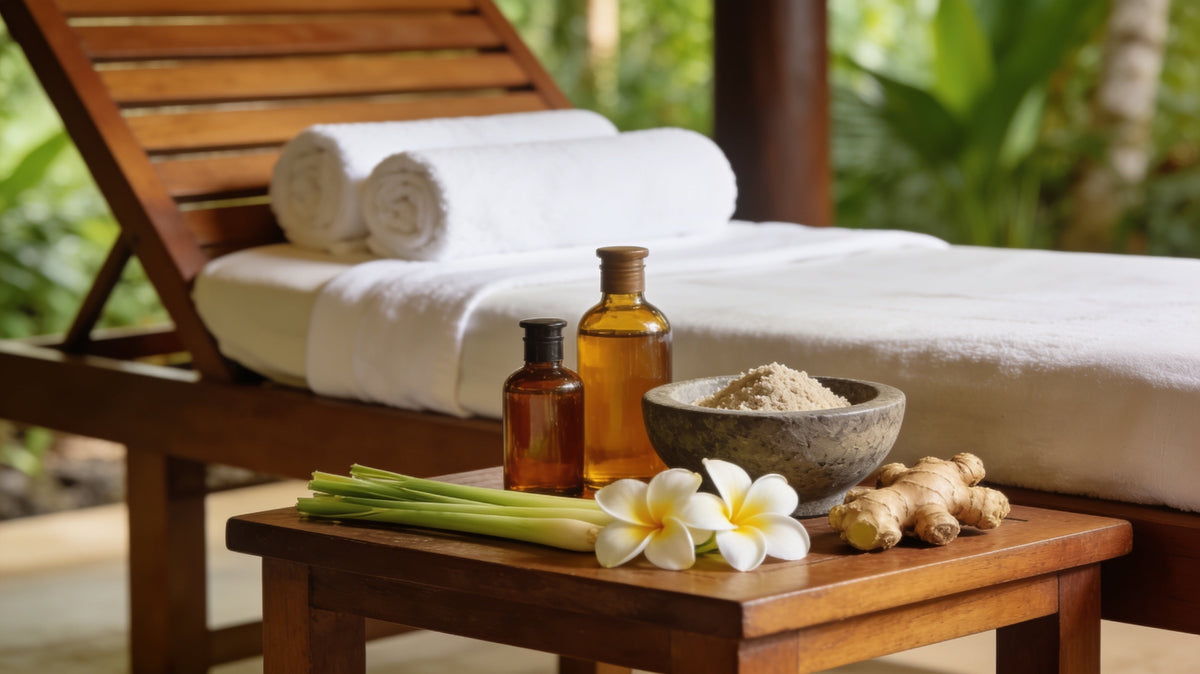
Use regional botanicals to set the sensory story, but keep claims cosmetic and describe feel and fragrance rather than benefits to health. Every fragrance should carry IFRA conformity for its product type, and formulas need stability data for tropical heat.
Spa and wellness amenities for South-East Asian resorts work best when regional botanicals such as lemongrass, pandan, ginger, frangipani and coconut set the sensory story, while the claims stay cosmetic and every fragrance conforms to IFRA standards. Massage oils, scrubs, after-sun gels and aromatherapy blends should describe how they feel and smell, not what they cure.
A resort spa in Ubud, Langkawi or Koh Samui is often where guests form their memory of the stay. The products on the treatment bed and in the villa bathroom carry that memory home. For operators building a range with a hotel amenities supplier for South-East Asian hotels, the challenge is to capture the region's scent palette in formulas that are stable in tropical heat, safe on skin and compliant with cosmetic rules in each market. For the commercial model behind private-label spa products, see our spa and resort amenity range guide.
The core spa range
- Massage oils: the workhorse of the treatment room. Carrier oils determine glide and absorption; essential oils and fragrance set the mood. Harrods Health is a massage oil manufacturer for spas and resorts.
- Body scrubs: exfoliating particles in an oil or cream base, used before wraps and massages.
- After-sun gels and lotions: cooling, hydrating textures for guests returning from the beach or pool.
- Aromatherapy blends: fragranced oils used in treatments or as part of a signature ritual.
- Room-side extensions: shower gel, body lotion, shampoo and conditioner in the same scent, carrying the spa into the room.
Regional botanicals and how to describe them
| Botanical | Sensory character | Formats it suits | Labelling note |
|---|---|---|---|
| Lemongrass | Fresh, green, citrus-like | Massage oil, shower gel, hand wash | Contains fragrance allergens; keep within IFRA limits |
| Pandan | Soft, green, sweet and nutty | Body lotion, scrub, signature scent | Often a fragrance accord; describe as "pandan-inspired" unless an extract is used |
| Ginger | Warm, spicy, bright | Massage oil, scrub, aromatherapy blend | "Warming sensation" is a sensory claim; avoid therapeutic wording |
| Frangipani | Creamy, floral, tropical | Body lotion, shower gel, villa diffuser scent | Usually a fragrance accord; say "frangipani scent" |
| Coconut | Milky, soft, comforting | Massage oil (as carrier), scrub, after-sun | Distinguish coconut oil as ingredient from coconut fragrance |
Honesty about what is an ingredient and what is a fragrance accord matters. If a product contains real ginger extract, say so. If the ginger character comes from fragrance, describe the scent, not the plant. Regulators and guests both read labels closely.

Keeping claims cosmetic
Under the ASEAN Cosmetic Directive, a cosmetic is applied to the external body to cleanse, perfume, change appearance, protect or keep it in good condition. Claims that a product treats or prevents a disease, relieves pain or acts on the body's functions can push it into another regulatory category.
Wording that usually works
- "Leaves skin feeling soft and nourished"
- "A warming massage oil with ginger and lemongrass"
- "Cooling after-sun gel to refresh skin after a day outdoors"
- "An uplifting aroma for the treatment room"
Wording to avoid or substantiate carefully
- "Relieves muscle and joint pain"
- "Treats sunburn" or "heals skin"
- "Detoxifies the body" or "boosts immunity"
- "Hypoallergenic" or "for sensitive skin" without supporting tests
Where formulas are supplied as dermatologically tested, test reports are available on request so the claim can be supported in the product information file. For after-sun products, never imply sun protection; SPF claims belong to sunscreens and need dedicated testing.
IFRA and fragrance safety
The International Fragrance Association publishes standards that restrict or limit certain fragrance materials by product type. A massage oil left on the skin is treated differently from a rinse-off shower gel, so the same fragrance may be acceptable at one level in a shower gel and lower in a body oil.
- Ask for an IFRA conformity certificate for each fragrance at its use level and product category.
- Check allergen declarations; many botanicals contain fragrance allergens that must appear on the label above set thresholds.
- Watch citrus and phototoxicity in leave-on products, especially after-sun and massage oils for guests heading back into the sun.
- Screen the full formula against the ASEAN ingredient annexes.
Formulating for tropical conditions
Heat and humidity test every spa product. Oils can oxidise and change odour, scrubs can separate, and gels can thin. Specify:
- antioxidant protection and stability data for oils at elevated temperature;
- packaging that limits light and air, such as amber or opaque bottles and pumps;
- preservative systems suited to wet spa environments for water-based products;
- back-bar sizes the spa will finish before quality drifts.
Our guide to toiletries for tropical humidity goes deeper on testing and packaging.
Back-bar and retail packs
Spa products live two lives. In the treatment room, therapists need back-bar sizes that are quick to dispense, easy to clean and finished before quality drifts. On the retail shelf, the same product must look and label like a finished consumer item.
- Back-bar: pump bottles or larger refill containers, labelled for professional use, with batch and date clearly visible to the spa team.
- Retail: smaller branded bottles with full consumer labelling in the local language, notified as cosmetics in the market where they are sold.
- Room amenities: shower gel, body lotion and hand wash in minis, tubes or dispensers carrying the same scent as the spa.
Scrubs in particular
Choose exfoliants that suit the region's sustainability expectations, such as sugar, salt or natural particles, rather than plastic microbeads. Salt scrubs can draw moisture in humid stores, so specify airtight jars and dry storage. Oil-based scrubs separate in heat; a stirring note in the therapist guide prevents complaints.
Building a signature ritual
- Choose one hero scent, for example lemongrass and ginger, or frangipani and coconut.
- Develop it as a signature scent across massage oil, shower gel, body lotion and hand wash.
- Print the resort's branding on every format, from treatment-room bottles to 5 L refills.
- Offer retail sizes so guests can take the ritual home.
Training the spa team
Give therapists a short product guide for each item: how much to dispense, how to store opened bottles, what the scent is built from and the approved words to describe it to guests. Consistent language in the treatment room keeps verbal claims as careful as the printed ones, which matters as much in a Koh Samui spa (see Thailand) as anywhere else.
Halal certification is available for resorts in Malaysia and Indonesia or anywhere guests expect it. Minimum order quantities are quoted per item.
Frequently asked questions
Can a massage oil say it relieves muscle pain?
Not as a cosmetic. Claims about treating pain or medical conditions can move a product out of the cosmetic category. Describe the sensory experience and skin feel instead, such as warming, soothing to the senses or leaves skin soft.
Are essential oils safe in body products for resort guests?
Used within IFRA limits and assessed for safety, yes. Some essential oils contain allergens or are restricted, and citrus oils can be photosensitising, so the full formula should be checked by the manufacturer and safety assessor.
Can you match a resort's signature scent across spa and room amenities?
Yes. We develop signature scents and can carry one fragrance through massage oil, shower gel, body lotion and hand wash, adjusted for each base.
What makes an after-sun product different from a sunscreen?
An after-sun is a cooling, moisturising cosmetic used after sun exposure. It does not protect from UV. A sunscreen carries UV filters and SPF claims that need specific testing, so the two should never be confused on a label.
Designing a spa range? See our massage oil manufacturing capability or talk to us about hotel amenities for South-East Asian resorts.
Related service: Hotel amenities supplier for South-East Asian hotels →
Tell us your idea. An account manager replies within 1 business day.
More from Harrods Insights
Keep reading
Shipping Hotel Amenities from India to China and Hong Kong: Consignee, Broker, Customs Inspection, Documents and Seasonal Planning

Supplying Hotels in Hong Kong and Macau: How the Rules Differ from the Mainland, Safety and Trade Descriptions Law, Labelling and Practical Buying
