
Hotel Toiletries in Tropical Humidity: Keeping Amenities Stable in Coastal and Equatorial Climates
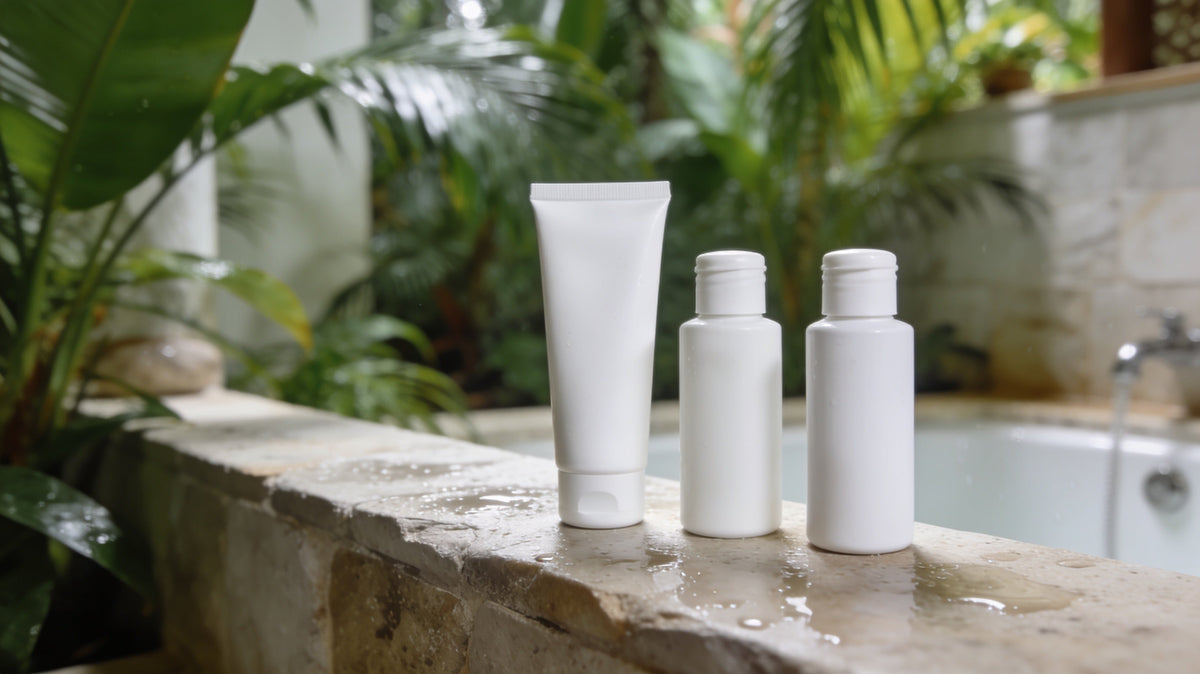
Humidity, not only heat, is the main risk for hotel toiletries in coastal and equatorial climates. It raises contamination and mould risk and damages labels and cartons. Choose challenge-tested formulas, well-sealed packs and moisture-resistant labels, and keep stock dry, ventilated and rotated.
In coastal and equatorial climates the main threat to hotel toiletries is not only heat but constant humidity, which raises the risk of microbial contamination, mould, label damage and seal failure. Robust preservation, well-sealed packaging, moisture-resistant labels and dry, ventilated storage keep amenities stable from delivery to the last guest.
Beach resorts on the Indian Ocean coast, island hotels and city properties near the equator all share one condition: warm, wet air for much of the year. A bottle of lotion that performs perfectly in an air-conditioned showroom can behave differently after weeks in a coastal storeroom. As a hotel amenities supplier for African hotels, we design and pack amenities with these conditions in mind. Our earlier guide to hot-climate stability and storage deals with dry desert heat; this article focuses on humidity.
Desert heat and tropical humidity are different problems
| Factor | Hot, dry climates | Hot, humid climates |
|---|---|---|
| Main stress | High temperature and strong sun | Heat combined with constant moisture |
| Product risk | Thinning, separation, fragrance change | Microbial growth, mould, separation |
| Packaging risk | Warping, fading of print | Soft cartons, lifting labels, seal and closure issues |
| Storage priority | Shade and temperature control | Ventilation, dryness and stock rotation |
Microbial risk and preservative robustness
Water-based products such as shampoo, shower gel, lotion and hand wash need an effective preservative system. In humid climates that system is tested harder, because bottles are opened with wet hands, pumps draw in moist air and dispensers sit in steamy bathrooms for days.
- Challenge testing. Ask whether the formula has passed a preservative efficacy test, which checks how well it resists deliberate contamination.
- Broad-spectrum protection. The preservative system should cover bacteria, yeasts and moulds, not just one group.
- In-use thinking. Dispensers and refills face more contamination than sealed minis. Formulas for bulk use need to be robust enough for repeated opening.
- Do not dilute. Adding water to stretch a refill weakens the preservative and invites spoilage.
Every batch we release comes with a certificate of analysis, and formulas can be supplied as dermatologically tested, with test reports on request. Our quality certifications page sets out the facility credentials behind this.

Emulsions, viscosity and fragrance in the heat
Body lotions and conditioners are emulsions, mixtures of oil and water held together. Repeated warming and cooling, for example between a hot storeroom by day and a cooler night, can thin them or, in poorly balanced formulas, cause separation. Shampoos and gels may lose some thickness at high temperature and recover as they cool. Fragrance can also shift slightly over time in heat.
Ask your manufacturer for stability data at elevated temperature and cycling conditions, and pick formulas that have been developed for warm markets rather than adapted afterwards. If a lotion arrives thinner than the approved sample, record the batch and storage conditions before using it, so the cause can be investigated rather than guessed.
Packaging seals and closures
- Minis and tubes. Check that flip-top or screw caps close firmly and that tubes are well crimped. An induction seal under the cap adds protection before first use.
- Sachets. Seal quality matters more in humidity. A good laminate and consistent heat-seal reduce leaks and moisture ingress.
- Dispenser bottles. Pumps should close or lock between uses, and bottles should be cleaned and dried before every refill, never topped up.
- 5 L refills. Keep caps tight after each use and avoid storing opened refills for long periods.
Labels and cartons that survive the bathroom
Humidity is hard on paper. Uncoated labels can wrinkle, lift or grow mould, and corrugated cartons lose strength when they absorb moisture. Practical fixes include:
- Film labels or direct print on bottles and tubes
- Varnish or laminate on paper labels
- Batch and expiry details printed or coded so they stay legible when wet
- Strong outer cartons, stretch-wrapped pallets and moisture-barrier liners for sea freight
Shipping by sea adds its own humidity, as containers can collect condensation on long voyages. Our fulfilment and export team can advise on export packing for coastal routes.
Storage rules for coastal and island properties
- Keep cartons sealed until the stock is needed.
- Store on pallets or shelves, never directly on the floor.
- Avoid external walls, sea-facing rooms, laundries and boiler areas.
- Ventilate or dehumidify the storeroom, and keep it shaded.
- Rotate stock first-expiry, first-out, and check dates at each count.
- Inspect a sample from older stock for odour, colour and texture before issuing it.
Properties in Mauritius, Zanzibar and along the East African coast face these conditions year-round. See our pages for hotel amenities in Mauritius and hotel amenities in Tanzania for local notes.
Housekeeping routines in humid bathrooms
Housekeeping practice decides whether a well-made product stays in good condition in the room. In humid climates, a few routines make a noticeable difference:
- Wipe dispenser nozzles and the area around pumps daily, so residue does not build up and grow mould.
- Keep minis on a dry shelf or tray rather than on the wet edge of a bath or shower tray.
- Replace any bottle that has been left open, shows separation or smells unusual, and report it with the batch number.
- Close pumps and caps after cleaning, and keep the bathroom ventilated between stays where possible.
- Train staff to recognise early signs of spoilage, such as a change in colour, odour or texture.
Questions to ask your manufacturer
- Has each formula passed a preservative efficacy test?
- What stability testing has been done at high temperature and under temperature cycling?
- Which label materials are recommended for wet bathrooms?
- How are sachets sealed, and how is seal strength checked?
- What shelf life and storage guidance applies to each item?
- Will each batch ship with a certificate of analysis?
Clear answers to these questions, in writing, are a good sign that the range has been designed for the climate rather than simply shipped into it.
Choosing a humidity-ready range
For most coastal properties, a short, well-preserved range in sealed formats, with moisture-resistant labelling and a disciplined storeroom, will outperform a long range bought on scent alone. We manufacture hotel toiletries including shampoo, conditioner, shower gel, 2-in-1, body lotion and hand wash in minis, tubes, sachets, dispenser bottles and 5 L refills, printed with your hotel branding. MOQ is quoted per item.
Frequently asked questions
Why do hotel toiletries go off faster on the coast?
Warm, humid air encourages microbial growth, especially in dispensers that are opened often or topped up. Humidity also softens cartons, lifts paper labels and can affect seals, while repeated warming and cooling can thin or separate some lotions.
How should we store amenities in a humid climate?
Keep cartons sealed until use, on pallets or shelves off the floor, away from external walls, laundries and boiler rooms. Ventilate or dehumidify the storeroom and rotate stock so the earliest expiry is used first.
Are paper labels suitable for tropical hotels?
They can be, with a protective varnish or laminate, but film labels or direct print on the bottle usually hold up better in wet bathrooms and humid stores. Ask for label materials tested for wet handling.
Is this different from storing toiletries in desert heat?
Yes. Desert climates are mainly about high heat and sun exposure; tropical climates add constant moisture, which raises mould and contamination risk. Packaging, preservation and storage need to address both heat and humidity.
Running a coastal or island property? Explore our hotel amenities for African hotels and ask for humidity-ready samples.
Related service: Hotel amenities supplier for African hotels →
Tell us your idea. An account manager replies within 1 business day.
More from Harrods Insights
Keep reading
Multilingual Labelling for Hotel Toiletries in South-East Asia: Languages, Small-Pack Layout and Halal Logo Rules

Sustainable Hotel Amenities in Singapore and South-East Asia: Refill Systems, PCR Plastic and Substantiating Green Claims