Dropper Bottles for Serums and Oils: Glass Types, Pipettes, Teats and Dosing
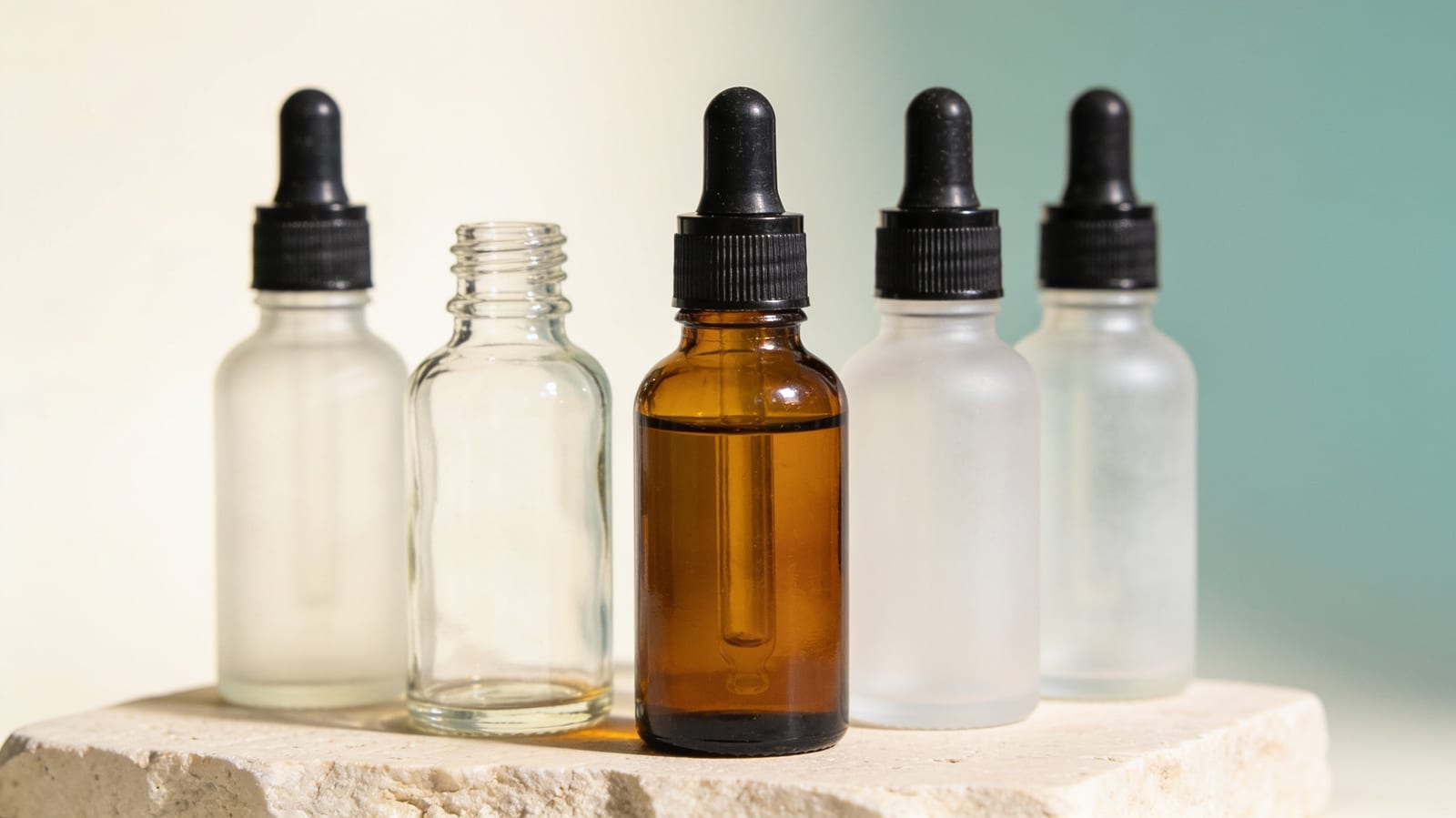
A dropper bottle combines a glass container, a pipette, a rubber or silicone teat and a closure collar. Amber glass helps protect light-sensitive formulas, and teat material must be checked against oils and solvents because some swell or degrade.
A dropper bottle is a glass bottle fitted with a pipette, a squeezable teat and a collar that screws onto the neck. Choose amber or opaque-coated glass for light-sensitive formulas, and always test the teat material with your formula, because oils, essential oils and some solvents can make teats swell, harden or leach.
Dropper bottles are the visual shorthand for a concentrated serum or face oil, which is why they appear in so many ranges. They are also a precise, inexpensive dosing system when specified properly. As a cosmetic packaging manufacturer in India, we supply dropper bottles empty or filled, and this guide explains the choices that matter. For broader context, see our skincare packaging guide.
Anatomy of a dropper bottle
- Bottle – usually glass, sometimes PET for travel or children's products.
- Pipette – a glass or plastic tube that draws and releases liquid.
- Teat (bulb) – the squeezable top, typically rubber or silicone.
- Collar or cap – holds the teat and pipette and screws onto the bottle neck.
- Optional extras – push-button droppers, child-resistant collars, tamper-evident rings and orifice reducers.
Glass types: flint, amber and frosted
| Glass finish | Look | Light protection | Typical use |
|---|---|---|---|
| Flint (clear) | Shows the formula's colour and clarity | Lowest | Stable formulas, coloured oils, products sold in cartons |
| Amber | Warm brown, apothecary feel | Good protection against UV and some visible light | Essential-oil blends, botanical and light-sensitive actives |
| Frosted | Soft, matt, diffused | Limited; frosting scatters light but does not block it | Premium serums where appearance matters |
| Coloured or coated | Opaque or tinted (spray-coated, for example) | Depends on the coating | Brand-defining colour; very light-sensitive formulas |
Frosted glass is created by acid etching or a frosted coating. It looks premium but should not be relied on as light protection unless your stability data supports it. If light sensitivity is a concern, use amber or opaque-coated glass and a carton.
Pipettes: glass vs plastic, and tip shapes
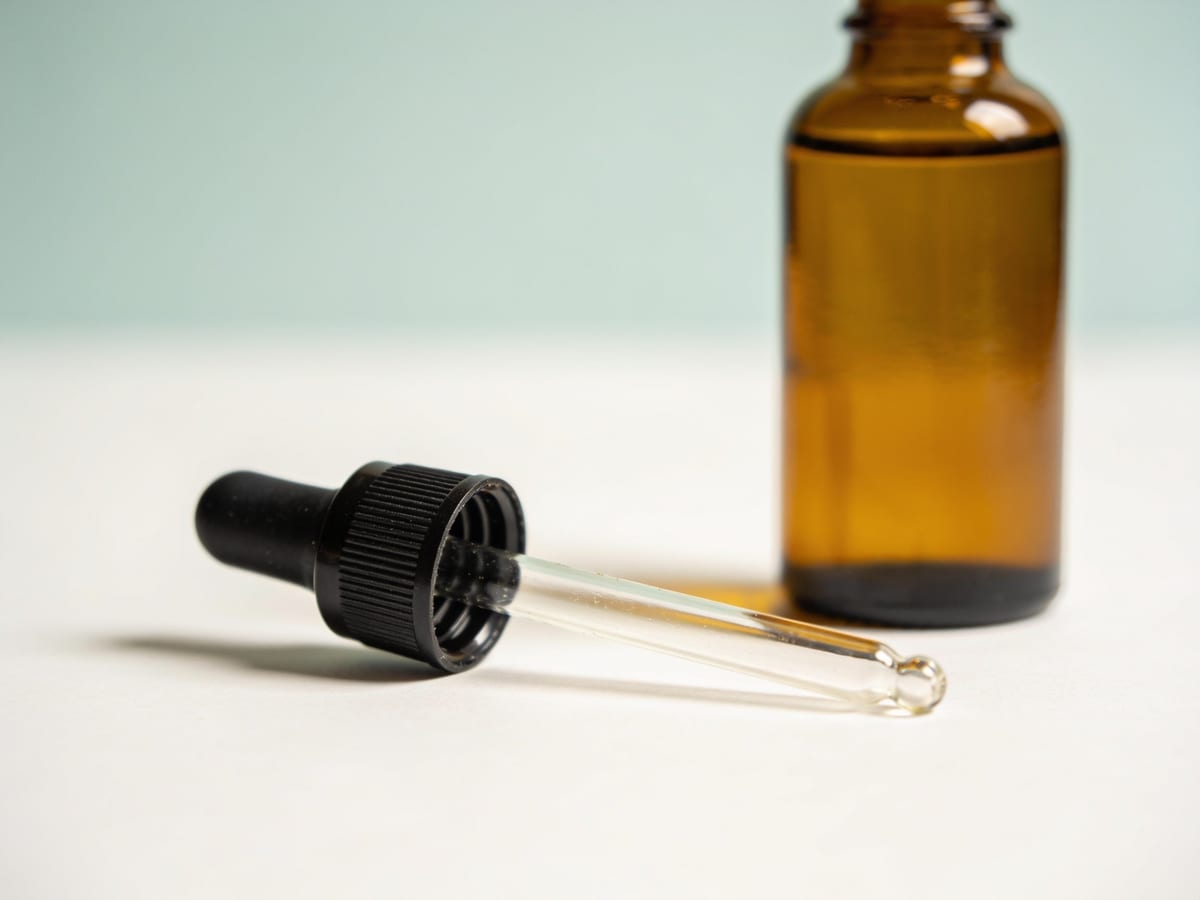
Glass pipettes are inert with most cosmetic formulas and feel premium. Plastic pipettes are lighter and less likely to break, which some brands prefer for travel sizes and children's products. Tip options include:
- Straight tip – the standard, giving a round drop.
- Bent or angled tip – easier to apply directly to the skin or scalp.
- Ball or bulb tip – a rounded end for gentle direct application.
- Graduated pipette – printed or moulded markings for measured dosing.
Pipette length must suit the bottle height. Too short and users cannot reach the last of the product; too long and the pipette hits the base, which can prevent the collar from closing.
Teats: rubber vs silicone and why it matters
The teat is the part most likely to interact with your formula. Natural rubber, synthetic rubbers such as nitrile, and silicone each behave differently:
- Silicone is widely used and generally stable, but some silicone-based formulas and certain oils may cause swelling.
- Nitrile and other synthetic rubbers can offer good resistance to some oils.
- Natural rubber is soft and responsive but may be less suitable for oil-heavy or solvent-rich formulas.
Essential oils, high fragrance loads, alcohol and certain esters are the most common causes of teat swelling, tackiness, cracking or discolouration. The only reliable answer is to store filled samples with the teat in contact with the formula, ideally inverted and under warm conditions, and inspect them over time. Our compatibility testing guide explains the process.
Closures and collars
Collars are usually plastic, often with a metallised, coated or aluminium shell for a premium finish. Options include smooth or ribbed collars, push-button droppers that draw a dose without squeezing a teat, child-resistant collars for formulas that require them, and tamper-evident rings. Make sure the collar matches the bottle's neck finish exactly; a dropper that fits a different neck standard may look right but will not seal.
Compatibility with oils and actives
- Face and hair oils – check teat stability and that the collar's inner seal does not wick oil to the outside.
- Water-based serums – check that the dropper releases a consistent drop and does not drip between uses.
- Acids and high-strength actives – glass is usually the safer contact material; confirm that coatings and printed areas are not exposed to drips.
- Alcohol-rich tinctures and fragrance oils – test teats and printed surfaces for softening or ink loss.
How dropper dosing works
A dropper does not dispense a fixed volume the way a metered pump does. The amount drawn depends on how hard the teat is squeezed, the teat size, the pipette bore and the formula's viscosity and surface tension. If you want consistent dosing, consider a graduated pipette, a push-button dropper, or a dropper-style treatment pump. If your labelling refers to a number of drops, verify the figure with your actual formula and dropper rather than assuming it.
Filling and assembly tips
- Fill the bottle first, then insert the dropper assembly; do not fill through the pipette.
- Leave enough headspace for the pipette to displace liquid without overflowing.
- Tighten collars consistently to avoid leaks in transit.
- For shipping, consider a separate transport cap with the dropper packed alongside, or an inner seal, to reduce leakage risk.
Dropper bottle or an alternative?
Droppers are not always the right answer. They suit thin serums, oils and concentrates that users apply in small amounts. They are less suitable for thicker gels, which may not draw up the pipette, and for products used in large quantities. If your formula is very oxygen-sensitive, every opening of a dropper bottle introduces fresh air, so an airless bottle or a treatment pump may protect it better. A quick comparison:
| Format | Best for | Watch-outs |
|---|---|---|
| Glass dropper | Oils, thin serums, concentrates | Teat compatibility; air exposure on each use; breakage |
| Push-button dropper | Serums needing more consistent dosing | Neck fit; higher component complexity |
| Treatment pump | Light lotions and serums with metered doses | Priming; residue at the end of the pack |
| Airless bottle | Oxygen-sensitive or low-preservative formulas | Viscosity range; correct filling |
Shipping and breakage
Glass dropper bottles travel well when packed correctly. Agree partitioned cartons or trays for empty bottles, protect decorated surfaces from scuffing, and keep pipette assemblies in separate bags until filling. For filled export shipments, ask how the outer cartons will be drop-tested and whether inner dividers are needed.
Decoration
Dropper bottles take screen printing, hot stamping, labels, frosting and spray coating, while collars can be metallised or coloured. See our decoration options and browse the dropper bottle collection.
Frequently asked questions
Is amber glass necessary for a face serum?
Not always. Amber helps protect formulas that are sensitive to light. If your stability testing shows the formula is light-stable, clear or frosted glass can work, especially with a protective carton.
Why is my dropper teat swelling or going sticky?
The teat material is probably interacting with oils, essential oils, fragrance or solvents in the formula. Try an alternative teat material and confirm it through stability testing in the final pack.
How many drops are in a dropperful?
It depends on the teat, the pipette and the formula. Measure with your own product and dropper before printing any dose instructions.
Can dropper bottles be shipped without leaking?
Yes, if the collar matches the neck finish and is tightened consistently. For export, many brands use a transport cap or an inner seal and add the dropper separately.
Browse dropper bottles, request samples, or brief our cosmetic packaging team.
Related service: Cosmetic packaging manufacturing →
Tell us your idea. An account manager replies within 1 business day.