Cosmetic Packaging Decoration: Screen Printing, Hot Stamping, Labels and Finishes by Material
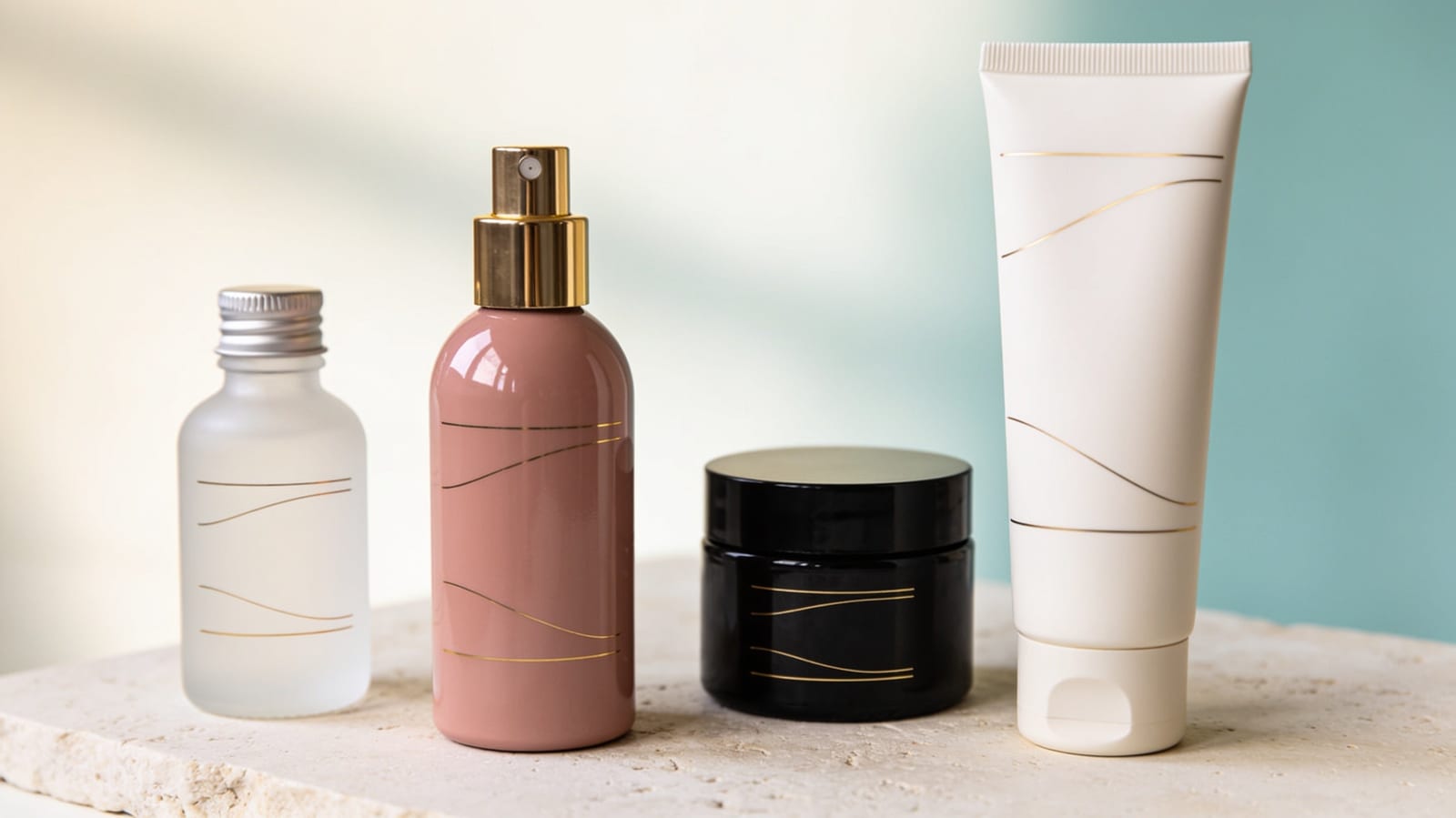
Decoration turns stock packaging into a branded pack, but every method suits some materials and shapes better than others. Match the technique to the substrate, the artwork, the quantity and the formula, and test decorated samples for rub, adhesion and chemical resistance.
The right decoration depends on the material, the shape and the run size: screen printing and hot stamping suit glass and rigid plastics, offset printing suits tubes, labels suit small runs and complex artwork, and coatings such as spray colour, frosting, UV and metallisation change the whole surface. Always test decorated samples against your formula and transit conditions.
Decoration is where a stock bottle becomes your bottle. A clear PET jar with a two-colour print and a gold-stamped logo can look entirely different from the same jar in a soft-touch spray coat with a single white mark. As a cosmetic packaging manufacturer in India with in-house decoration (printing, hot stamping, labels and finishes), we help brands choose a method that looks right, survives use and suits their quantities. You can see an overview on our branding and decoration page.
Decoration methods at a glance
| Method | What it does | Best substrates | Good for |
|---|---|---|---|
| Screen printing | Pushes ink through a mesh stencil, one colour at a time | Glass, PP, PET, PE bottles and jars, caps | Bold, opaque logos and text; white on dark |
| Hot stamping | Transfers metallic or pigment foil with heat and pressure | Caps, collars, rigid plastics, tubes, some glass with suitable preparation | Gold, silver and coloured metallic accents |
| Labels | Pre-printed self-adhesive or shrink labels | Almost any surface with a suitable label area | Small runs, frequent artwork changes, complex graphics |
| Offset printing | Multi-colour print transferred from a blanket in one pass | Tubes and cylindrical plastic parts | Detailed, multi-colour tube artwork |
| Pad printing | Transfers ink via a soft silicone pad | Small, curved or uneven parts such as caps and lipstick cases | Small logos on awkward shapes |
| UV coating and varnish | Clear coat cured by UV light | Plastics, printed surfaces, tubes | Gloss, matt, soft-touch and protective layers |
| Frosting | Acid etching or a frosted lacquer | Glass (etched); glass and plastic (lacquer) | Soft, diffused, premium look |
| Spray coating | Coloured or effect lacquer sprayed over the part | Glass and plastics | Opaque colour, gradients, pearl and soft-touch effects |
| Metallisation | Thin metal layer applied under vacuum, usually lacquered | Plastic caps, collars, shoulders, some glass | Mirror chrome, gold and coloured metallics |
Screen printing
Screen printing lays down a relatively thick layer of ink, giving rich, opaque colour. Each colour needs its own screen and pass, so cost and complexity rise with every additional colour. It works well on cylindrical and flat surfaces; tightly curved or tapered shapes may limit print area. On glass, ceramic-type inks can be fired for high durability, while organic inks are cured at lower temperatures. Ask what ink system will be used and how it performs with your formula.
Tips for screen-printed packs
- Keep fine text above the minimum size the process can reproduce cleanly; ask for guidance.
- Allow registration tolerance between colours rather than designing perfect butt-joins.
- Avoid printing where the formula will run down the outside, such as just below a pump.
Hot stamping
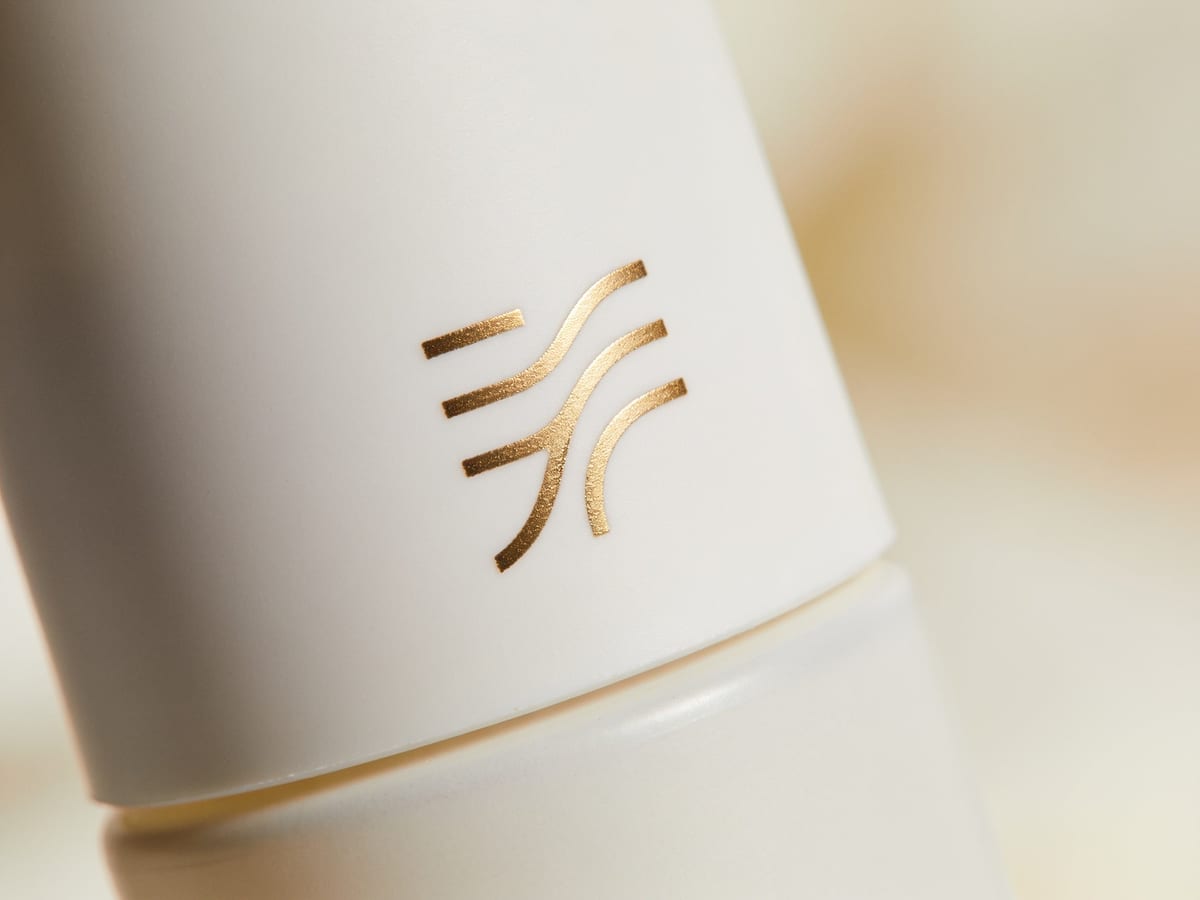
Hot stamping delivers a crisp metallic finish that is difficult to match with ink. It is common on caps, collars, tube bodies and jar lids. Large solid areas are harder to stamp evenly than lines and text, and curved surfaces need suitable dies. Combining a screen-printed base with a hot-stamped logo is a popular premium approach.
Labels
Labels are the most flexible route. They allow photographic artwork, multiple languages and quick changes between markets without new screens or plates. Options include clear "no-label look" films, paper with textures, metallised films and shrink sleeves that cover complex shapes. Consider:
- Adhesive choice – must hold in bathrooms, with wet hands and with oily product contact.
- Squeezability – on squeezable bottles and tubes, the label must flex without wrinkling or lifting.
- Recyclability – some label and adhesive combinations interfere with recycling; check guidance in your markets.
- Venting – on airless packs, labels must not cover the base vent.
Offset printing on tubes
Tubes are usually decorated by dry offset printing, where several colours are applied in a single pass. This suits detailed, multi-colour artwork and fine text, and is often combined with a coloured tube body, screen-printed white, hot stamping and a gloss, matt or soft-touch varnish. Laminate tubes can also be printed on the flat web before forming, giving rich graphics across the whole surface. Read our cosmetic tubes guide for more.
Coatings and surface finishes
Spray coating
Spray coating covers a bottle or jar in coloured, pearlescent, gradient or soft-touch lacquer. It can turn clear glass opaque, which helps protect light-sensitive formulas if your stability data supports it, and creates a unique colour without a custom-coloured mould. Adhesion and scratch resistance must be tested, particularly on high-touch areas.
Frosting
Acid-etched frosting on glass gives a soft, velvety surface that is part of the glass itself. Frosted lacquers can imitate the effect on glass or plastic. Frosting hides fingerprints but shows oily residue, so consider the formula.
UV coating and varnish
Clear UV-cured coatings protect printed surfaces and add gloss, matt or soft-touch effects. Spot UV can make a logo stand out against a matt background.
Metallisation
Vacuum metallisation creates a mirror-like metal look on plastic caps, collars and shoulders. A protective top coat is applied, which can be clear or tinted to create gold, rose gold or coloured metallic effects. Metallised parts should be tested for rub resistance and for any reaction with the formula or hand creams.
Matching decoration to material
| Pack | Typical decoration routes |
|---|---|
| Glass dropper and perfume bottles | Screen print, hot stamping, frosting, spray coating, labels; metallised or coloured collars |
| PET and PETG bottles and jars | Screen print, labels, hot stamping, spray coating |
| PP and PE bottles | Screen print (with surface treatment), labels, hot stamping |
| Tubes | Offset print, screen print, hot stamping, varnishes, labels |
| Caps, pumps and collars | Coloured moulding, metallisation, hot stamping, pad printing, spray coating |
| Airless shells | Screen print, hot stamping, spray coating, metallisation, labels (clear of vent) |
For stock shapes to decorate, browse our bottles and perfume bottles.
Polyolefins such as PP and PE have low surface energy, so they usually need surface treatment before printing or stamping to achieve good adhesion. Your supplier should handle this as part of the process.
Testing decorated packaging
- Adhesion – tape tests on print and coatings.
- Rub and scratch resistance – to simulate handling and transit.
- Chemical resistance – wipe or soak tests with your formula, alcohol, and common hand creams.
- Colour consistency – against an approved standard under agreed lighting.
- Humidity and temperature – especially for labels and soft-touch coatings.
See our testing and quality approach for more detail.
Decoration, quantity and MOQs
Each decoration step involves set-up: screens, plates, foil dies, spray-line colour changes. That is why MOQs depend on decoration as well as the component. For smaller runs, labels or a single-colour screen print keep costs sensible; for larger runs, multi-step decoration becomes more viable. Our MOQ and pricing page explains how we quote.
Artwork checklist
- Vector artwork with fonts outlined.
- A dimensioned drawing showing print area, position and orientation.
- Pantone or physical colour references for each ink, coating and foil.
- Mandatory text checked for each target market.
- Approval of a physical pre-production sample before the run.
Frequently asked questions
What is the most durable way to print on glass?
Fired ceramic-type screen printing is generally very durable on glass. Organic inks and coatings can also perform well when properly cured and tested with your formula.
Can I decorate small quantities?
Yes. Labels and simple single-colour printing usually suit smaller runs best, because multi-colour printing, hot stamping and coatings carry more set-up.
Why does print rub off PP bottles?
PP has low surface energy, so it needs surface treatment and suitable inks for good adhesion. Ask for adhesion and rub testing on decorated samples.
Does spray coating protect a formula from light?
An opaque coating can reduce light reaching the formula, but you should confirm the benefit with stability testing in the coated pack before relying on it.
Explore packaging decoration or start a brief with our cosmetic packaging manufacturing team.
Related service: Cosmetic packaging manufacturing →
Tell us your idea. An account manager replies within 1 business day.
More from Harrods Insights