Cosmetic Tubes Guide: PE vs Laminate (ABL/PBL), Diameters, Closures and Printing
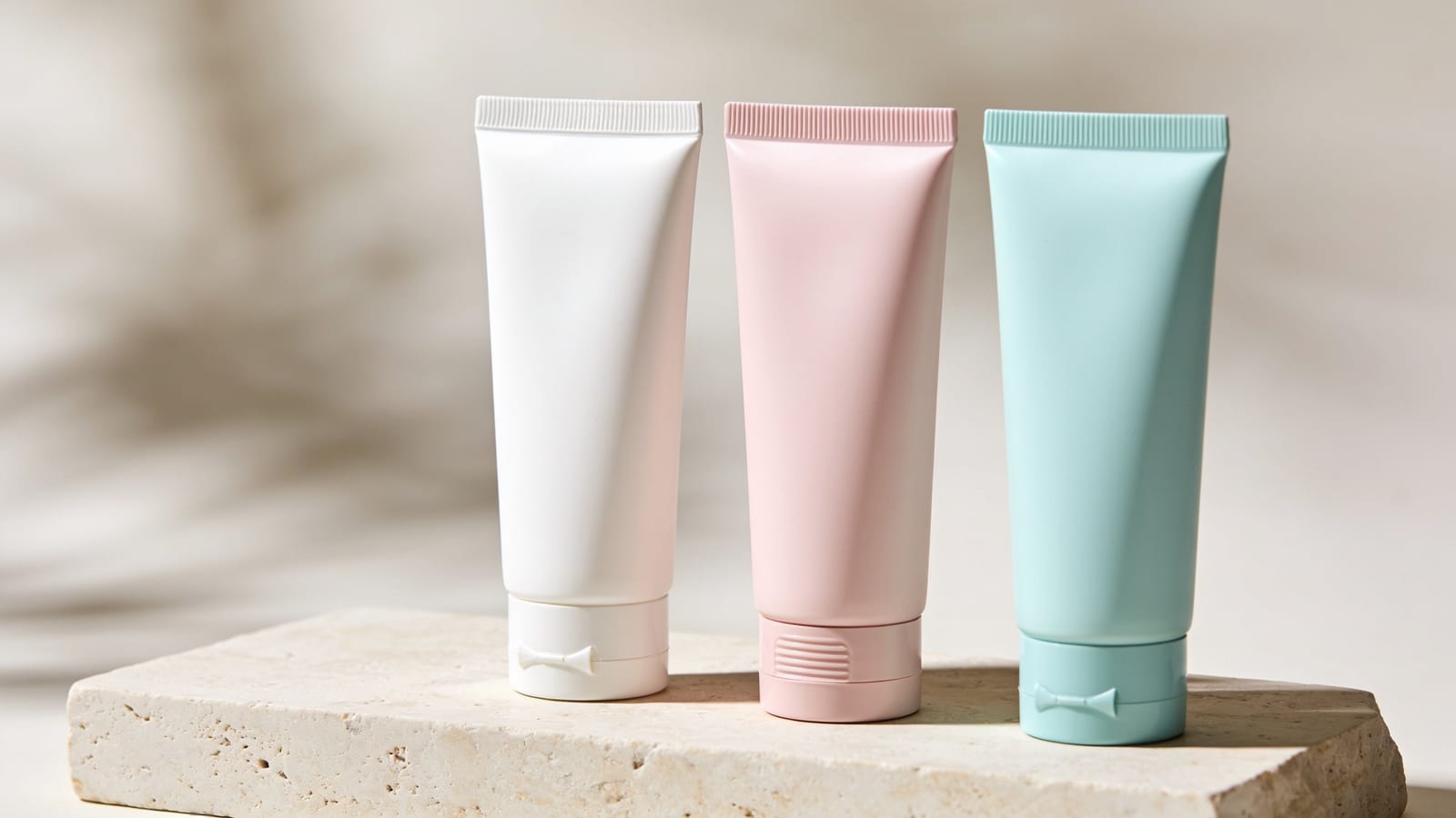
PE tubes are flexible, versatile and suit most creams, gels and cleansers, while laminate tubes (ABL and PBL) add barrier for fragrance- and oxygen-sensitive formulas and keep their shape better. Diameter, closure and printing method should be chosen together, because they affect fill volume, shelf impact and cost.
Cosmetic tubes come in two main constructions: extruded polyethylene (PE) tubes, which are flexible and versatile, and laminate tubes (ABL with an aluminium barrier, or PBL with a plastic barrier), which protect sensitive formulas and fragrance better. Choose the construction first, then the diameter, closure and decoration.
Tubes are everywhere in beauty and personal care: face washes, sunscreens, hand creams, hair masks, gels, primers and treatment creams. They are light, portable, hygienic and economical to ship. As a cosmetic packaging manufacturer in India, we supply tubes in a wide range of diameters, closures and finishes. This guide explains how to specify them. For category-specific advice, see our haircare packaging guide and skincare packaging guide.
PE tubes vs laminate tubes
| Construction | How it is made | Strengths | Considerations |
|---|---|---|---|
| Mono-layer PE | Extruded polyethylene sleeve with a moulded shoulder | Soft, squeezable, economical, wide colour choice | Lower barrier; may panel or lose fragrance with some formulas |
| Multi-layer PE (co-extruded) | Several PE layers, sometimes with an EVOH barrier | Better barrier while keeping a plastic feel | Barrier layers can complicate recycling |
| ABL (aluminium barrier laminate) | Laminated web including a thin aluminium layer, formed and seam-welded | High barrier to oxygen, light and fragrance loss; holds shape | Visible side seam; multi-material structure |
| PBL (plastic barrier laminate) | Laminated web with a plastic barrier layer such as EVOH | Good barrier, springs back after squeezing, premium print | Side seam; barrier depends on structure |
PE tubes tend to "suck back" air after squeezing, which some formulas tolerate well. ABL tubes stay where they are squeezed, giving the classic toothpaste-tube behaviour and better protection against air ingress. PBL tubes spring back like PE but bring a barrier and high-quality print.
Diameter, length and fill volume
A tube is specified by its diameter and length, which together set the capacity. The same fill volume can be achieved with a slim, long tube or a wide, short one, and each looks very different on shelf. When choosing:
- Start with the fill volume, then pick a diameter that suits the product's use and shelf presence.
- Slim diameters suit eye creams, lip treatments, travel and sample sizes.
- Mid diameters suit face washes, sunscreens, hand creams and treatment creams.
- Wide diameters suit body lotions, hair masks and family sizes.
- Allow for headspace and the crimp seal. The tube length includes the sealed end, and overfilling can contaminate the seal area and cause leaks.
Ask your supplier for the recommended fill volume range for each diameter and length, and confirm it with your filling equipment.
Closures and dispensing heads
| Closure | Best for | Notes |
|---|---|---|
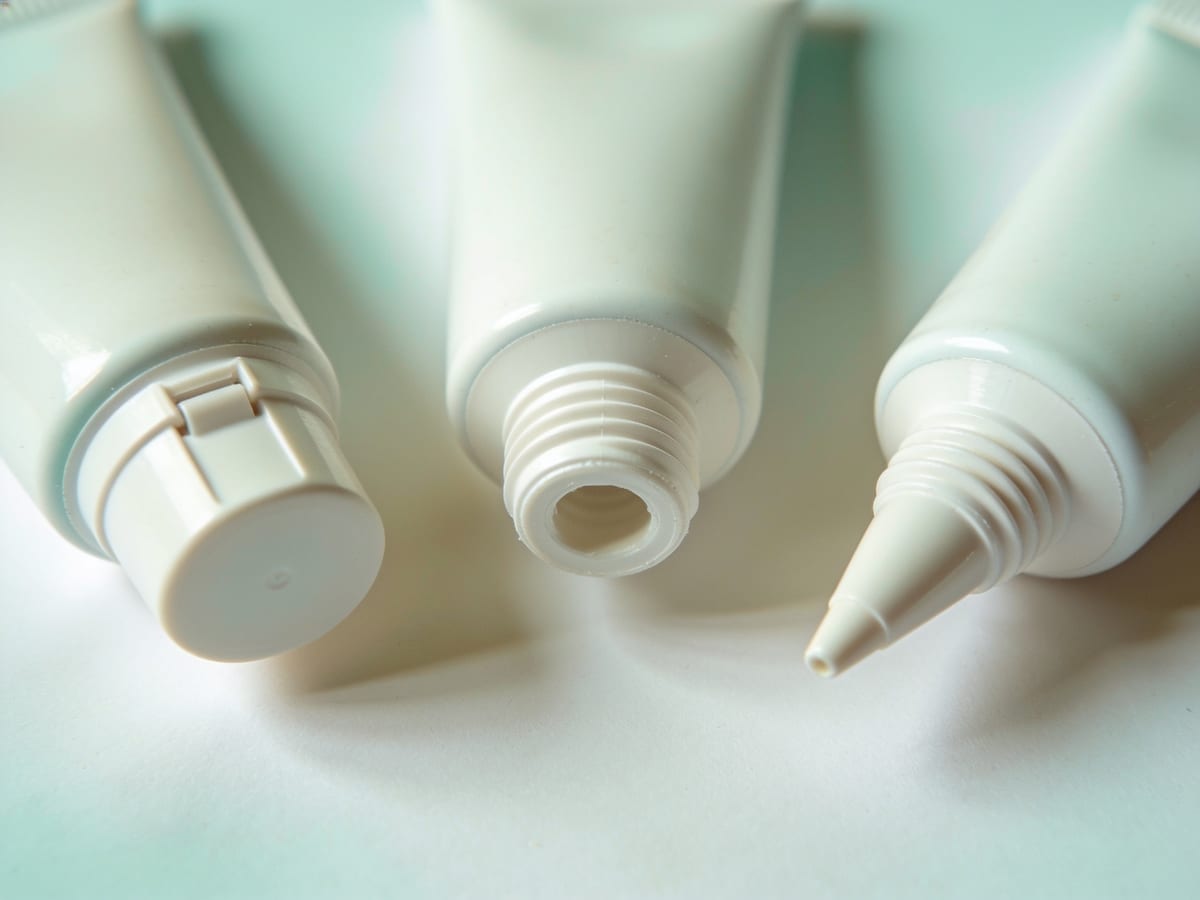
| Flip-top cap | Face washes, hand creams, gels | One-handed use; standing or inverted options |
| Screw cap | Creams, masks, products opened less often | Strong seal; good for travel |
| Disc-top cap | Lotions and gels | Press-to-open; neat dispensing |
| Nozzle or long-nose applicator | Eye creams, spot treatments, hair and scalp products | Precise application to a small area |
| Applicator heads (metal, ceramic, sponge, brush) | Eye and targeted treatments | Check compatibility and hygiene of the tip |
| Airless tube or pump head | Sensitive actives, premium serums and creams | Reduces air ingress; metered dose |
| Orifice reducer with membrane seal | Any product needing tamper evidence | Consumer pierces or peels before first use |
Consider how the tube will stand. Many brands specify a cap that lets the tube rest upside down so product is always at the orifice. Check that the cap is wide and stable enough when the tube is full.
Printing and decoration on tubes
- Offset printing – the workhorse for tubes; multi-colour artwork printed in one pass, suitable for detailed designs and fine text.
- Screen printing – thicker ink deposit for bold, opaque colours, especially white on dark tubes.
- Hot stamping – metallic foil logos or accents on the tube body or cap.
- Labels – practical for smaller runs or frequently changing artwork.
- Varnishes and coatings – gloss, matt or soft-touch finishes; UV spot varnish for contrast.
- Coloured tube body – a pigmented sleeve gives a solid background colour without printing it.
- Laminate print – on ABL and PBL tubes the web can be printed before forming, allowing rich, photographic graphics.
Keep text and graphics clear of the crimp area and the side seam on laminate tubes. Print orientation relative to the cap and the crimp should be shown on your artwork drawing. Our in-house decoration team can advise on what suits your design and quantity.
Compatibility issues specific to tubes
- Panelling and collapse – a tube that sucks inwards during storage, often due to fragrance or solvent absorption or gas loss through the wall.
- Fragrance loss or change – perfume components can migrate into PE; a barrier layer helps.
- Seal failure – product contamination at the crimp or incorrect sealing conditions.
- Print scuffing or ink lifting – where product contacts the outside surface, or from abrasion in transit.
- Swelling or stress cracking at the shoulder – where the formula attacks the moulded part.
All of these are caught by storing filled, sealed tubes under different conditions before launch. See our guide to packaging compatibility and stability testing.
Tube or something else?
Tubes are an excellent default for squeezable products, but compare alternatives honestly:
- A pump bottle may suit large-volume lotions and washes used daily at home.
- A jar may suit very thick butters and balms that do not flow through an orifice.
- An airless bottle may protect a sensitive serum better than a standard tube.
- A dropper may suit thin oils and serums where users dose drop by drop.
Tubes do, however, offer strong evacuation (users can roll them up), low weight for e-commerce and export freight, and a large printable surface for regulatory text and brand graphics.
Recyclability considerations
A tube made mostly from one polymer family, with a cap from a compatible material, is generally easier for recyclers to process than a multi-material laminate. Barrier layers, aluminium foil and mixed-material caps all add complexity. If recyclability is part of your brand story, ask for the material breakdown of each component and check it against the recycling guidance in your target markets before making any claim. Our eco packaging range is a good place to start shortlisting.
Filling and sealing
Tubes arrive open-ended with the cap fitted. They are filled from the open end and then sealed by heat, hot air or ultrasonic sealing, depending on the construction. Agree with your filler:
- The sealing method and the settings validated for your tube type.
- Any coding to be added in the crimp (batch, date).
- Fill temperature, if the product is filled warm.
- Orientation marks so print aligns consistently.
Frequently asked questions
What is the difference between ABL and PBL tubes?
Both are laminate tubes with a barrier layer. ABL uses a thin aluminium layer and keeps its squeezed shape; PBL uses a plastic barrier such as EVOH and springs back after squeezing.
Which tube is best for sunscreen or fragranced creams?
Formulas with high fragrance or volatile components often benefit from a barrier tube such as multi-layer PE, PBL or ABL. Confirm the choice with stability testing in the filled tube.
Can tubes be printed in small quantities?
Labels, stock colours and simple screen printing can suit smaller runs. Offset printing on tubes involves set-up, so MOQs depend on the decoration chosen.
Can I get an airless tube?
Yes. Airless tube heads and airless tube systems are available for formulas that need reduced air exposure and metered dosing.
Browse our cosmetic tubes or ask our cosmetic packaging team for tube samples and quotes.
Related service: Cosmetic packaging manufacturing →
Tell us your idea. An account manager replies within 1 business day.
More from Harrods Insights