Packaging in Third-Party Manufacturing: Who Sources What and Why

Packaging comes from the manufacturer, from you, or from a manufacturer that makes it in-house. Stock packaging bought by the manufacturer is simplest for a first launch; brand-supplied gives control but more risk. Test the pack with the real formula, approve artwork in writing, supply overage, and agree what happens to leftovers.
In third-party manufacturing, packaging can come from three places: the manufacturer buys it for you, you supply it yourself, or the manufacturer makes it. Each route changes your cost, lead time and risk, and the right choice depends on volume, design complexity and how much coordination you can handle.
Packaging is where many first launches slip. The formula is ready, and then a pump turns out to leak, a label peels in humid storage, or a custom carton arrives after the filling slot. This guide explains who normally sources what, how to test compatibility, and how to avoid the problems that come with leftover stock. It sits inside the wider process described in third-party cosmetic manufacturing in India.
The three sourcing models
1. Manufacturer-sourced packaging
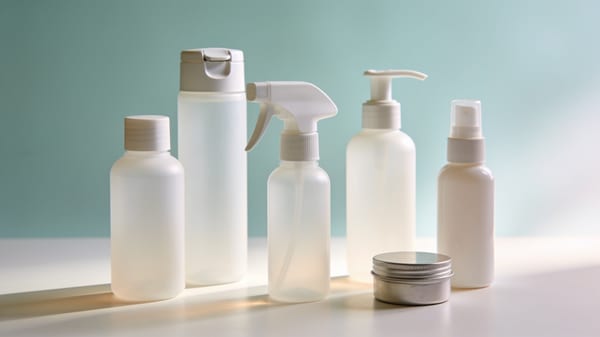
The manufacturer selects and buys bottles, jars, tubes, pumps, caps and cartons from its supplier network, often from stock ranges. You choose from options and approve. This is the simplest route for a first order, and it usually has the lowest packaging MOQ because stock components are bought in small quantities. The trade-off is limited choice and less control over the supplier. See stock versus custom cosmetic packaging, MOQs and samples for how those ranges differ.
2. Brand-supplied packaging
You buy the packaging yourself and deliver it to the manufacturer's factory. This gives you full control over the design and supplier, and it suits brands that already have a packaging partner or imported components. It also moves risk to you: if the components are late, defective or incompatible, the filling slot is lost and your name is on the delay. Agree in writing who inspects the goods on arrival and who pays if the pack fails.
3. Manufacturer-made packaging
A few manufacturers make packaging themselves and can fill it in the same facility. This shortens the chain, because the maker of the pack and the filler share one schedule and one accountability line. Harrods Health makes cosmetic packaging in-house and can fill it, which suits brands that want one point of contact; the custom packaging page lists what is covered. The honest limit is range: an in-house line will not make every format, so confirm yours is possible before designing around it.
Packaging compatibility testing
A formula and its pack must be tested together. The same cream can behave differently in a jar than in a tube, and a pump can corrode, clog or absorb fragrance. Ask the manufacturer to confirm each of these before approval:
- Chemical compatibility: no change in colour, odour, viscosity or pH after storage in the final pack, and no visible reaction from the container or closure.
- Leak and closure checks: caps, liners and pumps hold under transport conditions, including a sealed carton shaken or stacked.
- Dispensing: pumps and droppers deliver a consistent dose, and thick products do not clog.
- Label and print resistance: ink and adhesive hold against oils, fragrance and moisture.
The tests overlap with stability work, so read stability and safety testing before launch and plan the timing together. Testing in a stock sample bottle and then switching to a different pack for bulk defeats the purpose.
MOQs and lead times for packaging
Packaging MOQs are usually set by the component supplier, not the filler, and they are often higher than the product MOQ. Stock items can be small; anything custom (a moulded bottle, a coloured cap, a printed carton) carries tooling, set-up and a larger minimum. The product minimum and the packaging minimum can be separate numbers, so ask for each separately.
Lead times vary by component, by whether it is stock or custom, and by whether it is made locally or imported. Printed cartons and decorated bottles tend to take longer than plain stock items. The practical rule is to start packaging in parallel with formula development, not after sign-off. At Harrods Health, the production lead time of 15 to 25 working days starts only after both formula and packaging are approved, so late packaging pushes everything back. Ask every supplier the same question: when does your clock start?
Check how this affects your budget with MOQ forecasting and reorders and how to read a manufacturing quote, where packaging should be a separate line.
Decoration: printing, hot stamping and labels
- Labels: usually the fastest and cheapest route to a branded look, and easy to change if a claim or ingredient list needs correcting. Check adhesive strength on curved or oily surfaces.
- Screen printing: prints directly on the container. Good durability, but each colour adds set-up, and minimums rise.
- Hot stamping: metallic or foil detail, applied with a die. Looks refined, but needs a die and a clean surface, and is slower to change.
- Shrink sleeves and cartons: cover the whole pack and carry regulatory text, but they depend on exact artwork dimensions.
Whichever you pick, decide which text is mandatory on the pack and which is design. Label content rules differ by market, so check current rules with your regulatory adviser before you finalise artwork.
Artwork approval
Artwork errors are expensive because they are only discovered when the printed material arrives. Use a simple sequence:
- Get the dieline (the flat template with exact dimensions) from whoever makes the pack.
- Build the artwork on it, with ingredient list, batch and date placeholders, net quantity, contact details and any required marks.
- Have one person proofread every word against the approved specification and ingredient declaration.
- Request a printed proof or physical sample, and approve it in writing.
- Release to print only after the manufacturer confirms the batch code position fits.
Keep the signed proof. If a print run differs from it, you have a clear basis for a claim.
Inspecting supplied packaging, and overage
If you supply packaging, agree on an incoming inspection: count, dimensions, visible defects, print match to the approved proof, and a fit test on the filling line. Record the result before filling starts.
Always supply more than the order quantity. Filling and labelling lines use a number of units for set-up, rejects and samples. The extra amount, called overage, depends on the pack type, the decoration and the line, so ask the manufacturer for a figure in writing. Under-supplying by a few units can mean a short delivery of the finished order.
What happens to leftover packaging
Surplus components are common, and they should be dealt with in the agreement, not by assumption. Decide in advance:
- Who owns leftover stock, and where it is stored.
- For how long the manufacturer will hold it, and whether storage is charged.
- Whether leftovers carry over to the next batch, or whether obsolete artwork gets destroyed.
- What happens to printed items if you switch manufacturers; see switching cosmetic manufacturers and tech transfer.
Printed packaging with your branding is hard to reuse, so avoid over-ordering to save a little on unit cost. Write the storage and disposal terms into the contract, using key terms in a cosmetics contract manufacturing agreement as a guide.
Which route should you choose?
- First launch, limited budget: manufacturer-sourced stock packaging, decorated with a label.
- Established brand with a design identity: brand-supplied or custom packaging, with a proof and inspection plan.
- Want fewer hand-offs: a manufacturer that makes and fills the pack.
If you are unsure, send your product type, fill size and target quantity through the contact page and ask for the packaging options before you commit to a design.
Related service: Contract and third-party manufacturing for your brand →
Tell us your idea. An account manager replies within 1 business day.