Cosmetic Jars Guide: PP, PET, Acrylic, Glass and Double-Wall Jars Compared
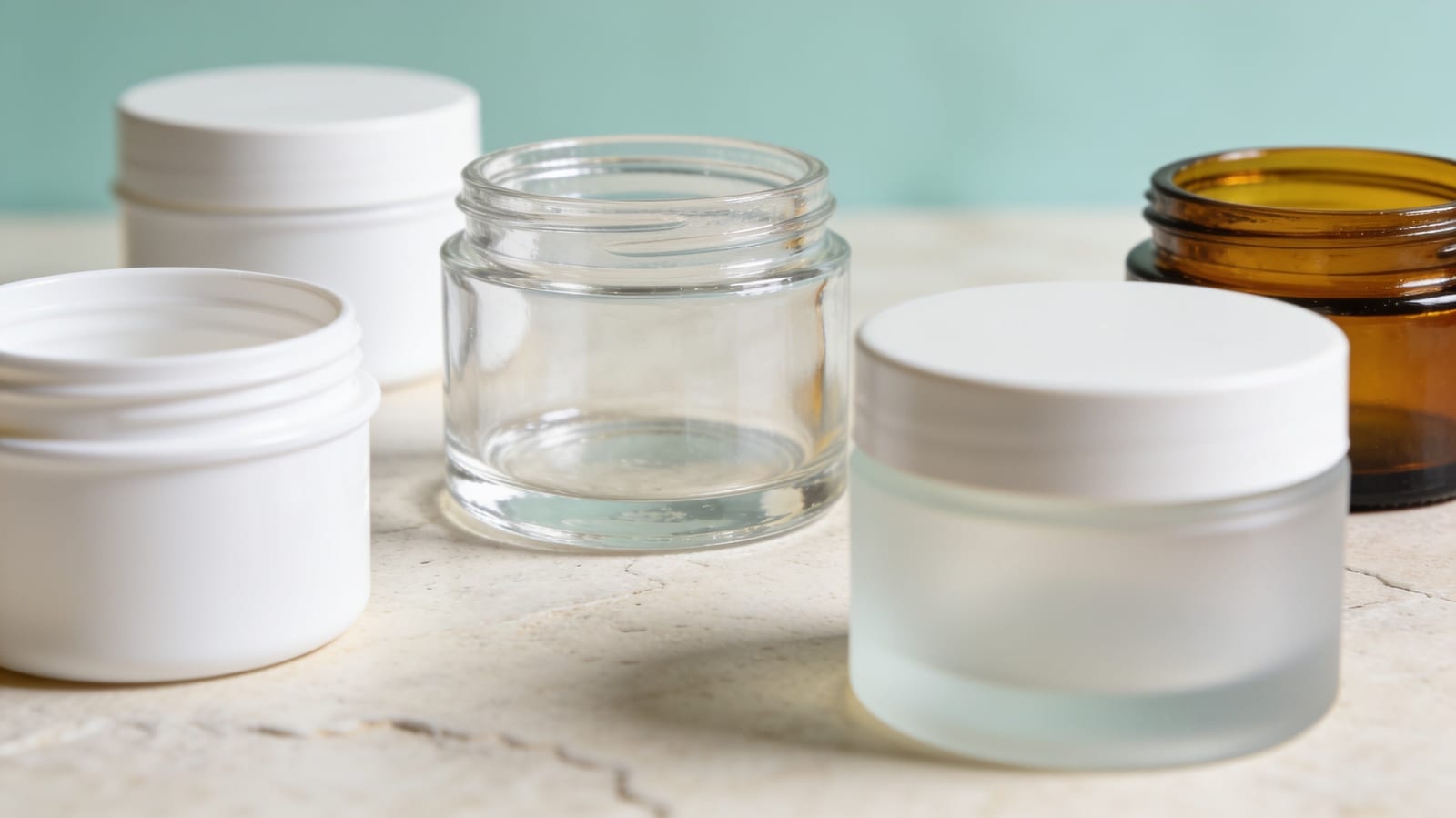
PP jars are versatile and cost-effective, PET and PETG offer clarity, acrylic and double-wall jars deliver a heavy premium look, and glass gives the most inert contact surface. Choose by formula type, required barrier, hygiene expectations and the price your product sells at.
The best cosmetic jar depends on what is inside and what the product sells for: polypropylene (PP) for versatile, cost-conscious creams; PET or PETG for clarity; acrylic (PMMA) and double-wall jars for a heavy premium look; and glass for an inert, luxurious contact surface. Add a liner, wad or spatula to improve sealing and hygiene.
Jars are the most familiar format in skincare, body care and haircare: face creams, balms, body butters, masks, scrubs, hair styling products and gels. They are simple to fill and easy to use, but the choice of material, wall construction and closure has a real effect on product protection, perceived value and cost. As a cosmetic packaging manufacturer in India, we supply jars in all the main materials, and this guide walks through how to choose. For how jars compare with airless, droppers and tubes, read our skincare packaging guide.
Cosmetic jar materials compared
| Material | Appearance | Strengths | Watch-outs | Typical position |
|---|---|---|---|---|
| PP (polypropylene) | Opaque or translucent, matt or gloss | Good chemical resistance, light, robust, collected for recycling in many systems | Less clarity than PET or acrylic | Everyday creams, body butters, hair products |
| PET | Clear, glass-like | Clarity, light weight, good barrier for many products | Can be sensitive to some solvents and essential oils; check for stress cracking | Gels, scrubs, clear-pack products |
| PETG | Thick-walled clarity | Heavier, premium feel; tough | Similar compatibility checks as PET | Mid to premium creams and masks |
| Acrylic (PMMA) | Crystal-clear, heavy, jewel-like | Premium look and weight | Can craze or crack with certain oils and solvents; usually used as an outer wall only | Premium creams, often double-wall |
| Glass | Clear, amber, frosted or coloured | Inert contact surface, luxurious weight, excellent barrier | Heavier, breakable, higher freight cost | Luxury creams, balms, natural ranges |
No material is universally compatible. Highly fragranced products, essential-oil-rich balms and some solvent-based formulas can attack certain plastics. Always confirm the contact material with your own formula through compatibility testing.
Single-wall vs double-wall jars
A single-wall jar is one moulded container. It is simple, economical and easy to decorate. A double-wall jar has an outer shell, often acrylic, PETG or a heavy PP, around a separate inner cup that holds the formula. Double-wall designs are popular in premium skincare because:
- The outer wall gives weight and visual depth without the formula touching acrylic.
- The inner cup can be a more chemically resistant material such as PP.
- They appear generous on shelf. Be careful here: the outer size must not mislead consumers about the quantity inside, and some markets have rules on slack fill and excessive packaging.
Some double-wall jars are designed with a removable inner cup, which enables a refill model. See our refillable packaging range if this interests you.
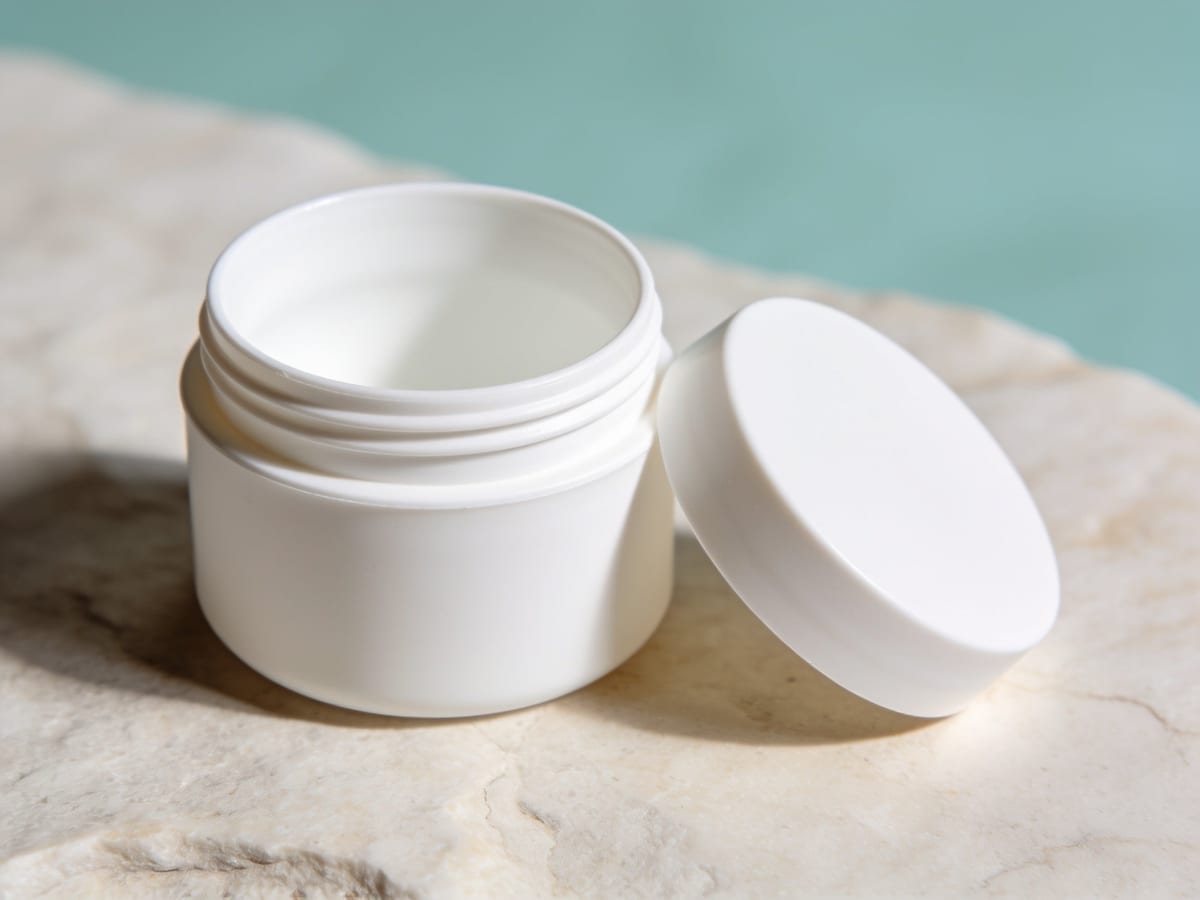
Liners, wads, discs and spatulas
The closure system protects the product between uses and during shipping.
- Cap liners and wads – a disc of foam, PE or a laminated material inside the cap that seals against the jar rim. Useful for oil-rich products and export shipments.
- Inner discs (sifters or protective lids) – a separate disc sitting on the product surface, which keeps the cream neat, reduces evaporation and gives a satisfying unboxing moment.
- Induction or pressure-sensitive seals – bonded to the rim for tamper evidence and leak protection; confirm the seal suits your jar material.
- Spatulas – small scoops that reduce finger contact with the product. They support a hygiene message, though they do not replace a robust preservative system.
Choosing a jar by formula type
| Formula | Suggested jar approach | Notes |
|---|---|---|
| Rich face cream | PP or glass, or double-wall with PP inner | Inner disc and spatula add hygiene and perceived value |
| Oxygen-sensitive cream | Consider an airless jar instead | Open jars expose the surface to air at every use |
| Body butter | PP or PET, wide mouth | Large openings help users scoop solid products |
| Scrub with oil phase | PP, or PET after testing | Check for stress cracking and oil seepage at the rim |
| Clay or gel mask | PP or PET with a liner | Liners reduce drying out between uses |
| Balm with essential oils | Glass, aluminium or tested PP | High essential-oil loads are aggressive to some plastics |
| Lip balm or salve | Small PP, glass or aluminium jars | See our lip jar collection |
If the formula is especially sensitive to oxygen or contamination, an open-mouth jar may not be ideal at all. Compare airless options before you decide.
Choosing a jar by price point
Packaging should match the promise and the margin.
- Mass and value ranges – single-wall PP or PET jars with screw caps, decorated with a label or one- or two-colour print.
- Masstige – thicker-wall PETG or PP with a metallised or soft-touch cap, hot stamping and an inner disc.
- Prestige – glass or double-wall acrylic jars, heavy caps, multi-step decoration, spatula and carton.
Remember that heavier jars increase freight cost and, in some markets, packaging fees linked to weight. Balance weight with the experience you want to create.
Jar formats beyond the round screw-top
Round screw-cap jars dominate, but other formats can solve specific problems:
- Square and angular jars – strong shelf presence and easy labelling on flat faces; check that caps align consistently with the faces.
- Low, wide pots – suit balms, pomades and solid products that users scrape rather than scoop.
- Airless jars – a press-top dispenser replaces finger contact; useful for sensitive creams.
- Sample and travel jars – small capacities for gifting, hotel amenities and trial sizes; often in PP with a simple screw cap.
- Aluminium tins – a lightweight metal alternative for balms and solid products; a lacquered interior may be needed depending on the formula.
Questions to ask before you approve a jar
- What is the exact contact material, including the inner cup and liner?
- Has this jar and cap combination been used with formulas like mine?
- What brimful and recommended fill volumes apply?
- Can the jar tolerate my fill temperature?
- Which decoration methods are proven on this jar and cap?
- How will the jars be packed for transit, and how are decorated surfaces protected?
Neck, rim and cap fit
Jars are specified by capacity, diameter and neck or thread type. When you change a cap, a liner or the jar supplier, recheck fit. A cap that looks the same but sits a fraction differently on the rim can leak under pressure or temperature change. Test filled jars upside down and in warm storage before approval.
Filling and handling tips
- Specify whether the formula is hot-filled. Some plastics distort at elevated temperatures; agree the fill temperature with your supplier.
- Allow hot-filled products to cool before capping, or condensation can form under the lid.
- Leave consistent headspace so the inner disc sits flat.
- Protect glossy and decorated surfaces during transit with partitions or sleeves.
Decoration options for jars
Jars take screen printing, hot stamping, labels, spray coating, frosting and metallisation, and caps can be coloured, metallised or textured. Our in-house team handles printing, hot stamping, labels and finishes. Browse shapes and sizes in our cosmetic jars collection.
Frequently asked questions
Which cosmetic jar material is the most chemically resistant?
Glass is the most inert contact surface for most formulas. Among plastics, PP generally offers good chemical resistance, but every material should be tested with your specific formula.
Is acrylic safe for creams?
Acrylic is often used as the outer wall of double-wall jars because some oils and solvents can craze it. If the formula touches acrylic directly, run compatibility testing first.
Do I need a liner in my jar cap?
A liner or wad improves sealing, especially for oil-rich products and export shipments. An inner disc also keeps the product surface protected between uses.
Can a double-wall jar be refillable?
Yes. Some double-wall jars use a removable inner cup that can be replaced, enabling a refill model.
See our cosmetic jars or brief our cosmetic packaging manufacturing team for samples.
Related service: Cosmetic packaging manufacturing →
Tell us your idea. An account manager replies within 1 business day.