Herbal Liquid Extracts for Cosmetics: Solvents, Extraction Ratios, Preservation and INCI Names
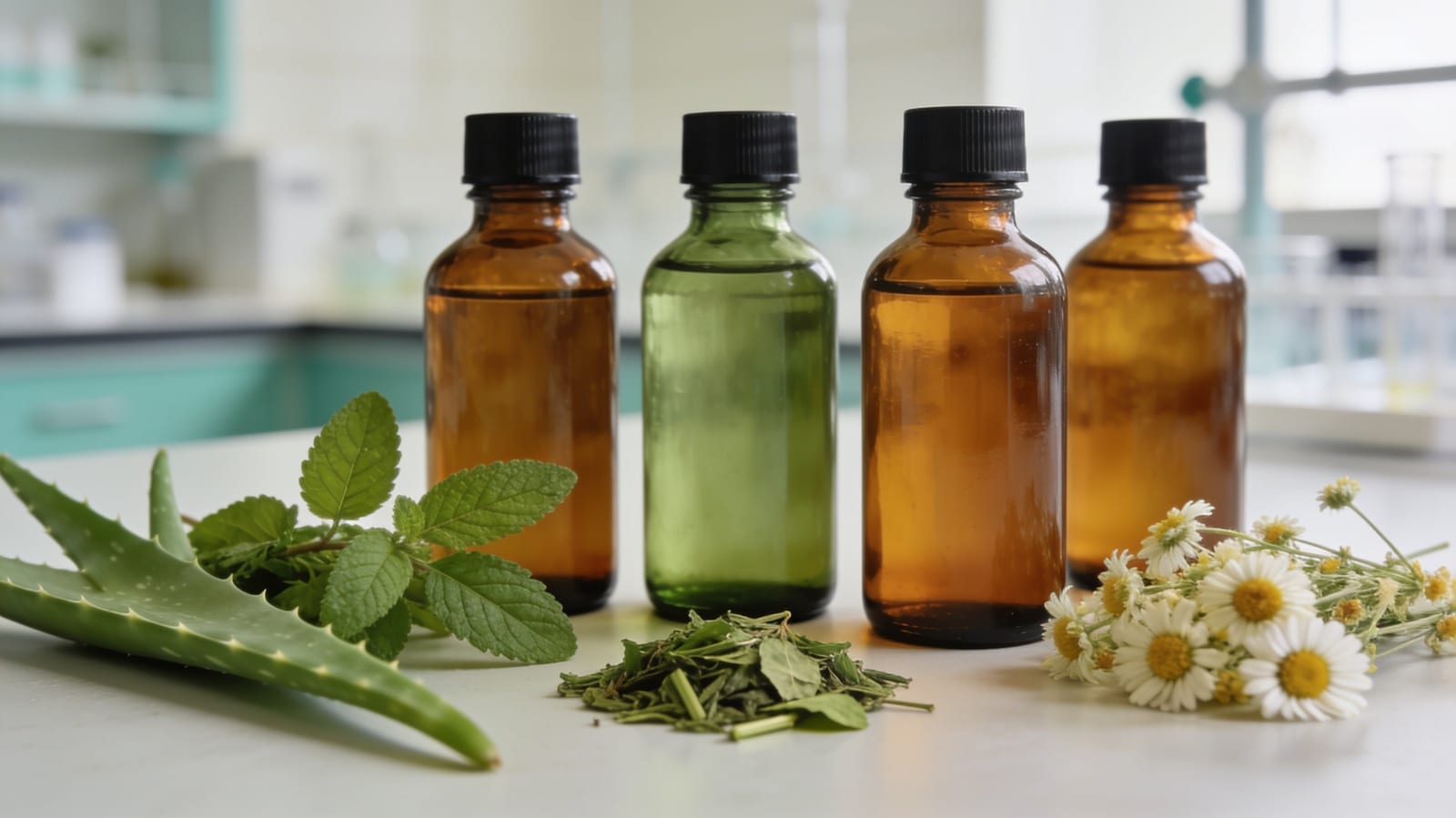
A herbal liquid extract is plant material extracted into a solvent such as water, glycerin, propanediol or alcohol. The solvent affects what is extracted, how the extract is preserved and what appears on your ingredient list. An extraction ratio describes the process, not the potency.
Herbal liquid extracts are plant materials extracted into a solvent such as water, glycerin, propanediol or alcohol and supplied as a liquid you add to a formula. The solvent decides what is extracted, how the extract is preserved and how it appears on your ingredient list, so it matters as much as the plant itself.
Botanical extracts are among the most requested ingredients in skin and hair care, yet they are also among the least understood on a specification sheet. Two extracts of the same herb can behave very differently because of the solvent, the ratio and the preservation system. As a cosmetic raw materials manufacturer in India holding an AYUSH licence, we produce herbal liquid extracts in-house. This guide explains the technical choices in general terms so you can compare extracts on the right basis.
How liquid extracts are made
The basic steps are similar across most liquid extracts. Plant material is cleaned, dried or used fresh, and reduced to a suitable particle size. It is then soaked in the chosen solvent (maceration), or the solvent is passed slowly through it (percolation), sometimes with gentle heat or agitation. The liquid is separated from the spent plant material, filtered, and adjusted or standardised. A preservative may be added if the solvent system needs one. The finished extract is tested and filled.
Each step affects the result. Particle size changes how easily compounds leave the plant; temperature affects both yield and the stability of delicate compounds; and contact time influences which compounds come through.
Choosing a solvent
Solvents differ in polarity, which governs what they dissolve. Water and glycerin pull out more polar compounds such as sugars and many polyphenols; alcohol reaches a broader range, including some less polar compounds.
| Solvent | INCI name | Extracts well | Considerations |
|---|---|---|---|
| Water | Aqua (Water) | Polar, water-soluble compounds | Highest microbial risk; needs robust preservation |
| Glycerin | Glycerin | Polar compounds; also a humectant | Can feel sticky at high use levels; plant-derived glycerin suits natural positioning |
| Propanediol | Propanediol | Similar range to glycerin | Lighter, less tacky feel; can support a preservative system |
| Butylene glycol | Butylene Glycol | Similar range to propanediol | Common in conventional formulations |
| Alcohol | Alcohol, or Alcohol Denat. if denatured | Broad range, including less polar compounds | Flammable; may not suit alcohol-free claims or some markets |
Many extracts use a blend, such as water and glycerin, to balance extraction and stability. Oil-soluble plant compounds are usually captured differently, by infusing the plant in a carrier oil, which produces an oil macerate rather than a liquid extract in the sense used here.
Matching solvent to formula
- Toners, gels and serums: glycerin or propanediol extracts blend easily into water phases.
- Shampoos and washes: water, glycerin or propanediol extracts work in surfactant bases; check clarity and viscosity after addition.
- Creams and lotions: add water-phase extracts after emulsification unless the supplier advises otherwise.
- Alcohol-free or halal-sensitive products: confirm the solvent before you commit, and check your market's requirements.
Extraction ratios explained
Extraction ratios are often quoted and often misread. There are two common conventions.
Plant-to-solvent ratio
Written as, for example, 1:5, this means one part of plant material was extracted with five parts of solvent. It describes the recipe of the extraction. A lower second number generally means a more concentrated liquid, but the ratio alone does not tell you how much of any compound ended up in the extract.
Drug-to-extract ratio (DER)
Used mainly for concentrated or dried extracts, this compares the starting plant material with the finished extract, so 4:1 means four parts of plant produced one part of extract. A "native" DER describes the extract before any carrier or excipient is added.
Why ratio is not potency
Ratios depend on whether fresh or dry weight was used, on the solvent, and on how exhaustively the material was extracted. Two extracts with the same ratio can contain different amounts of the compounds you care about. When the content of a specific compound matters, ask about total solids or dry matter, and about marker compounds where the supplier tests for them. Compare extracts on documented composition, not on the ratio printed on the label.
Preservation
Water-based extracts provide food for microorganisms, so preservation is not optional. High proportions of glycerin or propanediol reduce available water and make life harder for microbes, but that does not mean the extract or your finished product is self-preserving.
- Check whether the extract is pre-preserved. If it is, the preservative must appear on your ingredient list and must be permitted at that level in your market.
- Check compatibility between the extract's preservative and your formula's preservative system, pH and surfactants.
- Test the finished product. A preservative efficacy (challenge) test on the final formula is the only reliable check.
- Look for microbial limits on the COA, such as total aerobic count, yeasts and moulds, and the absence of specified organisms.
- Store well. Keep extracts cool and closed. Slight sediment or colour change can occur in natural extracts; follow supplier guidance on mixing or filtering before use.
INCI naming
Cosmetic ingredient lists use INCI names. Plant extracts follow a pattern of genus, species, plant part and "Extract", for example Calendula Officinalis Flower Extract or Aloe Barbadensis Leaf Extract. Local or traditional names cannot replace the INCI name on an export label.
The solvent and any preservative are listed as separate ingredients. If you add an extract made with glycerin and water, then glycerin and water appear on your list too, in their correct position by weight in the finished product. In the EU and US, ingredients above 1% are listed in descending order of weight, while those at 1% or below may follow in any order. Ask your supplier for the full composition of the extract, with INCI names and, where available, CAS and EC numbers, so your regulatory file is accurate.
Claims and herbal extracts
Including a botanical extract does not license a functional claim. If you claim a benefit, you need evidence for the finished product. Avoid medical language such as cures, treats or heals in cosmetic marketing; such claims can reclassify a product as a medicine in many markets.
Specification checklist
- Botanical name, plant part and INCI name
- Solvent system and ratio convention used
- Appearance, colour, odour, pH and specific gravity
- Total solids or dry matter, where tested
- Preservative, if any, with level
- Microbial limits and heavy metals, where specified
- Manufacturing and retest dates
Our facility credentials are listed on the quality and certifications page. Extracts are often added to surfactant bases, so you may also find our guide to surfactants, emollients and conditioning agents useful. If you want a finished product built around a particular herb, our custom formulation service can help.
Frequently asked questions
Which is better for cosmetic extracts, glycerin or propanediol?
Neither is better in every case. Both extract similar polar compounds. Glycerin is a strong humectant but can feel tacky at high levels, while propanediol gives a lighter feel. Choose based on skin feel, claims and your preservative system.
What does an extraction ratio of 1:5 mean?
Conventionally it means one part of plant material was extracted with five parts of solvent. It describes the process, not the amount of any active compound in the extract, so it should not be used alone to compare potency.
Do herbal liquid extracts need a preservative?
Water-containing extracts generally need preservation, either in the extract or in the finished formula. High glycerin or propanediol content helps but does not guarantee stability. Challenge-test your finished product.
How do I list a glycerin extract on my ingredient label?
List the plant extract by its INCI name and list glycerin, water and any preservative separately, each in its correct position by weight in the finished product. Ask the supplier for the full composition.
Browse our herbal liquid extracts, with documentation such as COA and SDS available on request.
Related service: Raw materials manufacturing and supply →
Tell us your idea. An account manager replies within 1 business day.
More from Harrods Insights