Salon and Professional Haircare Private Label: Back-Bar Packs, Retail Sizes, Colour-Care and Treatments
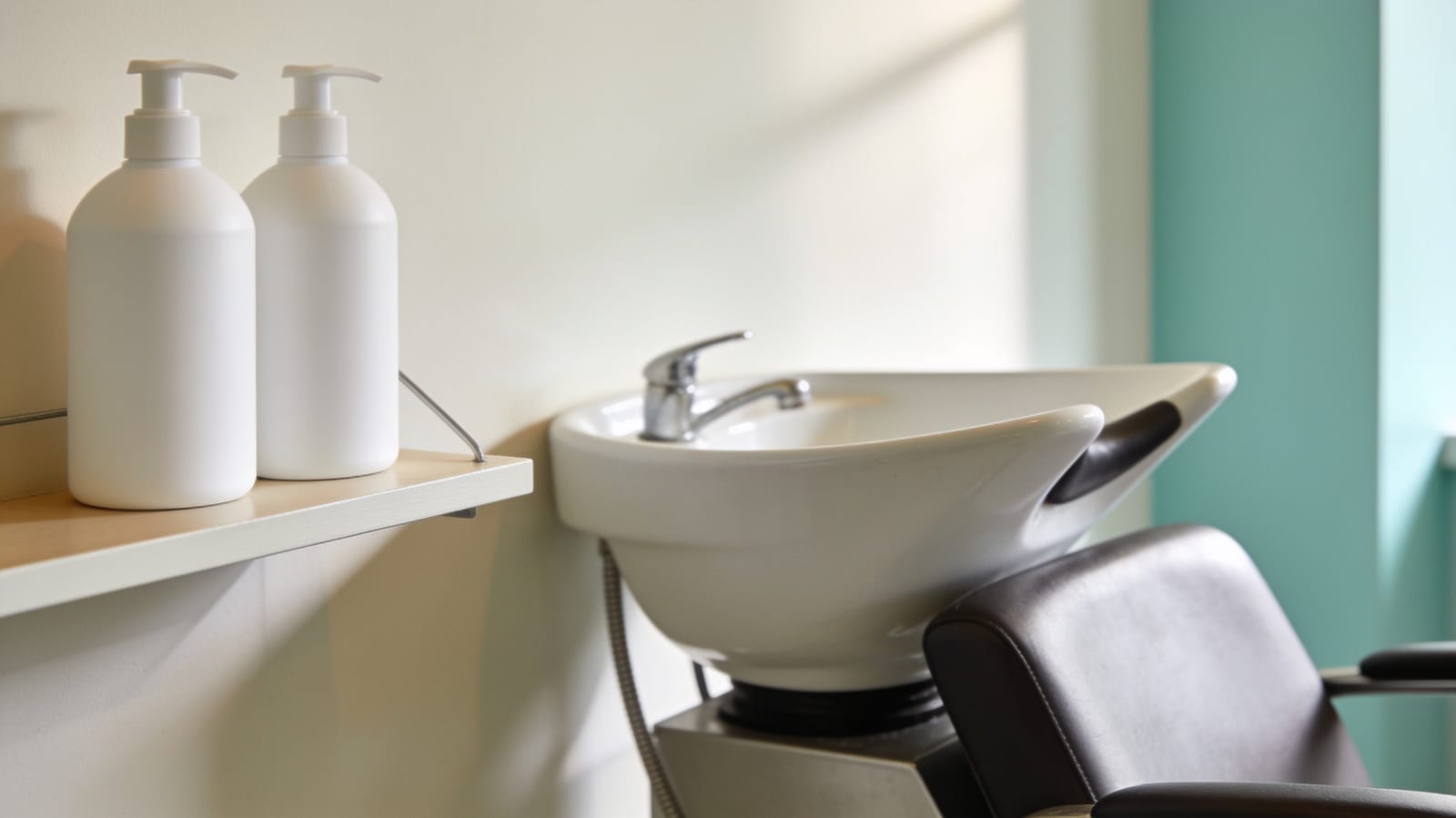
A salon private label range has two halves: back-bar products in 1 L and 5 L packs for use at the basin, and matching retail sizes for clients to take home. Colour-care and treatment lines add value, but some smoothing treatments release formaldehyde and are restricted in many markets, so they need careful regulatory review.
A salon private label haircare range combines back-bar products in 1 L and 5 L packs for use at the basin with matching retail sizes for clients to buy. Most ranges start with shampoo, conditioner and mask, then add colour-care, treatment and styling products. Smoothing treatments need special care, because some release formaldehyde and are restricted in many markets.
For salon groups, independent stylists, academies and professional distributors, an own-label range turns everyday basin use into a brand experience and a retail revenue line. It also gives control over fragrance, texture and positioning that third-party professional brands cannot offer. This guide explains how professional ranges are typically built with a haircare manufacturer in India.
Back-bar and retail: two halves of one range
| Back-bar | Retail | |
|---|---|---|
| Who uses it | Stylists at the basin and station | Clients at home |
| Typical sizes | 1 L with pump, 5 L for refilling | Travel, standard and large retail sizes |
| Priorities | Performance, consistency, cost per service, easy dispensing | Shelf appeal, gifting, clear claims and directions |
| Labelling | Professional-use information, clear identification at the basin | Full consumer labelling for retail sale |
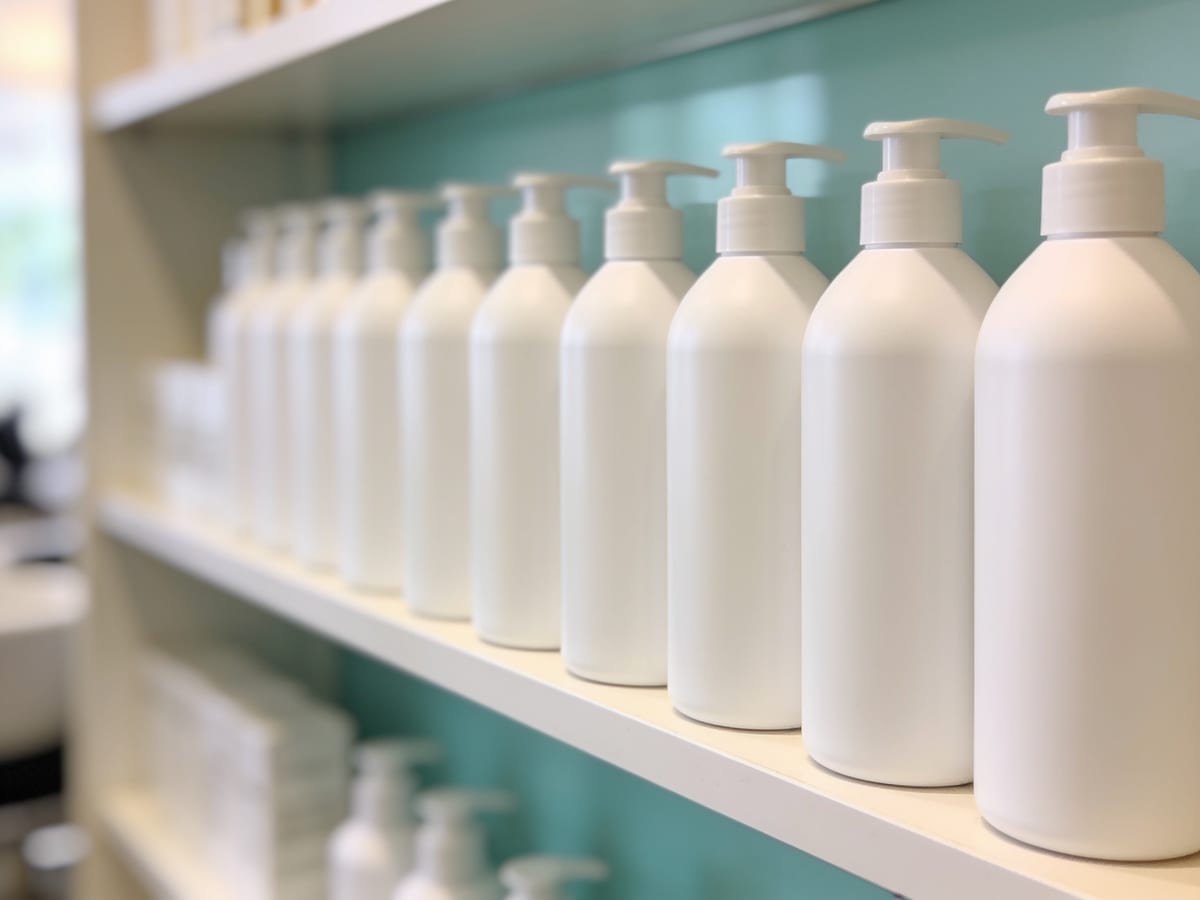
The value of the model lies in continuity. A client who loves the scent and feel of the basin wash can buy the same product at the desk. Use the same formula and fragrance across both halves wherever possible. See our bulk packs collection for back-bar formats.
Core professional products
- Shampoos: a clarifying shampoo for pre-treatment cleansing, a gentle everyday shampoo and concern-led variants.
- Conditioners: fast-acting rinse-off conditioners that detangle quickly at a busy basin.
- Masks and treatments: richer products for in-salon treatment services and retail add-ons.
- Leave-ins and serums: for finishing, frizz control and heat-styling support.
- Styling and finishing sprays: hold, shine and texture products; see our hair spray collection.
- Scalp care: scalp scrubs, tonics and massage oils for spa-style treatments.
Colour-care ranges
Colour services are high-value for salons, and colour-care retail extends that relationship. Colour-care products typically focus on:
- Mild surfactant systems that are gentle on coloured hair.
- Conditioning that keeps colour-treated hair smooth and shiny.
- Toning shampoos and masks with cosmetic colourants, for example violet-toned products for blonde or grey hair.
- Post-colour treatments used at the basin after a service.
Keep claims cosmetic and measured: "helps maintain colour vibrancy", "gentle on colour-treated hair" or "neutralises the appearance of brassy tones". Toning products should be tested for staining on hands, towels and porous light hair, with clear directions on timing.
Smoothing and straightening treatments: a caution
Smoothing treatments are popular, but this is the most sensitive area in professional haircare. Some smoothing and straightening products contain formaldehyde or ingredients that release formaldehyde when heated with flat irons. Formaldehyde is restricted or prohibited in cosmetic products in many markets, and exposure in salons has been a long-standing safety concern for stylists and clients.
- Treat any product that relies on heat-activated chemistry to straighten hair as needing specialist regulatory and safety review for every market.
- Check the status not only of formaldehyde but of related ingredients and releasers in each destination.
- Do not describe a product as "formaldehyde-free" unless the full formula, including releasers, supports it.
- Consider positioning smoothing products as frizz-control and smoothing-feel treatments using conditioning, film-forming and heat-protecting ingredients instead.
Rules in this area continue to change, so we recommend confirming current requirements in each market before developing or launching any straightening service product.
Hotel, spa and hospitality crossover
Many salon formulas also suit spas, resorts and hotels, particularly shampoo, conditioner and body products dispensed from wall-mounted or refillable bottles. If your business serves hospitality as well as salons, see our hotel toiletries page for amenity formats.
Fragrance as signature
A distinctive fragrance is often the most memorable part of a salon visit. Custom fragrance lets you create a house scent that carries from shampoo through to finishing spray and retail products, so clients recognise it at home. Brief the scent's intensity carefully: a strong fragrance at the basin can be overwhelming in a busy salon, and some clients prefer lighter options.
Building the range in phases
- Phase one: shampoo, conditioner and mask in back-bar and retail sizes, one signature fragrance.
- Phase two: colour-care and a concern line such as repair or volume.
- Phase three: treatments, scalp care and styling products.
Starting with ready formulas keeps minimums manageable: from 500 units per product, with custom fragrance, colour, texture and packaging. For a deeper look at how ranges are structured and costed, read our guide to building a haircare range.
Professional-use versus retail labelling
Back-bar packs are sometimes labelled for professional use only, while retail packs must carry full consumer labelling for the market where they are sold. Even professional packs should identify the product clearly, list ingredients and carry batch information, usage directions and any warnings. If back-bar packs might ever be resold to clients, or decanted into retail containers, label them to consumer standards from the start. Rules on professional-use products differ by market, so confirm requirements before printing.
Protocols, training and consistency
A salon range performs best when every stylist uses it the same way. Simple service protocols, such as how many pumps of shampoo per wash, how long a mask stays on and how a treatment is rinsed, help clients get a consistent result and help the salon control cost per service. Short training notes for each product, kept at the basin alongside safety information, also make it easier to recommend the right retail product at the end of an appointment. Consistent dosing also makes reorder planning more predictable, because usage per service becomes easier to estimate.
Supply and replenishment
Salon groups and distributors usually need regular replenishment rather than a single launch order. Plan for how stock will be held: as finished goods, as filled back-bar packs awaiting labelling, or as packaging components ready for the next production run. Products can be packed, documented and dispatched to your warehouse, to individual salon locations through your distribution partner or to an export port; see fulfilment and export for how this works.
Quality and documentation for professional use
Professional customers expect consistency from batch to batch. Products are made in a GMP-compliant, ISO certified facility, and the facility is Halal certified. Formulas can be supplied as dermatologically tested, with reports on request. Safety data and usage instructions should be available to staff at the basin, particularly for treatment and colour-care products.
Frequently asked questions
What sizes do salons need?
Most salons use 1 L bottles with pumps at the basin and 5 L packs for refilling, plus retail sizes for clients. Both can be supplied for the same formula.
Can back-bar and retail products use the same formula?
Yes, and it is usually recommended. Using the same formula and fragrance in both lets clients buy exactly what they experienced in the salon.
Do you make keratin or smoothing treatments?
Smoothing products need careful regulatory review, as some release formaldehyde and are restricted in many markets. We discuss cosmetic frizz-control and smoothing-feel options, and recommend specialist advice for any straightening product.
What is the MOQ for salon packs?
Ready formulas start from 500 units per product, with each pack size counted as a separate product. Custom projects are quoted individually.
Building a salon range? Begin with our haircare manufacturer in India page.
Related service: Haircare manufacturing for your brand →
Tell us your idea. An account manager replies within 1 business day.
More from Harrods Insights