Arabic and Bilingual Labelling for Hotel Amenities in the GCC: What to Include and How to Lay It Out
Most GCC markets expect key product information in Arabic, often alongside English. Labels usually carry the product name, ingredients, net quantity, batch, dates, manufacturer and importer details and country of origin. On minis and sachets, plan the layout early and confirm requirements with your importer.
Hotel amenities sold or supplied in GCC markets usually need key label information in Arabic, commonly alongside English. That normally covers the product name and function, ingredients, net quantity, batch number, dates, manufacturer and importer details, country of origin and any warnings. Small formats need careful layout so everything required still fits legibly.
A label is a compliance document as well as a branding surface. In the Gulf, getting it right is often the difference between goods clearing smoothly and stock waiting while artwork is corrected. This guide covers what typically appears on a GCC hotel amenity label and how to fit it onto a 30 ml bottle or a sachet. It is written for procurement teams, brand managers and distributors working with a hotel amenities supplier for GCC hotels.
Requirements differ by country and change over time. Gulf standards from the GCC Standardization Organization inform the region, but each national authority applies its own rules. Always have final artwork checked by your importer of record or a local regulatory consultant.
Why Arabic matters on hotel amenities
Arabic is the official language across the GCC, and regulators generally expect consumer-facing safety and identity information to be readable in it. Even where English is also accepted, a bilingual label signals that the product was made for the market, which matters to hotel guests from across the region. For hotels, a well-set Arabic label also reflects the brand: poor typesetting, reversed letters or broken ligatures look careless on a premium bathroom shelf.
What a GCC hotel amenity label usually includes
| Element | Typical expectation | Notes for hotel ranges |
|---|---|---|
| Product name and function | Arabic, often with English | "Shampoo", "Shower gel", "Body lotion" must be clear, not just a scent name |
| Ingredient list | INCI names | Fragrance allergens may need to be declared depending on the market |
| Net quantity | Metric volume or weight | Must match the registration file exactly |
| Batch or lot number | Printed or coded | Essential for traceability and recalls |
| Manufacture and expiry dates | Clear date format | Many Gulf markets expect dates rather than only a period-after-opening symbol |
| Manufacturer details | Name and address | Plus country of origin, for example "Made in India" |
| Importer or distributor details | Local name and address | Decide the importer before artwork is final |
| Directions and warnings | Arabic, often with English | For example "For external use only", "Avoid contact with eyes" |
Treat the table as a starting checklist, not a legal standard. Some markets add their own requirements, such as registration numbers or specific symbols.

Layout tips for minis, tubes and sachets
Hotel formats are small, which is where most labelling problems start. A 30 ml mini or a sachet has a fraction of the space of a retail bottle, yet much of the same information is expected.
Plan the hierarchy first
- Front panel: hotel logo, product name in Arabic and English, and optionally the scent or collection name.
- Back panel: ingredients, directions, warnings, net quantity, manufacturer and importer details.
- Batch and dates: often printed or embossed on the crimp, cap area or sachet seal during production rather than on the artwork.
Handle the two scripts properly
- Arabic reads right to left. Mirror the layout for Arabic blocks rather than forcing them into a left-aligned English grid.
- Use a well-designed Arabic typeface that pairs with your Latin brand font, and check that letters join correctly. Software that does not support Arabic shaping will break the text.
- Keep minimum type sizes legible for both scripts. Arabic often needs a slightly larger size than Latin to read at the same clarity.
- Ask a native Arabic reader to proofread the final print-ready file, not just the translation document.
Use space cleverly
- Wrap-around labels on minis give more width than front and back labels.
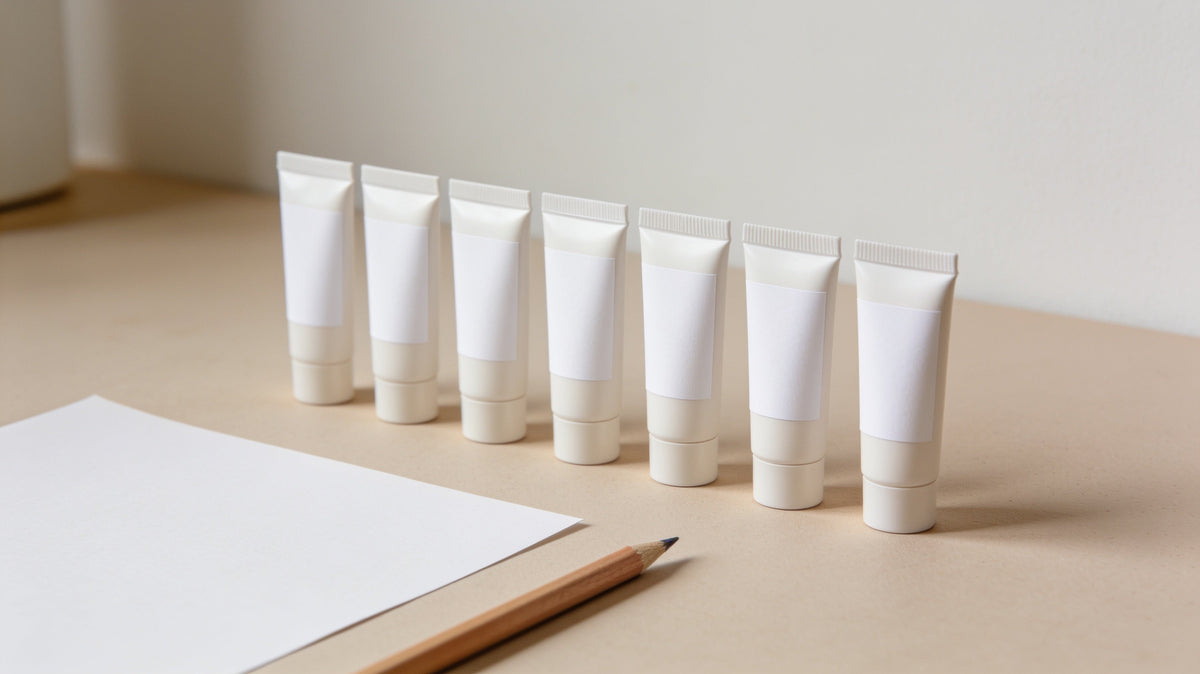
- Tubes can carry text on both faces and the crimp.
- For sachets, keep the front for brand and product name, and put the full declaration on the reverse.
- For dispensers and 5 L refills, there is space for full bilingual text, but the refill and the dispenser it feeds must carry consistent product names.
Our hotel toiletries team prints hotel branding on minis, tubes, sachets, dispenser bottles and refills, and can share label templates sized for each format.
Translation: get it right once
Product names, directions and warnings should be translated by someone who understands cosmetic terminology, not by generic machine translation. Ingredient lists use internationally standardised INCI names, so the ingredient list itself is usually not translated, but check what your market expects. Keep a master bilingual text file per product, approved by your importer, and reuse it across formats so the shampoo mini and the shampoo refill never say different things.
Common labelling mistakes
- Arabic text that does not join. Letters appear isolated or reversed because the design software did not shape the script.
- Scent name used as the product name. A label reading only "Oud Noir" does not tell a guest or a regulator what is inside the bottle.
- Missing importer details. Artwork approved before the importer was appointed.
- Net quantity mismatches. The label says one volume, the registration file another.
- Unreadable small print. Text shrunk to fit a mini until it is illegible, especially on curved or metallic surfaces.
- Claims that need support. Words such as "natural", "organic" or "dermatologically tested" should be backed by evidence; Harrods Health can supply dermatological test reports on request where a formula has been tested.
- One label for every country. A design approved in one market may need changes in another.
Halal and certification marks
Many GCC hotels ask for Halal-certified toiletries. If you show a Halal logo, it must match a valid certificate that covers the specific product and manufacturing site. Read our guide to Halal hotel toiletries before adding marks to artwork, and see our quality certifications for the documents we hold.
A practical sign-off process
- Draft bilingual text per product and get it checked by your importer or consultant.
- Lay out artwork for each format using the manufacturer's dielines.
- Proof the print-ready file with a native Arabic reader.
- Approve a physical printed sample, not only a PDF.
- Lock the files and keep version control, so registration and labels stay aligned.
If you are preparing a tender, add labelling language to the specification; our tender and RFP checklist shows where it fits.
Frequently asked questions
Do hotel toiletries in the GCC have to be labelled in Arabic?
In most GCC markets, key product information is expected in Arabic, often alongside English. Exact requirements vary by country, so confirm them with your importer of record before printing.
Can a sachet carry less information than a full-size bottle?
Small formats are sometimes treated differently, but you should not assume relief from any requirement. Plan the reverse panel carefully and check with your importer what must appear on the sachet itself and what can go on the outer carton.
Should the ingredient list be translated into Arabic?
Ingredient lists normally use INCI names, which are international. Product names, directions and warnings are the parts usually translated. Check the expectation for each destination market.
Who checks Arabic labels before production?
Your importer of record or a local regulatory consultant should review the content, and a native Arabic reader should proof the final print-ready artwork. The manufacturer then prints to the approved files.
Need bilingual, hotel-branded labels that clear first time? Speak to our team about your range as a hotel amenities supplier for GCC hotels.
Related service: Hotel amenities supplier for GCC hotels →
Tell us your idea. An account manager replies within 1 business day.