Attar and Oud Perfume Oil Manufacturing: Alcohol-Free Oils, Carriers, Roll-Ons and GCC Markets
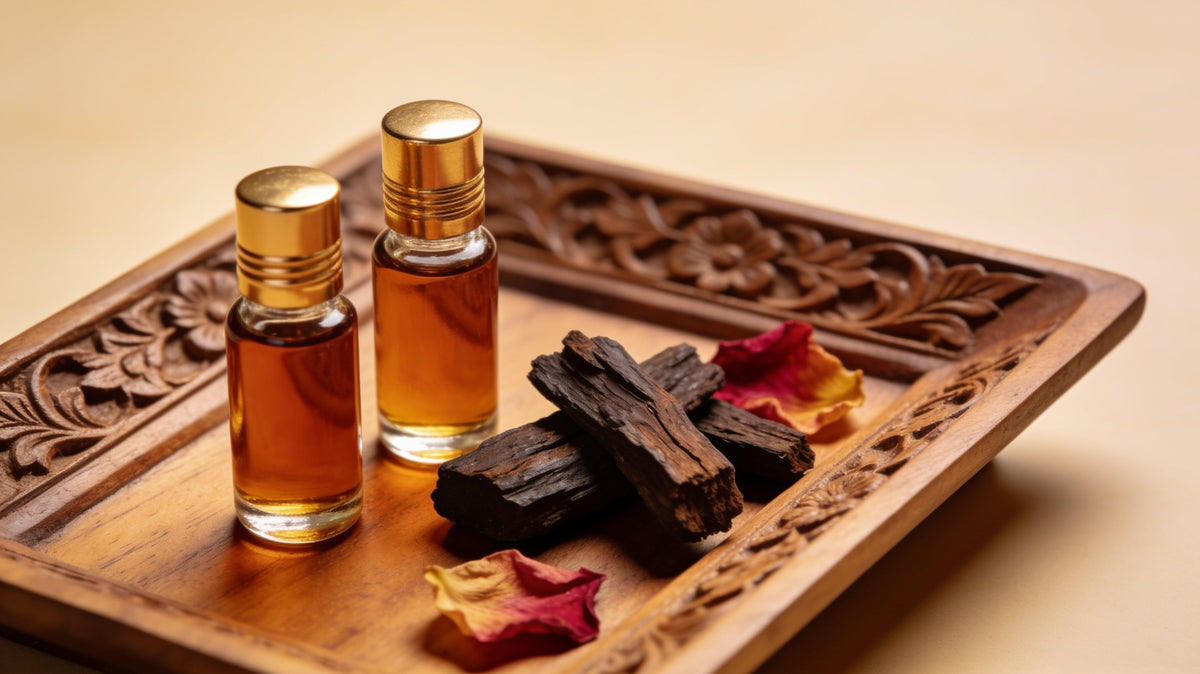
Perfume oils and attars carry fragrance in an oil base instead of alcohol, which suits customers who prefer alcohol-free products and close-to-skin wear. The choice of carrier affects feel, clarity, stability and allergen labelling, and oud products should state honestly whether they use agarwood oil or an oud accord. Harrods Health makes attars and oud-style perfume oils from 500 units per product and is Halal certified.
An attar or perfume oil is a fragrance carried in an oil base rather than alcohol. It is applied by roller or dabber, sits close to the skin and is chosen by customers who prefer alcohol-free products. Private label manufacture covers the fragrance, the carrier, the roll-on or dabber bottle, labelling and packing, and at Harrods Health starts from 500 units per product.
Perfume oils are a large and growing format for gifting brands, modest-fashion and lifestyle labels, and importers serving the GCC, South Asia, Africa and South East Asia. They also sit naturally alongside an alcohol-based range for brands that want to offer both. This guide explains how a perfume manufacturer in India approaches attar and oud oil projects, and the decisions that matter.
Traditional attar vs modern perfume oil
The word "attar" is used in two ways, and it helps to be clear which one you mean.
| Traditional attar | Modern perfume oil | |
|---|---|---|
| How it is made | Botanical material distilled, with the aromatic vapour captured in a base oil, historically sandalwood oil | A composed fragrance concentrate blended into a cosmetic carrier |
| Consistency between batches | Varies with harvest and process | High, because the formula is fixed |
| Scent range | Usually single-flower or earthy, traditional profiles | Any direction a perfumer can compose |
| Typical use | Heritage and connoisseur products | Most private label ranges |
Most private label projects use the modern approach because it delivers the same scent every batch, can be checked against safety limits and scales cleanly. Labels and marketing should describe the product accurately: if it is a composed perfume oil, do not imply it is a traditionally distilled attar.
Choosing a carrier
The carrier decides how the oil feels, how clear it stays and how well it holds the fragrance.
- Light cosmetic esters and fractionated coconut oil: clear, light, low odour and widely used. They let the fragrance read cleanly.
- Jojoba: technically a liquid wax, with good stability and a familiar ingredient name for customers.
- Sweet almond and other plant oils: pleasant skin feel, but more prone to oxidation and, in the case of nut oils, they need clear labelling for customers with nut allergies.
- Perfumery solvents: some perfume oils use solvents common in fragrance work to help dissolve materials. They should be declared on the ingredient list like any other component.
Antioxidants are often added to slow oxidation, especially where plant oils are used. Stability testing in the final bottle, in heat and light, is part of approving a perfume oil.

Oud: honest labelling matters
"Oud" describes a scent style associated with agarwood. True agarwood oil is a costly natural material, and agarwood-producing tree species are listed under CITES, which regulates international trade in them. Many oud perfumes therefore use an oud accord: a composition that evokes the character of agarwood using other materials, sometimes with a small proportion of the natural oil.
Both approaches are legitimate. What matters is how you describe them.
- If the product does not contain agarwood oil, avoid wording that implies it does. Terms such as "oud-inspired" or "oud accord" are clearer.
- If it does contain agarwood oil, keep supplier documentation, as some importing countries may ask for evidence of legal sourcing.
- Do not claim rarity, age or origin you cannot evidence.
Packaging: roll-ons, dabbers and small glass
Perfume oils are typically sold in small volumes. Common formats include glass roll-on bottles with a steel or glass ball, and bottles with a dabber rod. Harrods Health supplies roll-ons alongside glass perfume bottles; browse perfume bottles to shortlist. Points to check:
- Leak performance: roller fittings must seat tightly, particularly for export and marketplace shipping.
- Material compatibility: the fitting must not swell or crack in contact with the oil.
- Outer packaging: small bottles often benefit from a carton or gift box for shelf presence and protection. Custom packaging covers boxes and decoration.
Halal and GCC considerations
Alcohol-free positioning
Many customers in the GCC and in Muslim-majority markets elsewhere prefer alcohol-free fragrance, which is a key reason perfume oils are popular. If you describe a product as alcohol-free, the formula must contain no ethanol, and the claim should be checked against the full ingredient list.
Halal certification
Harrods Health is Halal certified. If your brand intends to carry a Halal mark on pack, confirm with the certifying body which products and ingredients are covered and what documentation is needed.
Market registration
GCC markets have their own cosmetic registration or notification systems, and requirements differ between countries. Your importer or local partner is usually best placed to confirm what applies. Our guide to fragrance compliance, IFRA and allergens covers safety principles that apply across markets.
Safety and allergen points specific to oils
- IFRA limits apply to perfume oils as finished products. Because oils are often highly concentrated and left on the skin, some materials need careful limiting.
- Fragrance allergens above the threshold set by the target market must be listed on the label where that market requires it.
- Oils applied to skin exposed to sunlight should avoid phototoxic materials above permitted levels, such as some untreated citrus oils.
Formulas can be supplied as dermatologically tested, and test reports are available on request via testing and quality.
How a perfume oil project runs
- Brief: scent direction, carrier preference, bottle size, applicator and target markets.
- Samples: ready oils from the library or bespoke mods to your brief, supplied before any order.
- Carrier and stability trials: the approved scent is checked in the chosen carrier and final bottle for clarity, colour and odour over time.
- Compliance review: the formula is checked against IFRA limits and the allergen labelling rules of each market.
- Packaging and artwork: roll-ons or dabber bottles, labels and cartons are procured.
- Blending, filling and packing: the oil is blended, filled, fitted and boxed.
- Dispatch: to your warehouse, marketplace or export port, with documents prepared.
Because perfume oils do not contain alcohol, they are not shipped as flammable liquids in the way alcohol-based perfume is, which can simplify freight. Your forwarder should still confirm classification against the safety data sheet. A single account manager coordinates each stage.
Building an oil range alongside alcohol-based perfume
Many brands offer the same scent as an EDP and as a perfume oil, giving customers a choice of format. Because oil and alcohol behave differently, the same concentrate can smell slightly different in each, so both versions should be sampled side by side. See perfume concentrations explained for how formats compare. Scented massage and body oils are another related format, with their own dilution guidance in our massage oil dilution guide.
Frequently asked questions
What is the MOQ for private label attar or perfume oil?
Ready fragrance formulas and perfume development start from 500 units per product, where a product is one scent in one bottle size. Samples are provided before any order.
Are your perfume oils alcohol-free?
Perfume oils are made in an oil carrier without alcohol. Any alcohol-free claim on pack should be confirmed against the final approved ingredient list.
Does an oud perfume oil contain real agarwood?
Not necessarily. Many oud products use an oud accord. Labelling should state honestly which approach is used.
Is Harrods Health Halal certified?
Yes, Harrods Health is Halal certified. Confirm with the certifier how any on-pack Halal mark applies to your specific products.
Planning an attar or oud range? Speak to our private label perfume manufacturing team about samples, carriers and roll-on packaging.
Related service: Perfume manufacturing for your brand →
Tell us your idea. An account manager replies within 1 business day.
More from Harrods Insights