
Bulk 5 L Refills and Hotel Dispensers: Hygiene, Tamper Evidence and a Refilling SOP
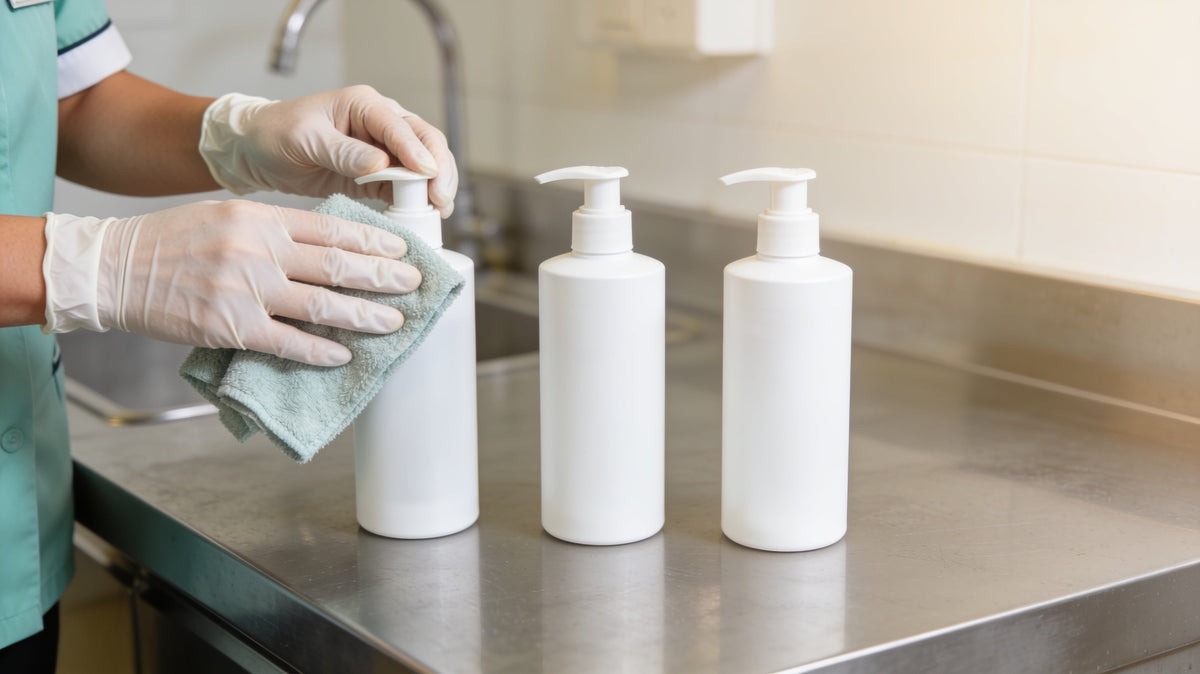
Dispensers fed from 5 L refills cut packaging, but only work well with a disciplined routine. Never top up a partly used bottle; empty it, clean it, dry it fully and refill it, or use sealed cartridges. Add tamper evidence and record batches so every bottle is traceable.
To use 5 L bulk refills safely, never top up a partly used dispenser bottle. Empty it fully, clean it, let it dry completely, then refill from a freshly opened or properly closed refill container, or switch to sealed cartridges that are replaced whole. Lockable or tamper-evident dispensers and simple batch records complete the system.
Refillable dispensers are one of the most effective ways for a property to reduce single-use plastic. They also put the quality of every guest shower in the hands of housekeeping. This guide, written from the perspective of a hotel amenities manufacturer in India that supplies 300 ml dispenser bottles and 5 L refills, sets out a practical standard operating procedure (SOP) that executive housekeepers can adapt.
Why topping up is the main risk
When fresh product is poured onto the remains of old product, the old residue, any water that has entered through the pump and anything that has touched the nozzle are mixed into the new fill. Over repeated top-ups, the oldest product never fully leaves the bottle. That can lead to changes in smell, colour or texture and undermines the preservation the formula was designed with.
The rule is simple: never top up. Empty, clean, dry, refill. Or use sealed cartridges.
Choosing the right system
| System | How it works | Hygiene control | Packaging |
|---|---|---|---|
| Open refillable bottle | Staff refill from 5 L | Depends entirely on SOP discipline | Lowest |
| Lockable refillable bottle | Only staff can open; refilled from 5 L | Good, with SOP | Low |
| Sealed cartridge | Factory-filled unit replaced whole | Highest; no product exposure | Moderate |
Many properties use sealed cartridges in guest rooms and refillable bottles in back-of-house or staff areas where control is easier. Compare hardware options in our hotel amenity packaging guide.

A refilling SOP for housekeeping
Before you start
- Work in a designated clean area, not in the guest bathroom.
- Wear clean gloves.
- Have a set of spare, clean, dry dispenser bottles ready so a bottle can be swapped out immediately rather than refilled in the room.
- Check the 5 L container: correct product, intact seal or closure, within its shelf life, batch code legible.
Step 1: Remove and swap
When a dispenser runs low, remove the bottle and replace it with a clean, full spare. Take the used bottle to the clean area. This avoids refilling in a wet, busy bathroom.
Step 2: Empty completely
Discard any remaining product in line with your property's waste procedure. Do not pour it back into the 5 L container.
Step 3: Clean
Wash the bottle, pump and cap with warm water and a suitable detergent. Pump clean water through the pump mechanism until it runs clear. Rinse thoroughly so no detergent remains.
Step 4: Dry completely
Leave bottles and pumps upside down on a clean rack until fully dry inside. Water left in a bottle dilutes the product and can affect its stability. This is the step most often rushed.
Step 5: Refill
- Use a clean funnel or a dispensing tap on the 5 L container.
- Do not touch the inside of the bottle or the funnel tip.
- Fill to the marked level, not to the brim.
- Close the 5 L container immediately after use.
Step 6: Seal and label
Refit the pump, apply a tamper-evident seal or lock, and label the bottle with the refill date and the 5 L batch code.
Step 7: Record
Log the date, staff initials, product, 5 L batch code and number of bottles filled. This makes any guest query traceable.
Storing 5 L refills
- Store in a cool, dry place away from direct sunlight and heat sources.
- Keep containers closed when not in use.
- Rotate stock first in, first out, using the batch code and manufacture date.
- Do not decant 5 L product into unlabelled containers.
- Once opened, use the container within a sensible period agreed with your supplier.
Our bulk packs are supplied with batch coding to support this.
Tamper evidence: reassuring guests
Guests who see a dispenser may wonder whether it has been interfered with. Visible cues help:
- Lockable brackets that only staff can open
- Tamper-evident labels across the pump and neck
- Sealed cartridges with an intact factory seal
- A small room card explaining your refilling standard
Daily checks
As part of room cleaning, housekeeping should check each dispenser for:
- Fill level, swapping the bottle when low
- Intact seal or lock
- Clean nozzle and exterior, with no build-up
- Correct product in the correct position
- Any unusual smell, colour or separation, in which case the bottle is removed and reported
Training and audits
An SOP only works if it is followed. Train new staff with a demonstration, display a laminated summary in the refilling area, and have a supervisor audit a sample of bottles and logs each week. Spot checks of dryness and labelling are quick and revealing.
Common mistakes to avoid
- Refilling in the guest bathroom. Wet, busy surfaces make clean refilling difficult. Swap bottles in the room and refill elsewhere.
- Refilling wet bottles. Even a little water left behind dilutes the product and can affect it over time.
- Mixing batches. Pouring the end of one 5 L container into a bottle and finishing it from another makes traceability impossible.
- Swapping products between positions. A shampoo bottle refilled with body wash confuses guests. Keep bottles dedicated to one product and clearly marked.
- Leaving 5 L containers open. An open container in a storeroom is exposed to dust and humidity.
- Skipping the log. Without records, a guest complaint cannot be traced to a batch.
Building the programme
Most properties phase dispensers in rather than switching overnight. Start with one floor or one room category, measure housekeeping time and guest feedback, then extend. Keep a small stock of minis or sachets at the front desk for guests who request them. Our hotel amenities collection shows dispenser, refill and mini formats on the same formulas, so you can mix them during the transition. Ready formulas start from 500 units per product; see MOQ and pricing.
What to ask your manufacturer
- Is the formula designed for dispenser use and the specific pump?
- What is the recommended period of use after opening a 5 L container?
- Are batch codes and manufacture dates printed on every container?
- Can the same formula be supplied in sealed cartridges if needed?
- Are certificates of analysis and safety data sheets available?
Harrods Health manufactures in an ISO certified, GMP-compliant facility; see quality and certifications for details.
Frequently asked questions
Can we top up hotel dispensers that are half full?
No. Topping up mixes old residue and any water that has entered with fresh product. Empty the bottle, clean it, dry it completely and refill it, or use sealed cartridges that are replaced whole.
How should 5 L refill containers be stored?
Keep them closed, in a cool, dry place away from sunlight and heat, rotate stock first in, first out, and use opened containers within the period agreed with your supplier.
Are sealed cartridges better than refillable bottles?
Sealed cartridges give the highest assurance because product is never exposed during refilling. Refillable bottles produce less packaging but depend entirely on a disciplined SOP.
What should a refill log record?
Date, staff initials, product, the 5 L batch code and how many bottles were filled. This makes any guest query traceable to a batch.
Planning a dispenser programme? Visit our hotel toiletries manufacturing page for 300 ml and 5 L options.
Related service: Hotel amenities manufacturing for your property →
Tell us your idea. An account manager replies within 1 business day.
More from Harrods Insights
Keep reading
Multilingual Labelling for Hotel Toiletries in South-East Asia: Languages, Small-Pack Layout and Halal Logo Rules

Sustainable Hotel Amenities in Singapore and South-East Asia: Refill Systems, PCR Plastic and Substantiating Green Claims