Private Label Baby Care Manufacturing in India: Formulas, Tests and Claims
Published by Harrods Health Private Limited, a private label and contract manufacturer in Ambala, Haryana, India. By Hemang Jain, Founder, Anadoris.
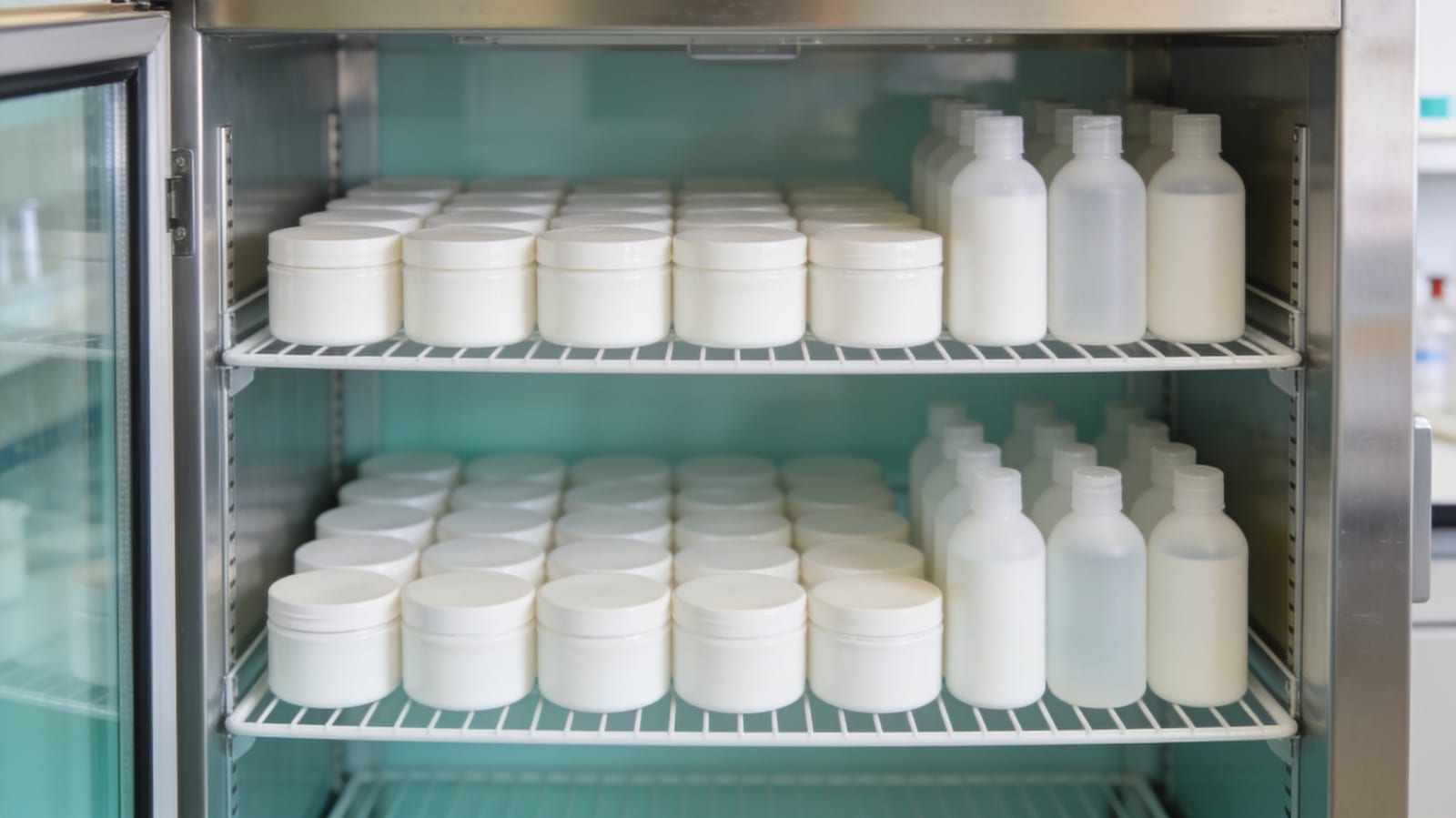
A private label baby care range rests on mild surfactant blends, simple emollient bases, little or no fragrance and a preservative system proven in the final pack. Plan stability, challenge and microbial testing early, keep claims cosmetic, and confirm product classification and permitted wording for each market with a regulatory adviser.
A private label baby care range is built on mild cleansing systems, simple emollient bases, little or no fragrance and a preservative system proven to work in the finished pack. Because products for young children draw closer scrutiny, plan testing and claim wording before artwork, and confirm classification and permitted claims for each market with a regulatory adviser.
Baby care looks like a small range: a wash, a shampoo, a lotion, an oil, a cream and perhaps a powder. Behind each sits a set of choices that adult products rarely face so strictly. Parents read labels line by line, retailers ask for test reports before listing, and regulators in many markets pay extra attention to products for young children. This guide covers what changes in formulation, testing, claims and packaging when you brief a third-party manufacturer for baby care. For the wider process, see our complete guide to third-party cosmetic manufacturing in India.
Which products make up a typical baby care range?
Most brands launch three or four products and add more once the first ones sell. The table shows the main product types, the formulation point that matters most for each, and the packs that usually suit them.
| Product type | Key formulation point | Typical pack |
|---|---|---|
| Baby wash | Mild surfactant blend, skin-friendly pH, modest foam | Lockable pump or flip-cap bottle |
| Baby shampoo | Gentle cleansing, light conditioning, quick rinse | Flip-cap bottle |
| Head-to-toe wash | One simple base for hair and body | Pump bottle in larger sizes |
| Baby lotion | Light oil-in-water emulsion that spreads easily | Pump bottle or tube |
| Baby cream | Richer emulsion with butters and emollients | Tube, or jar with inner seal |
| Baby oil | Simple oil blend with antioxidant | Bottle with flip cap or drip insert |
| Powder alternative | Talc-free starch blend or lotion-to-powder | Sift-hole shaker or tube |
How is a mild baby wash or shampoo formulated?
The cleansing system decides how a wash feels. Adult body washes often rely on one strong primary surfactant for high foam. Baby washes usually lean on milder blends: amphoteric surfactants such as betaines, non-ionic glucosides and gentler anionic options such as some amino acid-based surfactants, combined so that each softens the edge of the others. The trade-off is foam. A milder wash usually lathers less and can cost more per batch, and most parents accept that.
The pH is set close to that of skin and checked through stability storage, because it can drift over time. Thickening a mild base is also harder, since some low-irritation surfactants do not build viscosity with salt, so polymer or gum thickeners are often used instead. Ask the manufacturer how the base behaves after months in a warm bathroom.
Wording about eyes needs care. A promise of no stinging is a specific claim that needs specific evidence. Many brands say "gentle formula" and add a plain direction to avoid contact with eyes.
What changes in a baby lotion, cream or oil?
Lotions are light oil-in-water emulsions chosen to spread over a wriggling child without drag. Creams carry more oil phase, often butters such as shea or cocoa, and leave a richer feel. Emulsifier choice matters: a cream that separates or thins in heat will come back as a complaint.
Baby oil is the simplest product in the range and easy to get wrong in the details. Mineral oil gives a clean, consistent feel. Vegetable oils such as sunflower or coconut suit a natural positioning but need antioxidant protection and a realistic shelf life because they can turn rancid. Some brands avoid nut-derived oils so that parents with allergy concerns can choose more easily; if you use them, name them clearly. Our guide to carrier oils compared by feel and stability goes deeper.
Nappy-area creams deserve a warning. A cream positioned to treat or prevent a rash may fall outside cosmetics in many markets. Describe cosmetic functions such as moisturising and leaving skin soft, and take advice before using any wording about rashes.
What can replace traditional baby powder?
Many brands now choose talc-free powders based on starches such as corn, rice or tapioca, sometimes with a little kaolin or silica for slip. Starch powders feel different from talc and can clump in humid climates, so test them where they will be sold. A lotion-to-powder cream, which dries to a silky finish, avoids loose powder altogether. Whatever the base, choose a pack that limits puffing, such as a shaker with small sift holes.
How should fragrance and preservatives be chosen?
Many baby ranges are unfragranced or very lightly fragranced. Where fragrance is used, the fragrance supplier provides documentation for the product category and its allergen content, and the formulator keeps the dose low. Essential oils are not automatically milder; they contain allergens too. "Fragrance-free" means no added fragrance, while "unscented" can still include a masking agent, a distinction covered in our article on fragrance-free and sensitive-skin formulation.
Any product that contains water needs a preservative system. A "preservative-free" claim pushes you toward anhydrous formats or specialised packs, and it can read as a criticism of permitted preservatives. The aim is a system that is permitted in each target market, fits your ingredient policy and passes a preservative efficacy test in the final pack. Be wary of a mild preservative that only works at a low pH when your base sits closer to neutral.
Which tests do baby care brands usually ask for?
- Stability and packaging compatibility under accelerated and real-time storage. Our guide to stability and safety testing before launch explains the stages.
- Preservative efficacy (challenge) testing on the final formula.
- Microbial testing of every batch before release.
- A safety assessment by a qualified assessor that considers the intended age group.
- Patch testing on adult volunteer panels through an independent laboratory, where the brand wants supporting data.
- Screening for heavy metals and other contaminants when a retailer or importer asks.
A test report supports a claim only if the test was designed for that claim. Agree the claim first, then commission the test.
Which claims should a baby care brand avoid?
Keep claims cosmetic: cleansing, moisturising, softening, a gentle feel and a light scent. Avoid wording about treating or preventing any skin condition, absolute safety promises, endorsement-style claims about professional approval you cannot document, free-from lists that imply other products are unsafe, and natural or organic claims without paperwork. In India, cosmetics fall under the Drugs and Cosmetics Act and the Cosmetics Rules 2020, and BIS standards cover some product types. Classification, applicable standards and permitted claims depend on the market, so confirm current rules with a regulatory adviser before artwork.
What packaging suits baby care?
Parents often use these products one-handed. Lockable pumps, flip caps that open with a thumb and tubes for creams work well. Avoid small detachable parts, add tamper-evident seals or shrink bands for retail, and keep text legible on small packs. Jars invite fingers into the product, so a tube or pump lowers contamination risk for creams. Our custom packaging team can match bottles, closures and decoration to the formula.
Harrods Health Private Limited, Ambala, Haryana, makes private label and custom skincare and body care in its own facility with an in-house R&D lab. Minimum order quantities are quoted by product and packaging, and for baby care the team will set out which documentation exists for a ready base and which tests a new claim would need.
What to put in your brief for a baby care range?
- The intended age group and every market you plan to sell in.
- The product list, pack sizes and launch order.
- Your fragrance position: none, very light or a named scent.
- Your ingredient policy, including any exclusions.
- The claims you hope to make and the tests you are prepared to fund.
- Pack and dispensing preferences, including locks and seals.
- Retailer or importer test and document requirements.
- Forecast quantities for launch and the first reorder.
Related service: Ready formulas you can brand →
Tell us your idea. An account manager replies within 1 business day.