
Body Oil vs Massage Oil vs Dry Oil: Formats, Textures and Packaging
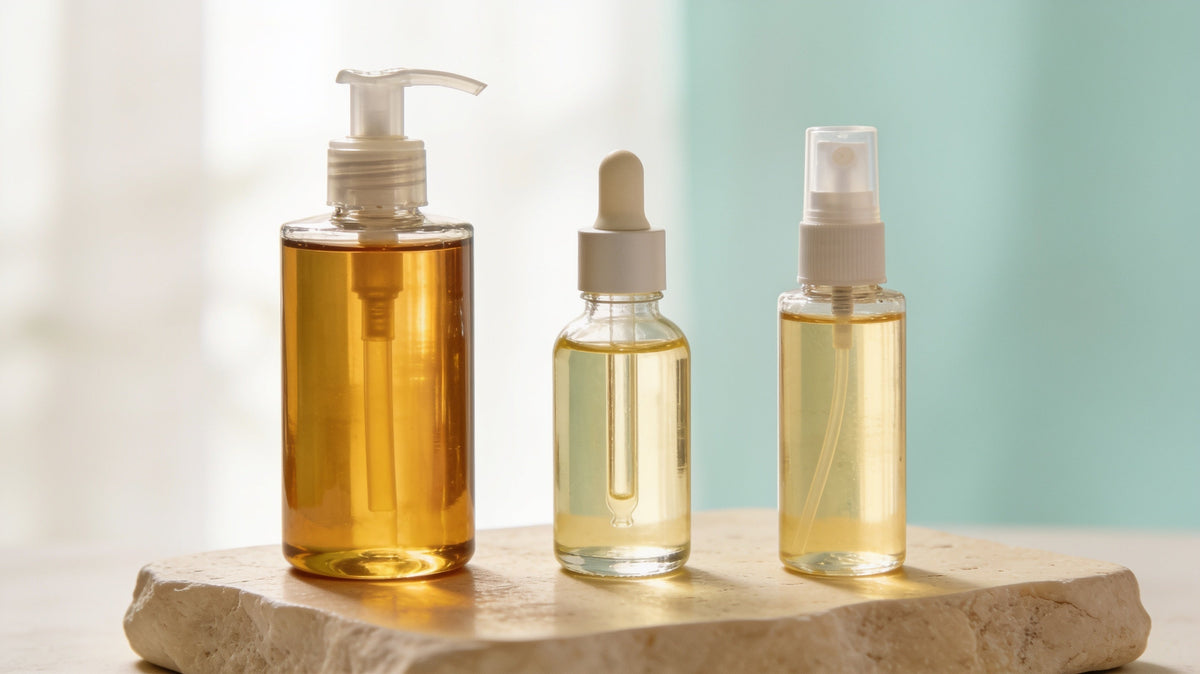
A massage oil is built for glide and working time, a body oil for everyday moisturising with a comfortable finish, and a dry oil for fast absorption with a light, non-greasy touch. The carrier blend sets the texture, and the pack should match how the oil is used: pumps for treatment rooms, sprays for dry oils, droppers and roll-ons for small, concentrated formats.
A massage oil is formulated for glide and a long working time, a body oil for daily moisturising with a comfortable finish, and a dry oil for very fast absorption with a light, non-greasy touch. The carrier blend creates each texture, and the pack, whether pump, spray, dropper or roll-on, should suit how the oil is applied.
Brands planning an oil range often use these three names interchangeably, yet customers notice the difference immediately. Getting the format right affects the formula, the pack, the price point and the way you describe the product. As a massage oil manufacturer in India that also produces body oils and aromatic body oil mists, we help brands choose the right format before sampling begins.
The three formats at a glance
| Massage oil | Body oil | Dry oil | |
|---|---|---|---|
| Main job | Lets hands glide over skin through a treatment | Moisturises and softens skin day to day | Moisturises with a quick, light, satin finish |
| Absorption | Slower, so it stays workable | Moderate | Fast |
| After-feel | Richer; may be wiped off after treatment | Comfortable, soft | Almost dry to the touch |
| Typical carriers | Sesame, sweet almond, sunflower, olive in part | Sweet almond, apricot kernel, jojoba, fractionated coconut | Fractionated coconut, lighter esters, jojoba |
| Who uses it | Therapists, couples, home rituals | Consumers after bathing | Consumers wanting oil without residue, including on hair ends where suitable |
| Typical packs | Pump bottles, 1 L and 5 L bulk | Glass or PET with pump or dropper | Fine-mist spray bottles |
Massage oil
A massage oil prioritises slip. The therapist needs to move across large areas of skin without the oil vanishing within minutes, so slower-absorbing carriers form the base, often balanced with a lighter oil to stop the finish feeling heavy. Fragrance is often softer than in retail products because treatment rooms are enclosed. Bulk 5 L packs are available for professional use, with 1 L and retail sizes for smaller spas and home users. See examples in our massage oil range and, for the professional side, our guidance on spa and hotel formats.
Typical claims
Glides smoothly, moisturises, softens skin and helps skin feel relaxed. Keep claims cosmetic; avoid any suggestion that the oil treats aches or medical conditions.

Body oil
A body oil is a daily moisturiser in oil form, usually applied to damp skin after a shower or bath. It should spread easily, absorb within a reasonable time and leave skin feeling soft without staining clothes. Body oils often carry a stronger, more perfume-like fragrance, botanical extracts or a radiance finish from fine shimmer. Our body oil collection shows ready bases that can be customised with fragrance, colour and packaging, and the wider body care range covers products that can extend the same scent.
Typical claims
Moisturises, softens and smooths the feel of skin, leaves skin with a healthy-looking glow, absorbs comfortably.
Dry oil
"Dry oil" is a sensory description, not a separate ingredient. It describes an oil that sinks in quickly and leaves very little residue. Formulators achieve this with light carriers and emollients that spread thinly and absorb fast. Dry oils are usually sprayed, which spreads a thin layer evenly and helps avoid over-application. Aromatic body oil mists sit in this family, combining a light oil with fragrance for a scented, soft finish.
Typical claims
Absorbs quickly, non-greasy feel, moisturises, leaves skin soft and lightly scented.
Choosing packaging for each format
Oils interact with packaging more than water-based products do. They can soften some plastics, travel past loose closures and lift unsuitable labels. Here is how the common options compare.
Bottle materials
- Glass: inert, premium in feel and well suited to essential-oil-rich blends. Amber glass protects against light. Heavier and breakable, which adds shipping cost and needs careful cartoning.
- PET: light, clear and shatter-resistant, widely used for body and massage oils. Compatibility with the specific formula, especially high essential-oil levels, should be checked before filling.
- HDPE and other plastics: practical for bulk 1 L and 5 L packs and back-bar use.
- Aluminium: light and opaque, sometimes used for premium or travel formats; an internal lining may be needed.
Closures and applicators
| Applicator | Best for | Watch for |
|---|---|---|
| Lotion pump | Massage oils, body oils, spa stations | Lock or clip for transit; oil-compatible seals |
| Fine-mist spray | Dry oils, body oil mists | Spray pattern with oil viscosity; nozzle clogging |
| Dropper | Small concentrated body or face oils | Rubber teat compatibility; dropper-only dosing is slow for body use |
| Roll-on | Aromatherapy blends for pulse points, travel sizes | Ball fit to avoid leaking; suited to small volumes |
| Flip-top or disc cap | Value body oils, larger retail sizes | Seal quality; risk of over-pouring |
| Tap or pump on bulk pack | 5 L professional containers | Clean decanting routine |
Our custom packaging service covers bottle, closure, label and carton selection with compatibility checks, while stock bottles from our unlabelled packaging range suit faster launches with your own labels.
Building a range across formats
Many brands start with one format and add others once the scent has proven popular. A common path is a massage oil for the spa or ritual market, followed by a retail body oil and then a dry oil mist for customers who dislike residue. Keeping the fragrance consistent while adjusting texture and pack lets each product serve a different moment without confusing customers. Each format and size is a separate product for minimum order purposes, with ready formulas starting from 500 units per product, so plan the order of launches around demand rather than releasing every format at once. Samples are provided before ordering so you can compare textures side by side.
Practical points for brands
- Decide the use occasion first. A product used in a treatment room and one applied after a shower need different textures, even if they share a scent.
- Test the pack with the formula. Leakage, label lifting and pump failure usually appear during transit and storage checks, not on the bench.
- Consider light protection. Clear packs look attractive but expose oils and fragrances to light; cartons or tinted packs help.
- Remind users about slippery surfaces. Oils on bathroom floors and in showers can make surfaces slippery, a sensible note for usage instructions.
- Mention oily laundry. For professional users, towels soaked in oil should be laundered and dried carefully, letting dryers complete their cool-down cycle.
To compare the carriers behind each texture, see our guide to carrier oils for massage oils.
Frequently asked questions
What is the difference between a body oil and a massage oil?
A massage oil absorbs more slowly so hands can glide through a treatment, while a body oil is designed for daily moisturising with a more comfortable, quicker finish.
What makes an oil a dry oil?
A dry oil uses light carriers and emollients that spread thinly and absorb fast, leaving very little residue. It is usually packed in a fine-mist spray.
Is glass or PET better for body oil packaging?
Glass is inert and premium, and amber glass protects from light, but it is heavier and breakable. PET is light and shatter-resistant; compatibility with the specific formula should be checked.
Can one formula be sold as both a massage oil and a body oil?
Sometimes, especially in smaller ranges, but the best results come from tuning absorption and fragrance strength to each use. A shared scent can link the two products.
Choosing a format for your range? Ask our massage oil manufacturer team for samples.
Related service: Massage oil manufacturing for your brand →
Tell us your idea. An account manager replies within 1 business day.
More from Harrods Insights
Keep reading

Reef-Friendly and Ocean-Conscious Hotel Amenities: What the Claims Mean and How to Judge Them

Ayurveda and Wellness Spa Amenities for Sri Lankan Hotels: Massage Oils, Herbal Body Care and Claims