
Fine-Fragrance Body Wash: How Perfume-Grade Scent Is Built Into a Shower Gel
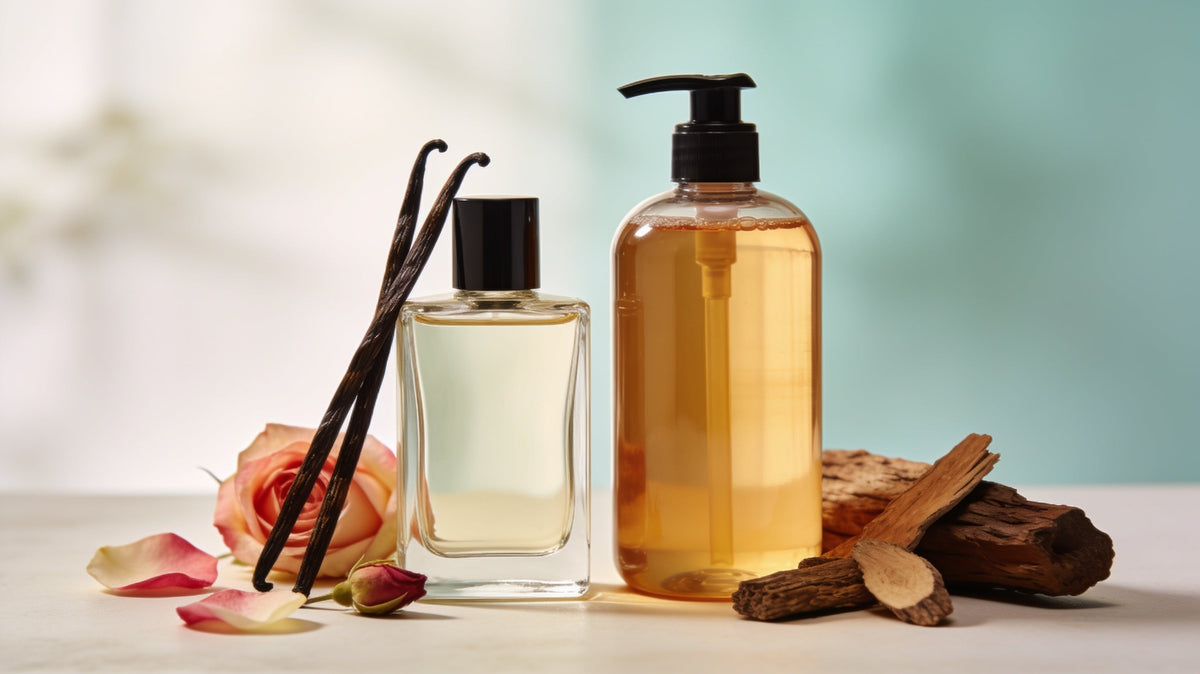
A fine-fragrance body wash uses a perfume-quality accord adapted for a surfactant base, usually at a higher load than a standard shower gel. Solubilisers keep it clear, stability testing protects colour and viscosity, and the perfumer rebalances notes so the scent blooms in hot water and lingers lightly on skin. A brand's EDP is a starting point, not something poured straight in.
A fine-fragrance body wash carries a perfume-quality accord, adapted for a surfactant base and typically dosed higher than an everyday shower gel, so it blooms in the shower and leaves skin lightly scented. Matching a brand's perfume means re-engineering the accord for rinse-off, not pouring the perfume into the bottle.
Fragrance is usually the reason a customer picks one shower gel over another, and the reason they reorder. For brands that already sell an eau de parfum, extending that scent into bath and body is one of the most natural range extensions available. This guide explains, in practical terms, what a perfumed body wash manufacturer does to make a perfume-grade scent behave well inside a shower gel.
What "fine fragrance" means in a body wash
In perfumery, fine fragrance refers to the scents worn as perfume: complex, layered compositions with distinct top, heart and base notes. A functional fragrance, by contrast, is designed mainly to make a product smell pleasant in use. A fine-fragrance body wash uses an accord built to perfume standards, with recognisable structure and character, then adjusted so it survives a detergent base, a hot shower and a long shelf life.
The result should smell like a considered perfume in the bottle, open up generously under running water, and leave a soft trace on skin after towelling. It is a sensory and cosmetic promise, so the right claim is that it cleanses and leaves skin smelling of the fragrance, not that it replaces perfume or lasts a stated number of hours.
Typical fragrance loads by format
Fragrance load is the percentage of fragrance oil in the finished product. The ranges below are general industry norms rather than fixed rules; the right figure depends on the fragrance, the base and safety limits for each material.
| Format | Typical fragrance load | Why |
|---|---|---|
| Everyday shower gel | Roughly 0.5% to 1.5% | Pleasant in use, cost-efficient, easy to keep clear |
| Fine-fragrance body wash | Often 1.5% to 3% | Stronger bloom and a more perfume-like profile |
| Body mist | Commonly a few per cent | Light, refreshing, leave-on |
| Eau de parfum | Commonly 15% to 20% | Concentrated, worn as perfume |
Higher is not automatically better. Above a certain point extra fragrance adds cost, can thin or destabilise the gel, and may push individual materials towards their safety limits for rinse-off products. The perfumer and formulator agree a load that delivers the effect with headroom.

Why you cannot simply add perfume to a shower gel
- Alcohol: a finished EDP is mostly ethanol. Added to a gel, it can collapse viscosity and is not needed in a rinse-off base.
- Material limits differ by product type: fragrance safety standards set maximum levels for each material according to how the product is used. Rinse-off limits are different from those for fine fragrance, so the accord may need adjusting.
- pH and surfactants: some fragrance materials change odour, colour or stability in a detergent environment.
- Dilution: in the shower the product is diluted many times over, which changes which notes the nose actually detects.
Solubilisers and clarity
Fragrance oils do not dissolve in water. In a shower gel, surfactant micelles carry some of the oil, but at fine-fragrance loads a clear gel often needs help. Solubilisers such as polysorbate 20 or PEG-40 hydrogenated castor oil wrap fragrance droplets so they stay dispersed, keeping the product clear and preventing a film of oil forming at the top of the bottle.
Clarity is checked across temperatures. A gel that is clear in a warm lab can turn hazy in a cold warehouse, so samples are cycled through cold and heat. If a perfectly clear gel is not essential to your brand, an opaque or pearlised base removes the clarity constraint and can carry more fragrance with fewer solubilisers.
Viscosity and the salt curve
Many shower gels are thickened with salt, and fragrance shifts that thickening behaviour. A high fragrance load can make a gel thinner or, occasionally, thicker than expected. The formulator re-runs the salt curve with the final fragrance in place so the texture you approved in the sample is the texture that ships.
Scent bloom: designing for the shower
Bloom is the burst of fragrance released when the product meets warm water and lathers. It is driven mostly by the lighter top and heart notes, which evaporate readily in steam. What stays on skin afterwards is carried by heavier, more substantive base materials such as soft woods, musks and ambery notes.
A good fine-fragrance body wash is balanced for both moments. Perfumers often lift the top notes slightly so the bloom feels generous, and keep enough base character that skin smells softly of the fragrance after drying. Evaluate samples in a real shower, then again ten minutes after towelling, rather than judging only from the cap.
Matching your brand's perfume or EDP
If you already sell a perfume, the goal is recognisable continuity: a customer should smell the body wash and know which perfume it belongs to. The process usually runs like this.
- Share the reference. Provide the fragrance oil or the finished perfume, together with the fragrance supplier's safety documentation where you have it.
- Adapt the accord. The perfumer reworks materials that are unstable or restricted in a rinse-off base, keeping the signature notes.
- Trial at two or three loads. Small batches are made at different dosages so you can compare intensity and cost.
- Side-by-side evaluation. Compare the reference perfume with each trial in the bottle, during lather and on skin.
- Stability and compatibility testing. The chosen trial is held under heat, cold and light in its final pack to check odour, colour, clarity and viscosity.
Colour and discolouration
Some popular materials, notably vanillin and certain warm, gourmand notes, can gradually tint a product towards amber over time. Options include a coloured or opaque base, tinted or opaque packaging, or reformulating the accord. Deciding this early avoids disappointment when a crystal-clear sample darkens on the shelf.
To make the most of a matched scent, extend it across formats. Our guide to building a matching scent range covers body mist, body wash and perfume together, and the perfume collection shows EDPs available as a starting point.
What to ask for in your brief
- The reference scent and how close the match needs to be.
- Clear gel or opaque base, and the colour you want.
- Target cost per unit, which guides the fragrance load.
- Sales countries, since allergen labelling rules vary.
- Whether the body wash must sit in a gift set alongside a mist or EDP.
Custom scent work runs through our custom formulation service, with samples provided before any order.
Frequently asked questions
How much fragrance goes into a perfumed body wash?
Typical everyday shower gels sit at roughly 0.5% to 1.5% fragrance, while fine-fragrance body washes are often formulated at around 1.5% to 3%. The final figure depends on the accord, the base and the safety limits for each material in rinse-off products.
Can my existing perfume be used in a body wash?
Your perfume is the reference, but it is adapted rather than added directly. The alcohol is not used, and materials that are unstable or restricted in rinse-off products are reworked so the body wash smells recognisably of your perfume.
Why does a clear body wash sometimes go cloudy?
High fragrance loads, low temperatures or an insufficient solubiliser can cause haze. Formulas are cycled through cold and heat during development to check clarity before approval.
Will a perfumed body wash leave skin smelling of the fragrance?
A well-balanced fine-fragrance body wash leaves skin lightly scented after rinsing and drying. How long it remains noticeable varies by fragrance and person, so it should be described as a light scent rather than a timed claim.
Ready to bring your signature scent into the shower? Explore our fine-fragrance body wash manufacturing service.
Related service: Perfumed body wash manufacturing for your brand →
Tell us your idea. An account manager replies within 1 business day.
More from Harrods Insights
Keep reading

Shipping Hotel Amenities from India to China and Hong Kong: Consignee, Broker, Customs Inspection, Documents and Seasonal Planning

Supplying Hotels in Hong Kong and Macau: How the Rules Differ from the Mainland, Safety and Trade Descriptions Law, Labelling and Practical Buying
