
Building a Matching Scent Range: Body Wash, Body Mist, Lotion and Perfume
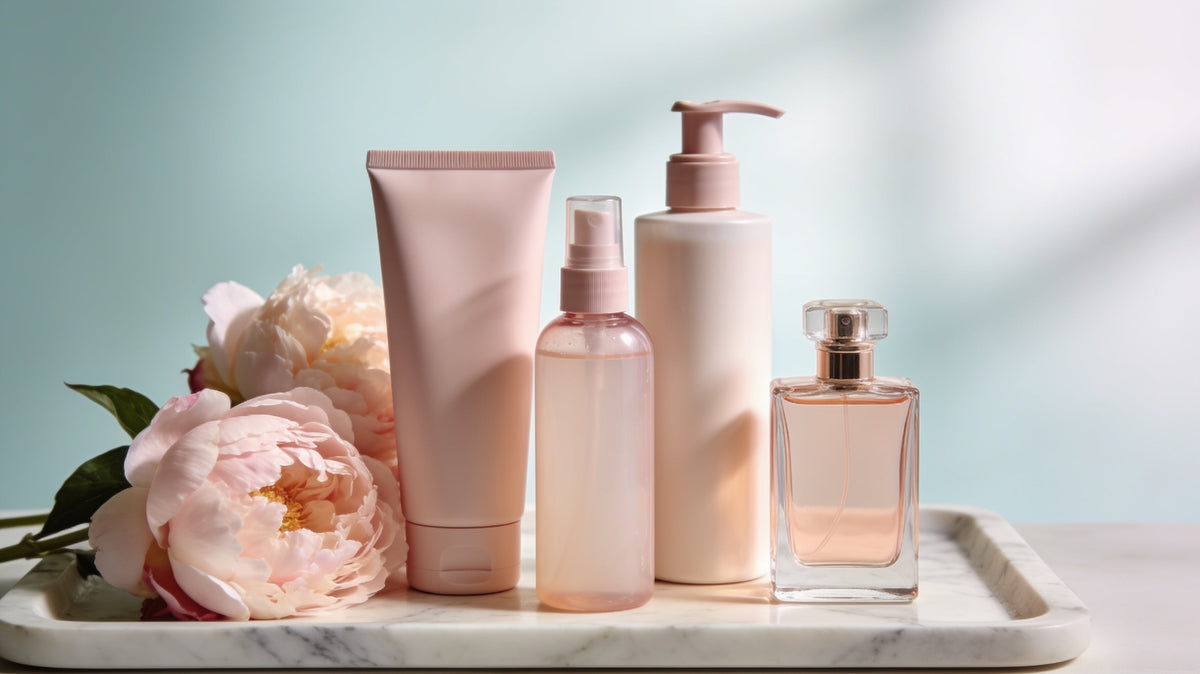
A matching scent range carries one recognisable fragrance across several formats, each adapted to its base and dosed differently. Start with a few hero scents across two or three formats rather than many scents in one format. Plan packaging as a family, align allergen labelling per format and budget MOQs per scent and per size.
A matching scent range carries one recognisable fragrance across body wash, body mist, lotion and perfume, with the accord adapted and dosed for each base so customers can layer the same scent through their routine. The most efficient way to build one is to choose a small number of hero scents and extend each across two or three formats.
Layering is how many customers already use fragrance: they shower with a scented wash, mist their skin and finish with a perfume. A brand that offers all of these in one scent gives customers a reason to buy more than one product and a ready-made gift. This guide explains how to plan such a collection with a perfumed body wash manufacturer that also produces body mists and perfumes.
Why build a scent across formats
- Higher basket value: a customer who loves a scent is likely to want it in more than one form.
- Natural gift sets: wash, mist and perfume in one scent make a coherent gift without extra development.
- Stronger brand identity: a signature scent becomes recognisable across the range.
- Easier storytelling: each scent has a name, a mood and a family of products, which is simpler to market than many unrelated SKUs.
How one fragrance adapts to each format
The same accord behaves differently in a detergent, an alcohol-water mist, an emulsion and a perfume. Perfumers adjust the composition and dosage so each product smells like a member of the same family. The ranges below are typical, not fixed rules.
| Format | Typical fragrance load | Role in the routine | What gets adjusted |
|---|---|---|---|
| Body wash | Roughly 0.5% to 3%, depending on positioning | Scent bloom in the shower; light trace on skin | Top notes lifted for bloom; materials stable in surfactant |
| Body lotion or cream | Commonly lower, often below about 1% | Soft, close-to-skin scent that lingers | Leave-on safety limits; emulsion compatibility |
| Body mist | Commonly a few per cent | Light, refreshing, re-applicable | Brighter, airier balance; clarity in alcohol-water |
| Eau de parfum | Commonly 15% to 20% | Full expression and projection | The reference composition |
The body wash usually needs the most adaptation, because some fine-fragrance materials are unstable or restricted in rinse-off bases. Our guide to fine-fragrance body wash explains that process in detail.

Designing the range architecture
The common mistake is launching too many scents in a single format. Ten body washes with no matching products spread stock thin and leave customers without a layering story. A grid of a few scents across a few formats works better.
| Scent | Body wash | Body mist | Eau de parfum | Gift set |
|---|---|---|---|---|
| Fresh hero (citrus, aquatic or green) | Yes | Yes | Optional | Wash + mist |
| Floral or fruity hero | Yes | Yes | Yes | Wash + mist + EDP |
| Warm hero (vanilla, amber or woods) | Yes | Yes | Yes | Wash + mist + EDP |
Three scents across three formats gives nine core products and several gift combinations. Once a scent proves itself, add a lotion, a travel size or a 5 L refill rather than a new scent.
Picking hero scents
- Cover different moods so the scents do not compete with each other.
- Consider climate: fresher profiles for hot markets, warmer and creamier profiles for cooler ones.
- Test with real customers using samples before committing to full production.
- Keep names and colour cues consistent across every format in the scent family.
Packaging as a family
A layering collection should look like one family on shelf and on screen. Match cap colours, label layouts and typography across the wash, mist and perfume. Choose bottle shapes that share a design language, even when sizes differ.
For the perfume, the bottle carries most of the brand's perceived value. Our perfume bottles range offers shapes that can be paired with body wash and mist packaging, and the perfume collection shows existing EDPs that can serve as the starting point for a scent family.
Labelling consistency and allergens
Because fragrance allergens such as linalool and limonene are declared above thresholds that differ for rinse-off and leave-on products in markets like the EU and UK, the allergen list on your body wash may differ from the one on your mist or lotion, even though the scent is the same. That is normal. Plan artwork so each format's ingredient panel is generated from its own approved formula rather than copied across the range.
Extending the scent beyond the shower
Once a scent family is established, it can extend into other textures. Massage oils, for example, are a natural partner to a warm or floral scent family for spa and gifting channels; see our massage oil manufacturing page. Wider body care formats can follow the same principle.
Planning MOQs and stock
Ready formulas start from 500 units per product, and each scent in each format and size counts as a separate product. A three-scent, three-format launch therefore needs nine lots of stock. To manage cash flow:
- Launch all three scents in the body wash and body mist first.
- Add the EDP for the two strongest scents once early sales data arrives.
- Use gift sets to move stock of slower scents.
- Hold packaging components rather than finished goods where lead times allow.
Your single account manager coordinates fragrance, formulas and packaging across every format, so the scent stays consistent from batch to batch and from wash to perfume.
Keeping the scent consistent over time
A layering range only works if each scent stays the same from one production run to the next. That depends on locking the fragrance code and dosage for every format at approval, and on the fragrance supplier holding consistent quality. Retained samples from each batch let the team compare new production against the approved standard. If a fragrance material becomes unavailable or a regulation changes, the perfumer adjusts every format together so the family still matches.
Evaluating a scent family
Before approving, wear the full set together as a customer would: shower with the wash, apply the mist on dry skin, then add the perfume. Check that the notes harmonise rather than clash, that the mist feels lighter than the perfume, and that the wash bloom hints at the same character without overpowering it. Small tweaks at this stage are far cheaper than relaunching later.
Frequently asked questions
Can the same fragrance oil be used in a body wash and a perfume?
The perfume is usually the reference, but the accord is adapted for each format. Body washes in particular need materials that are stable and permitted in rinse-off products, so the perfumer adjusts the composition while keeping the scent recognisable.
How many scents should a new layering range launch with?
Many brands start with two or three hero scents that cover different moods, each offered as a body wash and body mist, then add a perfume or lotion for the best performers.
Why do allergen lists differ between products in the same scent?
In markets such as the EU and UK, fragrance allergens are declared above different thresholds for rinse-off and leave-on products, and each format uses a different fragrance load, so the declared allergens can vary.
Do I need to order the minimum quantity for every format?
Yes. Each scent in each format and pack size is a separate product, and ready formulas start from 500 units per product, so plan launch quantities across the whole grid.
Ready to build your scent family? Start with our body wash manufacturing page and brief your hero scents.
Related service: Perfumed body wash manufacturing for your brand →
Tell us your idea. An account manager replies within 1 business day.
More from Harrods Insights


