
Foundation and Concealer Shade Range Development: Undertones, Pigments and Real-Skin Testing
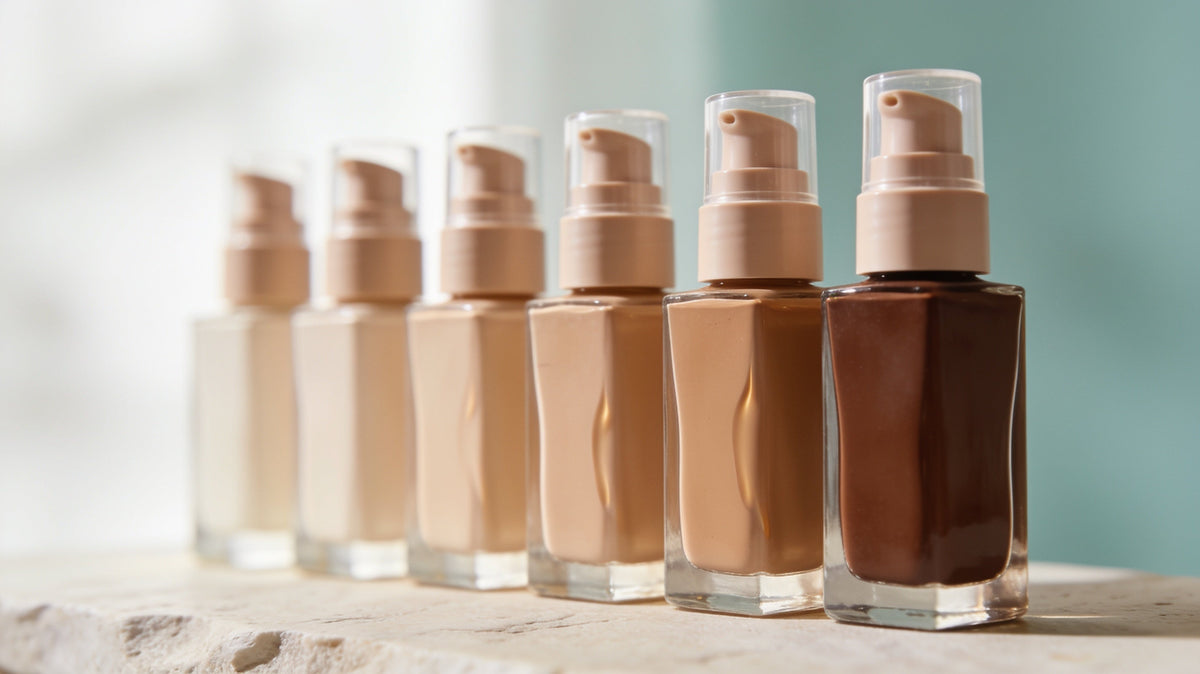
A foundation range is built on a grid of depth and undertone, not a list of names, and every shade must be tested on real skin in the final formula. Pigment dispersion and batch consistency decide whether shades stay true over time. Start with a focused core range and widen it with evidence.
A good foundation or concealer range is planned as a grid of depth and undertone, matched in the final formula, and tested on real skin across that grid. Shade names and swatch photos come last; the structure of the range comes first.
Complexion products are the hardest makeup category to get right and the most damaging to get wrong. A lipstick in the wrong shade is a disappointment; a foundation that turns grey, orange or ashy on a customer's skin is a lost customer. This guide explains how shade ranges are developed with a makeup manufacturer in India, with particular attention to Indian skin tones and to brands selling into several regions.
Depth and undertone: the two axes of a shade range
Every complexion shade can be described by two things:
- Depth: how light or deep the shade is.
- Undertone: the underlying hue, commonly described as warm (yellow or golden), cool (pink or red), neutral, and in many systems olive.
A range is strongest when it covers depth evenly and offers more than one undertone at each depth that matters to your customers. Many failed ranges have plenty of light shades with three undertones each, then a handful of deep shades with only one.
Indian and South Asian skin tones
Indian skin spans a wide depth range, and warm, golden and olive undertones are common. Shades that are too pink can look ashy; shades that are too yellow or orange can look flat. Deeper skin often needs richer red or golden undertones rather than a darker version of a light shade. Brands targeting India should build the core of the range around medium and medium-deep depths with careful warm and olive options, rather than adapting a range designed for another market.
Global ranges
Importers and brands selling across the GCC, UK and EU, US, Africa and South-East Asia need wider depth coverage and more deliberate undertone choices at the deep end of the range. If one formula must serve several regions, plan the full grid early, even if you launch only part of it.
Planning shade spacing
Shade spacing is the gap in colour between neighbouring shades. Spacing that is too wide leaves customers between shades; spacing that is too narrow multiplies SKUs without adding coverage. A practical approach:
- Map your target customers' depth and undertone spread.
- Choose anchor shades at key depths, typically the shades you expect to sell most.
- Fill gaps between anchors where real-skin testing shows customers falling between shades.
- Add undertone variants at the depths where your customers are concentrated.
A short, well-spaced first range is better than a long range with poor spacing. You can add shades later with evidence from sales and customer feedback.

Pigments and dispersion
Complexion shades are usually built from a small palette of pigments: titanium dioxide for whiteness and coverage, iron oxides in yellow, red and black, and sometimes other permitted colourants for fine correction. Changing the proportions moves depth and undertone.
How well those pigments are dispersed matters as much as which ones are used:
- Poor dispersion shows as streaks, colour shift after rubbing, or a shade that changes as the product sets.
- Pre-dispersed pigments or treated pigments can improve consistency and feel.
- Colour development: some foundations deepen or "oxidise" slightly after application as the carrier evaporates. Shade approval should be done after the product has set, not just at application.
Information on available pigments is on our pigment and mica powders page, and the regulatory side is covered in our guide to cosmetic pigments and colourants.
Format affects shade
The same pigment blend looks different in different bases. A shade matched in a liquid foundation will not automatically transfer to a stick, cushion, tinted moisturiser or concealer. Coverage, finish and the colour of the base itself all change the result.
| Product | Shade consideration |
|---|---|
| Liquid foundation | Check colour after the film sets; finish (matte to dewy) changes perceived depth |
| Tinted products | Sheer coverage means fewer shades may be needed, but undertone still matters |
| Concealer | Often offered slightly lighter for brightening as well as an exact-match option; higher pigment load makes errors more visible |
| Face powder | Translucent options suit many skin tones; tinted powders need their own shade logic |
See the face range for formats available.
Testing on real skin
Lab colour measurement is useful for batch control, but shade ranges are approved on faces. A sound real-skin process includes:
- A panel of people chosen across your depth and undertone grid, not just the people who happen to be in the office.
- Application on the jawline and cheek, assessed after the product has set.
- Assessment in natural daylight and typical indoor lighting.
- Photographs under consistent conditions, with and without flash, if you sell mainly online.
- Checks for ashiness on deeper skin and for orange or grey casts across the range.
- A wear check over several hours, because shade can shift as skin oils mix with the product.
If you plan any claims around wear, coverage, or suitability for oily or sensitive skin, plan the testing for those at the same time. Words like "non-comedogenic" need specific evidence, not just a formula with familiar ingredients. Formulas can be supplied as dermatologically tested, with test reports on request; more detail is on our testing and quality page.
Batch-to-batch consistency
A shade range is only as good as its repeatability. Customers who rebuy expect the same colour. Good practice includes keeping a retained physical standard for every approved shade, comparing each batch against it before filling, and controlling pigment lots carefully. Ask your manufacturer how they handle a batch that drifts from standard and what tolerance is agreed.
Concealer: more than a lighter foundation
Concealers do several jobs, and the range should reflect which ones you want to support. An exact-match concealer covers blemishes and should mirror the foundation grid closely. A brightening under-eye concealer is usually a step lighter with a slightly warmer or peachier undertone, because dark circles on many Indian and deeper skin tones lean blue, purple or brown, and a peach or orange correction neutralises them more effectively than a simply lighter shade. Colour correctors in green, peach or lavender are a separate category again. Decide which roles your concealer line will play before you plan shade counts, and brief the manufacturer accordingly. Higher pigment loads also make dispersion problems and colour drift more visible, so concealer batches need especially careful comparison against the approved standard.
Shade naming and communication
Names come last, but they matter. Numbered systems that encode depth and undertone help customers and retailers navigate the range. Avoid names that could be read as value judgements about skin colour. Clear swatches on several skin tones and a simple shade-finder description do more to reduce returns than clever names.
Minimums and timelines
Each shade is usually its own batch, so shade count drives both cost and timeline. Ready formulas start from 500 units per product; ask for shade MOQs when planning a custom range, and expect custom shade matching to add development rounds. For the full project sequence, see our guide to private label makeup manufacturing in India.
Frequently asked questions
How many foundation shades should a new brand launch with?
There is no fixed number. Launch the shades your target customers actually need, spaced evenly across depth with undertone options where customers are concentrated, then add shades using sales and feedback.
Why does my foundation look different after it sets?
As the carrier evaporates and the product mixes with skin oils, colour can deepen or shift. Shades should be approved after the product has set and after some wear, not just at application.
Can one shade range work for India and export markets?
It can, if the range is planned across a wide enough depth and undertone grid. Many brands launch the core shades for their first market and extend the grid for export.
Do you offer custom shade matching for foundations?
Yes. Custom shade matching is available on suitable bases. Ask for shade MOQs, as custom shades can change the minimum order.
Developing a complexion range? Explore the face collection or speak to our private label makeup manufacturing team.
Related service: Makeup manufacturing for your brand →
Tell us your idea. An account manager replies within 1 business day.
More from Harrods Insights
Keep reading

Multilingual Labelling for Hotel Toiletries in South-East Asia: Languages, Small-Pack Layout and Halal Logo Rules

Sustainable Hotel Amenities in Singapore and South-East Asia: Refill Systems, PCR Plastic and Substantiating Green Claims