Plastic Rules and EPR for Hotel Amenities in India
India prohibited a list of identified single-use plastic items from July 2022; at the time of writing that central list does not name hotel toiletry bottles. Extended producer responsibility for plastic packaging is a separate obligation for producers, importers and brand owners, and some states add their own rules.
India's Plastic Waste Management Rules prohibited a list of identified single-use plastic items from July 2022, and at the time of writing that central list does not name hotel toiletry bottles. Separately, extended producer responsibility (EPR) for plastic packaging requires producers, importers and brand owners to register on the Central Pollution Control Board (CPCB) centralised portal and meet targets. Several states and cities add rules of their own, so check local notifications too.
This guide explains each layer for hotel buyers and what it means when choosing between miniatures, dispensers and refills. It is general information, not legal advice. For the wider Indian picture, see our India hotel amenities hub.
The rules in outline
Plastic waste in India is governed by the Plastic Waste Management Rules, 2016, made under the Environment (Protection) Act, 1986 and amended several times since. For hotels, three strands matter: the prohibition on identified single-use plastic items, EPR for plastic packaging, and state or city rules.
| Strand | What it does | Relevance to amenities |
|---|---|---|
| Single-use plastic prohibition | Bans manufacture, import, stocking, distribution, sale and use of listed items | Check the list; at the time of writing it does not name hotel toiletry bottles |
| EPR for plastic packaging | Producers, importers and brand owners register with CPCB and meet targets | Applies to plastic packaging; who is the brand owner needs checking |
| State and city rules | Additional bans or conditions in some places | Can be stricter than the central list |
The July 2022 single-use plastic prohibition
An amendment to the rules prohibited a defined list of single-use plastic items from 1 July 2022. The list is made up of everyday items with low utility and high littering potential, such as plastic cutlery, plates, cups, straws, stirrers, earbuds with plastic sticks and certain wrapping films. Hotels felt the change most in food and beverage, where straws, cutlery and stirrers had to be replaced.
At the time of writing, the central list does not name hotel shampoo, shower gel or lotion bottles. That does not make miniatures future-proof. Lists can be revised, states can go further, and many hotel groups have their own targets. Read the current notification rather than relying on a summary, including this one.

EPR for plastic packaging
EPR guidelines for plastic packaging make producers, importers and brand owners responsible for the plastic packaging they place on the market. In outline:
- Registration. Obligated businesses register on the CPCB centralised EPR portal.
- Categories. Plastic packaging is grouped into categories, such as rigid packaging and different kinds of flexible and multilayer packaging.
- Targets. Obligations can include collection and recycling targets, and for some categories reuse and recycled-content requirements, met partly through certificates from registered processors.
- Reporting. Quantities placed on the market are reported periodically on the portal.
The detail changes through amendments, so check the current guidelines on the CPCB portal when planning.
Who is the brand owner when a hotel's name is on the bottle?
This is the question hotel buyers most often ask, and there is no single answer for every arrangement. Under the rules, a brand owner is broadly a person or company that sells a commodity under a registered brand label or trademark. Hotel amenities complicate this, because the products are usually given to guests as part of a room rather than sold separately, and the hotel name may or may not be a registered trademark used in that way.
Points to raise with your environmental or legal adviser:
- Is the hotel's name or logo on the pack a registered brand or trademark?
- Are the amenities sold in any form, for example in a hotel shop, or only provided with the room?
- Who introduces the packaging to the market: the manufacturer that fills and packs it, a distributor, or the hotel?
- Does the hotel group already hold an EPR registration for other packaging, such as retail products or food packaging?
Whatever the answer, your adviser will want to know what each pack is made of. Because Harrods Health manufactures packaging in-house, we can tell you the material used in each bottle, tube and refill container.
Dispensers and refills
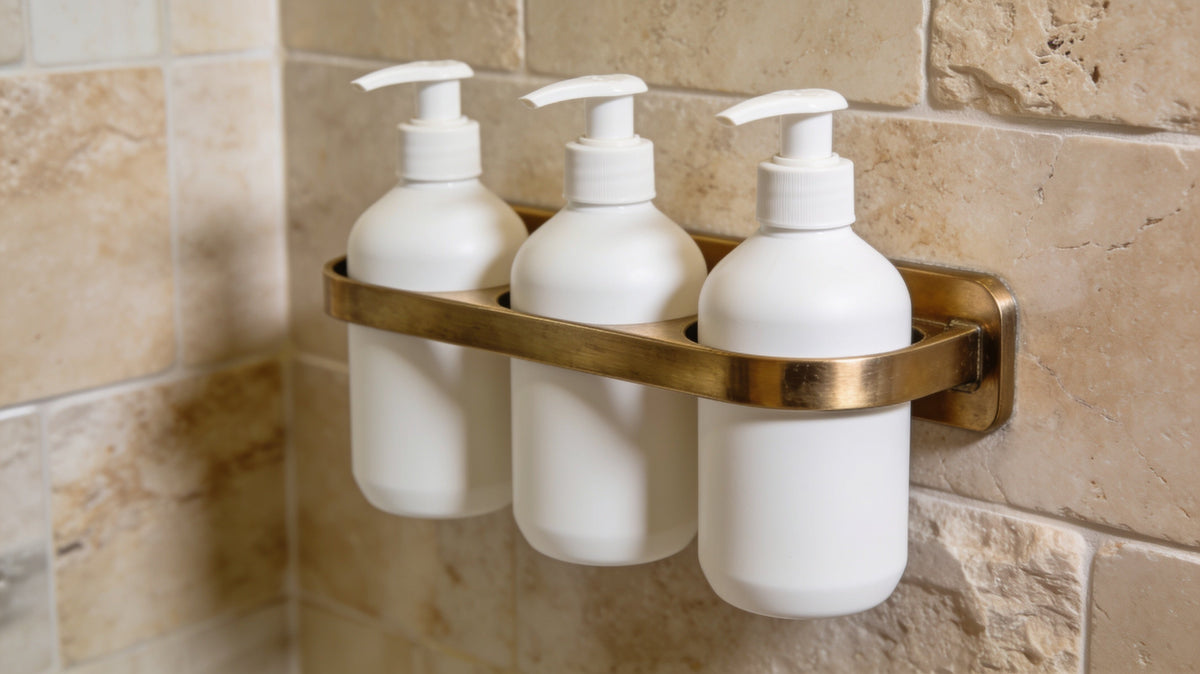
Many Indian hotels are moving from miniatures to wall-mounted or counter dispensers refilled from bulk containers. The change reduces the number of small plastic items handed out, simplifies housekeeping and usually lowers cost per room. It also reduces the quantity of small-format plastic packaging you are exposed to under EPR, though the bulk containers themselves are still plastic packaging.
Points to plan:
- Refill hygiene. Dispensers need a written cleaning and refilling routine, so that bottles are washed and dried between fills rather than topped up indefinitely.
- Bulk format. We supply shampoo, conditioner, shower gel, body lotion and hand wash in 5 L refills; see our bulk packs range.
- Guest perception. Luxury properties sometimes keep decorated minis or tubes in suites while using dispensers elsewhere. Our comparison of miniatures, dispensers and bulk refills weighs the trade-offs.
- Branding. Dispenser bottles can carry your hotel name and design, printed in-house; see custom packaging.
State and city rules
Several states have issued their own plastic notifications, some before the central prohibition and some stricter than it. Tourism states and large cities have been particularly active. If your hotels are in more than one state, check each one. Our Mumbai and Maharashtra page notes that Maharashtra has its own notifications, for example. Local bodies can also set conditions on waste segregation and collection at hotels.
Questions to ask your amenity supplier
Your supplier cannot decide your legal position, but it can give you the facts your adviser needs and offer formats that reduce plastic.
- What plastic is each bottle, tube, sachet and refill container made of?
- Is the packaging made in-house or bought from another converter, and who introduces it to the market?
- Does the supplier hold its own EPR registration for packaging it places on the market?
- Which products are available in dispensers and 5 L refills, and can dispenser bottles carry your branding?
- Can the same formula and scent be filled into both minis and refills, so a property can mix formats without changing the guest experience?
Recording the answers alongside your specification makes later reviews easier when the rules change or a property moves from minis to dispensers.
Practical steps for a hotel group
- Read the current central list of prohibited single-use plastic items and note anything used in rooms or public areas.
- Check state and city notifications for each property.
- Ask your adviser whether the group is a brand owner for its amenity packaging under the EPR guidelines.
- Collect packaging material information from your suppliers.
- Decide where dispensers and refills make sense, and where minis still suit guests.
- Review again when the rules are amended.
Our guide to sustainability and single-use plastic in hotel amenities covers material choices in more depth.
Frequently asked questions
Are hotel miniature bottles banned in India?
At the time of writing, the central list of prohibited single-use plastic items does not name hotel toiletry bottles. Some states and cities have their own rules, so check locally.
Does our hotel need EPR registration for amenity bottles?
It depends on whether you count as a brand owner for that packaging, which turns on facts such as trademarks and whether amenities are sold. Ask your adviser.
Do dispensers remove EPR obligations?
No. They reduce small plastic items, but 5 L refill containers and dispenser bottles are still plastic packaging.
Can you tell us what our amenity packs are made of?
Yes. We manufacture packaging in-house, so we can tell you the material used in each bottle, tube and refill container.
Planning a lower-plastic range? See our hotel toiletries service.
Related service: Hotel amenities supplier for hotels in India →
Tell us your idea. An account manager replies within 1 business day.
More from Harrods Insights
Keep reading
Shipping Hotel Amenities from India to Japan: Importer and MAH Roles, Customs, the India–Japan CEPA, Ports and Lead Times
Plastic Rules and Refillable Amenities in Japanese Hotels: The Plastic Resource Circulation Act, Dispensers, Refills and Onsen Wash Stations