
Makeup Packaging Guide: Lipstick Cases, Gloss Tubes, Compacts, Palettes, Pencils and Mascara Components
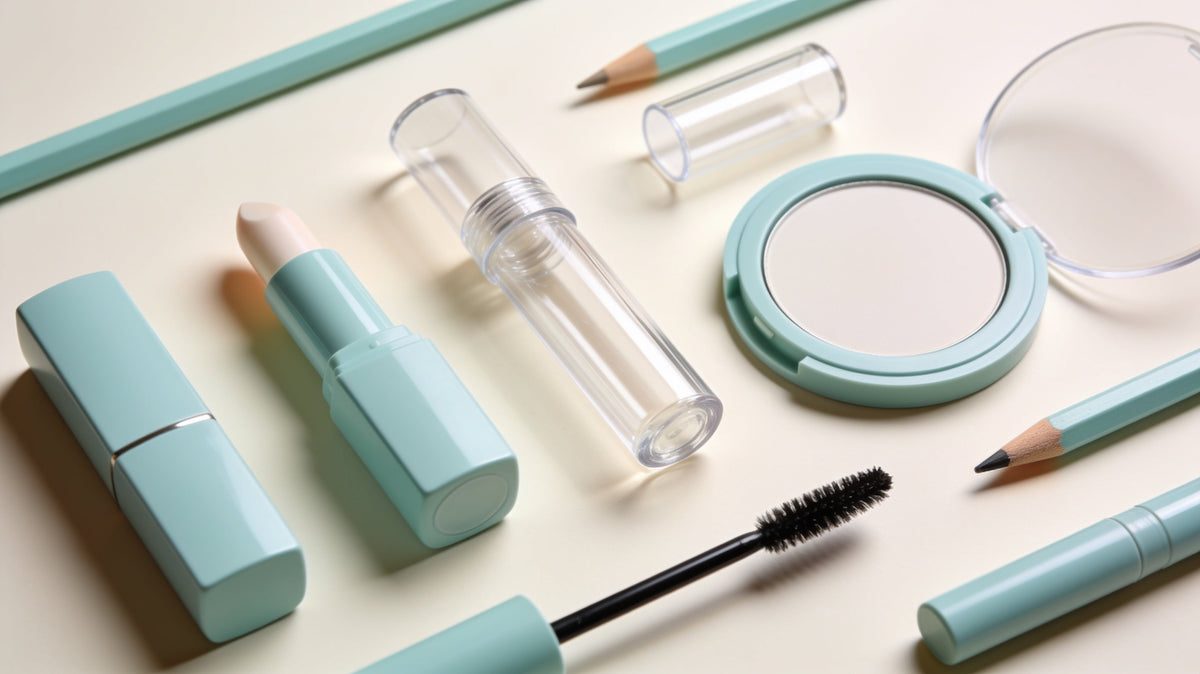
Makeup packaging is part of how the product works, so components must be matched to the formula and tested together. Stock components keep minimums low; custom colours, decoration and new moulds raise them and add lead time. Decide packaging before final stability testing.
In makeup, packaging is functional: the lipstick case, gloss wiper, compact pan and mascara brush all change how the product performs. Choose components alongside the formula, test them together, and expect custom colours, decoration and new moulds to raise minimums and lead times compared with stock components.
Packaging is usually the largest visible part of a makeup brand's identity and one of the largest drivers of cost and timeline. It is also where many first-time founders lose time, by choosing components late or changing them after testing. This guide explains the main components, what to check, and how decoration and moulds affect minimum orders when working with a makeup manufacturer in India.
Stock, customised or custom-moulded
| Level | What changes | Effect on MOQ and time |
|---|---|---|
| Stock component | Existing shape and colour, your label or print | Lowest minimums, quickest |
| Customised stock | Existing shape with custom colour, metallisation, printing, hot-stamping or soft-touch coating | Higher minimums per decoration; added lead time |
| Custom mould | New shape made with dedicated tooling | Tooling investment, highest minimums, longest lead time |
Most new brands start with stock or customised stock and invest in a custom mould only once a product has proven demand. Our packaging team can advise on which level suits your launch.
Lipstick cases
- Bullet size: slim and standard bullets need matching cups and mechanisms.
- Mechanism: swivel action should be smooth with no wobble. Test with your actual bullet.
- Closure: friction-fit, click or magnetic caps change feel and cost.
- Materials: plastic, metal or combinations; heavier cases feel premium but cost more to ship.
A bullet that is slightly too wide for its cup can crack; one that is too narrow can fall out. This is why the case should be fixed before the bullet is finalised.

Lip gloss tubes and lip oil packaging
- Tube: clear, frosted or coloured. Clear shows off the shade and shimmer but reveals any separation.
- Applicator: doe-foot, brush or cushion, sized to your desired payoff.
- Wiper: sets how much product stays on the applicator. It must match the formula's viscosity.
- Alternatives: squeeze tubes, roll-ons and jars. See our lip jars for balm and mask formats.
Compacts and palettes
- Pans: metal or other materials, in shapes that match pressing tooling. Magnetic pans suit refillable palettes.
- Single compacts: with or without mirror and puff or sponge compartment.
- Palettes: card, plastic or metal, with a range of pan configurations.
- Hinge and catch: must hold under transport and repeated use.
Drop and transport testing on filled compacts is worth doing before a first export shipment. Our guide to powder, blush and highlighter manufacturing explains how pressing and packaging interact.
Pencils
- Wooden pencils: classic, sharpenable, available in different diameters. The lead formula must sharpen cleanly.
- Mechanical or twist-up pencils: no sharpening, but the lead diameter must match the mechanism.
- Dual-ended pencils: pencil plus smudger or spoolie; useful for liners and brows.
Mascara and liquid eye components
A mascara is a system of bottle, wiper and brush. Each is a design choice:
- Brush: moulded or twisted-wire, in different shapes and bristle densities for length, volume or separation.
- Wiper: controls how much product stays on the brush.
- Bottle: size and neck finish must suit the brush and wiper.
Liquid liners use pens with felt or brush tips, or bottles with fine brushes. Explore our mascara bottles and components.
Decoration options
- Colour moulding: the component is made in your chosen colour.
- Spray coating and soft-touch finishes: change colour and feel after moulding.
- Metallisation: metallic effects on plastic parts.
- Screen printing, pad printing and hot-stamping: logos and text.
- Labels and sleeves: flexible and lower-minimum, useful for testing designs.
Each decoration is usually its own process with its own minimum. Several decorations on one component multiply the work. For a first run, a well-chosen stock component in a strong colour with one decoration is often the best balance of look, cost and speed.
Minimum order quantities for packaging
Ready formulas start from 500 units per product, but packaging minimums are set by the component suppliers and decorators and can be higher, especially for custom colours, decoration and moulds. We do not publish a single figure because it depends on the component and the finish. Ask for packaging and shade MOQs together, so the formula and pack minimums line up. Current guidance is on our MOQ and pricing page.
Compatibility and stability
Formula and packaging must be tested together. Things that can go wrong include oils softening certain plastics, fragrance or flavour migrating into components, colours staining tubes, and seals failing in heat. Stability and compatibility testing in the final component, ideally including warm-temperature conditions for export markets, catches these before launch.
Labelling space and outer cartons
Small makeup components leave little room for mandatory information. Plan where ingredients, batch number, expiry date or period after opening, net quantity and responsible person details will sit, on the component, on an outer carton or on an attached leaflet where the rules allow. Read our guide on exporting makeup and labelling before you finalise artwork.
Planning the packaging timeline
Packaging is often the longest item on a makeup project plan, so it pays to work backwards from your launch date. A practical sequence looks like this:
- Shortlist components while the formula is still being sampled, so fit and compatibility can be checked early.
- Request physical samples of each component and fill them with the actual formula. Photos and drawings do not show how a case clicks or how a wiper performs.
- Approve colour and decoration against a physical standard, such as a colour chip or a pre-production sample, rather than a screen proof.
- Finalise artwork only after label text has been reviewed for each market.
- Confirm quantities so that packaging and formula minimums line up and you are not left with surplus components.
- Run stability and compatibility testing in the approved components before mass production.
Two habits save the most time. First, make one person responsible for packaging approvals so that decisions do not stall between team members. Second, avoid changing a component after testing has started unless there is a real problem; even a small change, such as a different wiper, can mean repeating work. If you are unsure between two options, sample both at the start rather than switching later.
For outer cartons, think about how the product will be sold. Marketplace and e-commerce orders need cartons that protect the product in a courier bag; retail shelves need cartons that display well and carry barcodes in the right place; gift sets need inserts that hold several components securely.
Sustainability choices
Refillable lipstick cases and magnetic palettes, mono-material components that are easier to recycle, and reduced secondary packaging are increasingly requested. Make claims such as "recyclable" only when the component is recyclable in practice in your target markets, and be specific about which part.
Frequently asked questions
Can I use stock packaging and still look distinctive?
Yes. Custom colours, one well-chosen decoration and strong label design make stock components look brand-specific, with lower minimums and quicker lead times than a new mould.
What is the MOQ for custom makeup packaging?
It depends on the component and decoration. Packaging minimums can be higher than the 500-unit starting point for ready formulas, so ask for packaging and shade MOQs together.
Why must packaging be chosen before stability testing?
The formula and component interact. Changing a case, wiper or brush after testing can change performance, fit or stability and may mean repeating the tests.
Do you supply mascara and eye packaging?
Yes. Our packaging range includes lip packaging, compacts, and mascara and eye packaging, matched to the formula.
Choosing components? Talk to our custom packaging team or explore private label makeup manufacturing.
Related service: Makeup manufacturing for your brand →
Tell us your idea. An account manager replies within 1 business day.
More from Harrods Insights
Keep reading
Multilingual Labelling for Hotel Toiletries in South-East Asia: Languages, Small-Pack Layout and Halal Logo Rules

Sustainable Hotel Amenities in Singapore and South-East Asia: Refill Systems, PCR Plastic and Substantiating Green Claims