Pressed Powder, Blush and Highlighter Manufacturing: Pans, Pressing, Mica and Shimmer
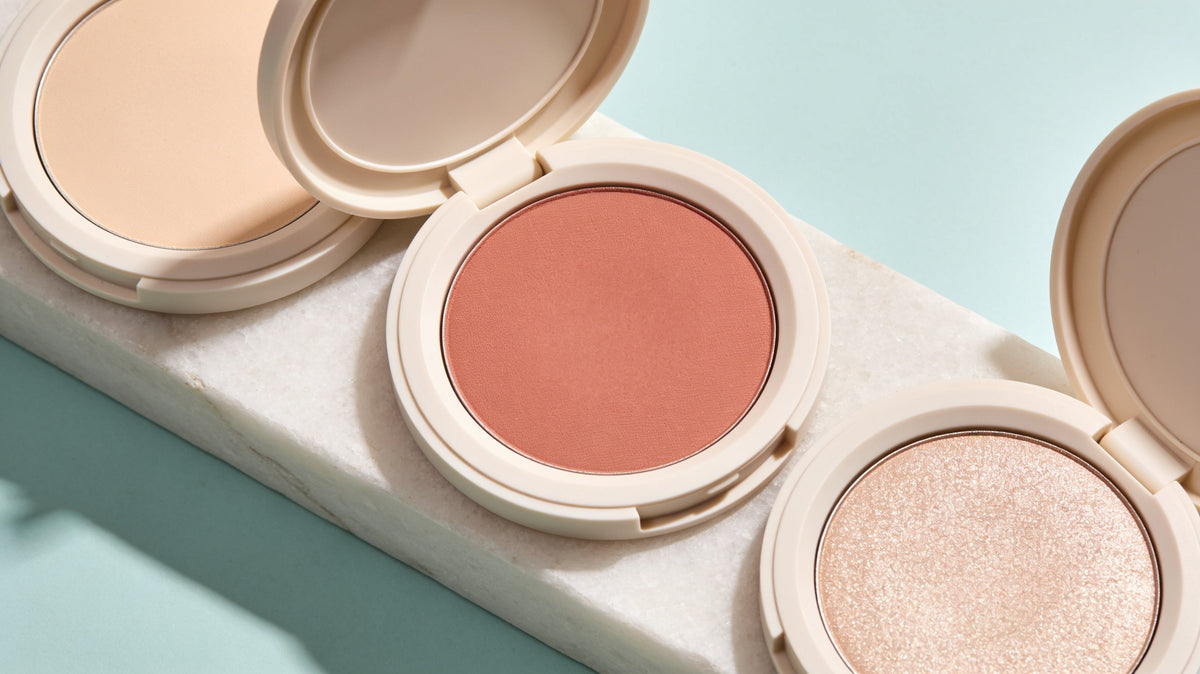
Powder products depend on the balance between fillers, pigments and binders, and on how firmly they are pressed into the right pan. Mica and effect pigments decide shimmer and glow, and each must be permitted for face use in your markets. Pans, compacts and transport testing should be agreed before production.
Pressed powders, blushes and highlighters are made by blending fillers, pigments and binders, then pressing the mix into a pan at a controlled pressure. The balance of binder and pressure decides whether the product picks up well on a brush without crumbling, glazing or breaking in transit.
Powder products look simple, and they are a popular way to round out a makeup range. In practice they raise their own technical questions: how much shimmer is too much, which mica grade to use, whether a pan will survive shipping, and how to keep the shade consistent from batch to batch. This guide explains each, from the perspective of a makeup manufacturer in India making pressed and loose powder products for brands and importers.
Pressed vs loose powder
| Pressed | Loose | |
|---|---|---|
| Form | Compressed into a pan, used with a brush or puff | Free-flowing, in a sifter jar |
| Portability | High, suits compacts and palettes | Lower, can spill |
| Feel | Depends on binder level | Often finer and lighter on skin |
| Typical products | Setting powder, blush, bronzer, highlighter | Setting powder, loose highlighter, pigments |
See the face powder collection for available formats.
What goes into a powder formula
- Fillers: the bulk of most powders. Talc has long been common; talc-free bases use alternatives such as mica, starches, silica or other minerals. If you use talc, specify cosmetic-grade talc tested to be asbestos-free and ask for the supporting documentation, as buyers and regulators increasingly expect it.
- Pigments: iron oxides, titanium dioxide and other permitted colourants for shade.
- Effect pigments: mica-based pearls and other pearlescent materials for shimmer and glow.
- Binders: oils, esters or waxes that hold the pressed cake together and improve adhesion to skin.
- Texture modifiers: for slip, blurring or a soft-focus finish.
"Talc-free" is a legitimate claim if no talc is used, but it should not be used to imply that talc-containing products are unsafe.

Pressing: where most problems start
Pressing is a balance. Too little binder or pressure, and the cake crumbles or breaks in transit. Too much, and the surface "glazes" or becomes hard-panned, so the brush stops picking up colour.
- Blending and milling to distribute pigment evenly without damaging effect pearls.
- Binder addition at a level matched to the base and the finish.
- Sieving for a consistent particle size.
- Pressing into pans at a set pressure, with patterns or embossing if required.
- Drop and transport testing on filled compacts to check the cake survives handling.
Embossed or domed designs look beautiful and photograph well. They also need tooling and careful pressing, and can affect minimums and timelines.
Blush: pigment and finish
Blush shades rely on red, pink and orange pigments that must be permitted for face use in your markets. Payoff should suit your customers' skin tones: a blush that looks right on light skin may barely show on deeper skin, and a highly pigmented blush can look harsh on fair skin. Many brands offer finishes from matte to satin to shimmer within one blush line. Test each shade on several skin tones before approval.
Highlighter: mica, particle size and shimmer
Highlighters get their glow from effect pigments, most often mica coated with titanium dioxide and iron oxides, or synthetic alternatives. The choices are:
- Particle size: finer particles give a soft, skin-like sheen; larger particles give visible sparkle.
- Coating colour: champagne, gold, rose and bronze tones suit different skin tones. Gold and bronze tones often read better on deeper Indian skin than very cool silvers.
- Load: more effect pigment means more glow but can emphasise skin texture.
Glitter sold for cosmetic use must be made from materials permitted in cosmetics. Plastic microbead and microplastic rules vary by market and are tightening, particularly in the EU; check whether your effect materials are affected. Available materials are listed on our pigment and mica powders page.
Mica sourcing responsibility
Natural mica has well-documented supply-chain concerns, including child labour in some mining regions. Brands should ask suppliers about traceability and responsible sourcing, and consider synthetic mica where traceability cannot be shown. Our guide to cosmetic pigments and colourants covers this in more detail.
Pans, compacts and palettes
The pan and compact are part of the product specification:
- Pan material and shape: metal pans suit magnetic palettes; the shape must match the press tooling.
- Compact type: single compacts with mirrors and puffs, magnetic palettes, or refillable systems.
- Fit and closure: a secure hinge and catch protect the cake in transit.
- Decoration: printing, metallisation and custom colours carry their own minimums.
Our custom packaging team can match compacts and pans to your formula and pressing pattern.
Quality checks
Powder batches are typically checked for shade against the approved standard, payoff, pressing hardness, appearance, fill weight and microbiological quality. Transport and drop testing on finished compacts is worth doing before the first large shipment, especially for export. Formulas can be supplied as dermatologically tested, with test reports on request.
Common powder problems
- Breakage in transit: adjust binder level, pressure or packaging protection.
- Hard-panning or glazing: reduce binder or change binder type.
- Chalky or ashy cast: often from too much titanium dioxide or white filler; check on deeper skin tones.
- Patchy payoff: usually a dispersion issue during blending.
- Fallout: shimmer that drops onto the cheeks; reduce particle size or improve adhesion.
Building a powder range around skin tone
Powder products often fail on deeper skin tones for the same reason foundations do: they were designed on a narrow panel. A translucent setting powder that looks invisible on fair skin can leave a white cast on medium and deep skin, particularly under camera flash. Blushes that read as soft pink on light skin may disappear on deeper Indian skin, and highlighters with cool, silvery pearls can look grey rather than radiant. When planning a range:
- Test translucent powders on deep skin tones and under flash photography before approval.
- Offer at least one tinted or deeper setting option if your customers need it.
- Choose blush shades by how they look on your core customers, not by how they look in the pan.
- Include warm highlighter tones such as gold, bronze and rose gold alongside champagne.
Retailers and importers selling into several regions should apply the same discipline. A range that photographs well on a wide spread of skin tones is also easier to market, because swatch content does not need excuses or retouching. For complexion shade planning in depth, see our guide to foundation and concealer shade range development.
Getting started
Ready formulas start from 500 units per product. Custom shades, embossing and decorated compacts can change minimums, so ask for shade MOQs. Samples are provided before any order so that you can test payoff and finish on real skin.
Frequently asked questions
Should I choose a talc or talc-free powder?
Both can be made to a high standard. If you use talc, specify cosmetic-grade, asbestos-free tested talc with documentation. Talc-free bases suit brands whose customers prefer them; make the claim factually.
Why does my pressed powder break during shipping?
Usually the binder level, pressing pressure or packaging protection needs adjusting. Drop and transport tests on finished compacts catch this before launch.
Can I have a custom embossed highlighter?
Yes, embossing and patterned pressing are possible but need tooling, so they affect minimums and timelines. Ask for shade MOQs and tooling details.
Is natural mica a problem?
It can be, because of documented sourcing concerns in some regions. Ask for traceability information, or choose synthetic mica where traceability is not available.
Explore the face powder range or start your project with our private label makeup manufacturing team.
Related service: Makeup manufacturing for your brand →
Tell us your idea. An account manager replies within 1 business day.
More from Harrods Insights
Keep reading
Multilingual Labelling for Hotel Toiletries in South-East Asia: Languages, Small-Pack Layout and Halal Logo Rules

Sustainable Hotel Amenities in Singapore and South-East Asia: Refill Systems, PCR Plastic and Substantiating Green Claims