What Drives the Unit Cost of Private Label Skincare?
Published by Harrods Health Private Limited, a private label and contract manufacturer in Ambala, Haryana, India. By Hemang Jain, Founder, Anadoris.
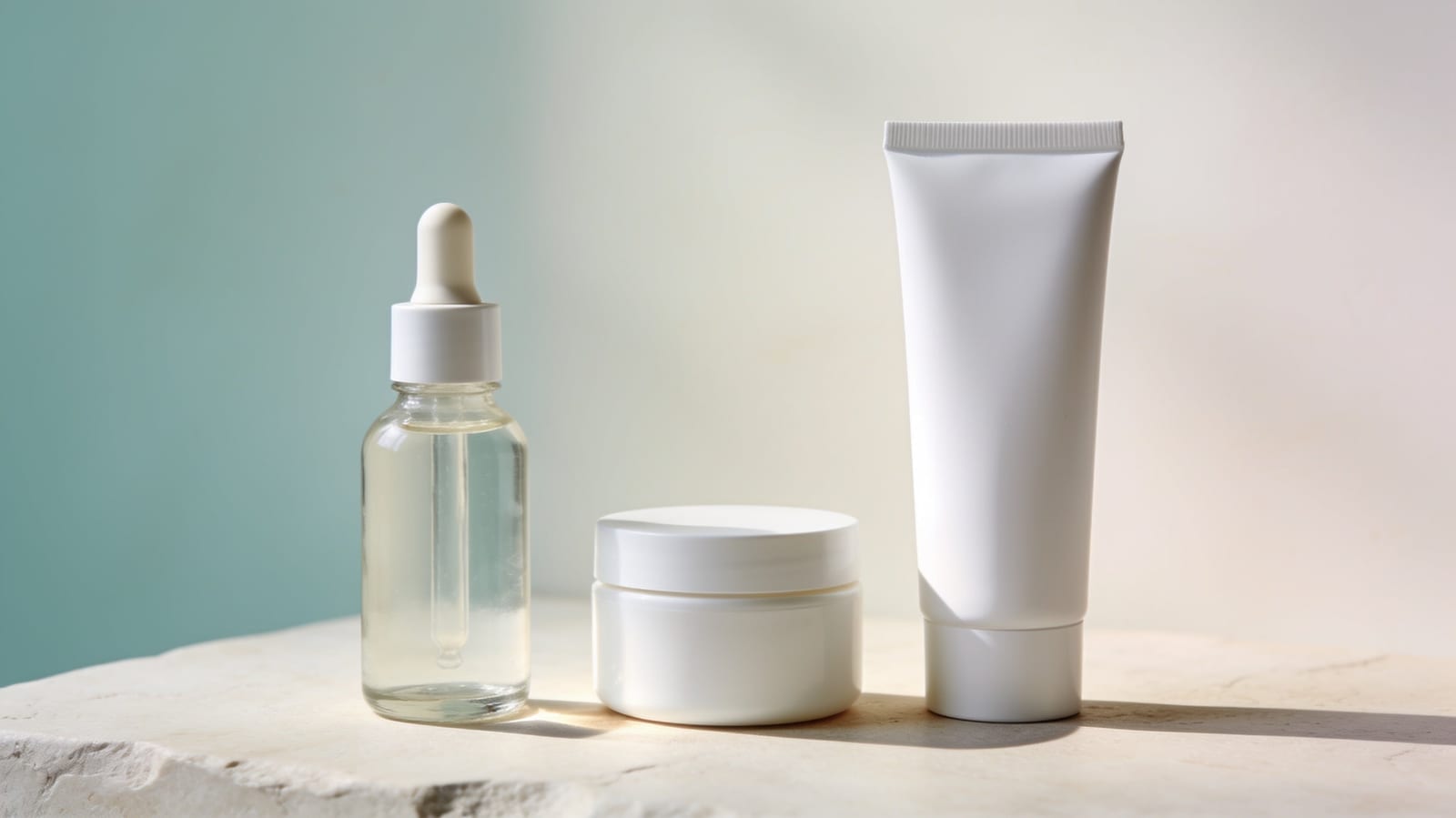
The unit cost of private label skincare is shaped mainly by the formula and its actives, the packaging and how it is decorated, the fill size and the batch size. Testing, documentation and logistics add further costs. Brands control most of these levers through the choices they make in the brief.
The unit cost of private label skincare depends mainly on six things: the formula and its actives, the packaging components, decoration, fill size, batch size and any custom development. Testing, documentation and logistics add to the landed cost. Most of these are brand decisions, so a clear brief is the best way to control cost.
Founders often ask for "the price of a serum" before deciding what the serum is. In practice, two products in the same category can differ widely in cost because of choices made in the brief. As a skincare manufacturer in India, Harrods Health builds quotes from these components; this guide explains each one qualitatively, so you can see where your money goes and which levers you can pull. It does not quote prices, because every project is specified differently.
1. The formula
The base formula sets the starting point. A simple aqueous gel uses fewer, less costly ingredients than a rich emulsion with several oils, butters and emulsifiers. Factors that raise formula cost include:
- a higher number of functional ingredients;
- premium emollients, specialty silicones or plant oils;
- sophisticated preservative systems, such as those used for gentle or minimally preserved positioning;
- more demanding processing, for example extra mixing stages, heating and cooling, or ingredients added at controlled temperatures.
Ready formulas from a manufacturer's library are usually the most economical route because development is already done.
2. Actives and their concentration
Actives often account for a large share of formula cost. Some are inexpensive and stable; others are costly, sold in small packs or needed at meaningful levels to support a claim. A higher headline percentage normally means a higher cost, and certain forms of an active, such as encapsulated retinol or specific vitamin C derivatives, can cost considerably more than simpler forms. Peptides, specialty ceramides and some botanical extracts also add cost.
The key question is whether the concentration serves the customer or only the label. Our guide to active ingredient and percentage claims explains why percentages on pack must match the formula.
3. Packaging components
For many skincare products, packaging costs as much as, or more than, the formula inside. Cost varies with:
- Format – airless pumps and dispensing systems generally cost more than simple bottles, tubes or jars.
- Material – glass, heavy-wall plastics and specialty materials cost more than standard plastics.
- Closure – droppers, treatment pumps and fine-mist sprayers add cost compared with simple caps.
- Secondary packaging – cartons, inserts and gift boxes are separate cost lines.
Compare options on our custom packaging page, or start with stock formats such as airless bottles.
4. Decoration
A printed label on a stock bottle is the most economical way to brand a product. Direct decoration such as screen printing, hot foil, metallisation, custom colours or embossed cartons adds cost per unit and set-up costs per design. Decoration also tends to raise component minimums, because suppliers decorate in runs. Many brands launch with labels and move their best-sellers into decorated packs later.
5. Fill size
Larger sizes contain more formula, so the formula cost per unit rises with fill size. Packaging cost does not rise in proportion, though, so the cost per millilitre often falls as size increases. The right size depends on use: a serum used a few drops at a time does not need a large bottle, while a cleanser or body-adjacent moisturiser may. Oversized packs of sensitive actives can also hurt the customer experience if the product degrades before it is finished.
6. Batch size and order quantity
Every production run carries fixed effort: line set-up, cleaning, quality checks, documentation and filling changeovers. Spreading this over more units lowers the per-unit share. That is why unit costs typically fall as order quantities rise, and why small orders cost more per unit. Ready formulas at Harrods Health have the lowest minimums, which lets brands test demand without committing to very large runs. The MOQ and pricing page explains how order size affects quotes.
7. Custom development
A custom formula involves development time, sampling rounds and stability work before the first batch. Custom fragrance, colour and texture adjustments also need work. These costs are worth it when they create a genuine point of difference; for a first launch, adapting a ready formula is often the better balance. Read more on custom formulation.
8. Testing, documents and compliance
Depending on the product and market, costs can include stability and compatibility work, preservative efficacy testing, dermatological testing, SPF and UVA testing for sunscreens, and safety assessment or registration for export markets. Some of these are one-off costs per formula; others recur when you change the formula or pack.
9. Packing and logistics
Shrink-wrapping, cartoning, kitting gift sets, marketplace-ready labelling and dispatch to warehouses, marketplaces or export ports all contribute to the cost of getting product to market. Freight, duties and the importer's costs then add to the landed cost for export.
Hidden costs brands often miss
- Late changes. Changing artwork after labels or decorated components are ordered can mean scrapped stock and new set-up work.
- Too many variants. Several sizes or scents of each product split your order into smaller runs, each with its own set-up.
- Component minimums. A special pump or cap may need to be bought in larger quantities than your first product order.
- Repeated testing. Reformulating after launch can trigger new stability, compatibility or protection testing.
- Market-specific labels. Each export market may need its own label version.
Summary of cost drivers
| Driver | Pushes cost up | Helps control cost |
|---|---|---|
| Formula | Complex emulsions, many specialty ingredients | Ready library formulas, simpler bases |
| Actives | High percentages, specialty forms | Concentrations matched to purpose |
| Packaging | Airless, glass, treatment pumps | Stock bottles, tubes, standard pumps |
| Decoration | Screen print, foil, custom colours | Printed labels at launch |
| Fill size | Larger fill of costly formula | Sizes matched to use |
| Batch size | Small runs | Fewer products in larger runs |
| Development | Full custom projects | Adjusting ready formulas |
How to get a useful quote
Send a brief that names the product type, hero active and concentration, texture, fragrance preference, packaging format and size, decoration, quantity per product and target markets. The more precise the brief, the more accurate the quote. Samples are provided before you order, and a single account manager can walk you through alternatives that change the cost without changing what matters to your customer.
Frequently asked questions
Why is packaging so expensive relative to the formula?
Many skincare formulas use small fill sizes, so the formula cost per unit is modest, while components such as airless pumps, glass droppers and decorated packs carry their own material, tooling and decoration costs.
Does ordering more units lower the unit cost?
Usually, yes. Fixed set-up, cleaning and quality work is spread over more units in a larger batch, and packaging components are often cheaper in larger runs.
What is the minimum order for private label skincare?
Minimum quantities are confirmed on enquiry. Custom formulas and decorated packaging are quoted per project because they carry their own minimums.
How can I reduce cost without compromising quality?
Start from a ready formula, keep active levels purposeful, use stock packaging with printed labels and focus your first order on fewer products in sensible quantities.
Want a quote built around your brief? Contact our private label skincare manufacturing team.
Related service: Skincare manufacturing for your brand →
Tell us your idea. An account manager replies within 1 business day.