Shipping Hotel Amenities from India to Australia
Hotel amenities shipped from India to Australia need an importer of record and a customs broker to lodge the entry, handle GST and duty, and clear biosecurity. Ship on treated, certified pallets, ask your broker whether the Australia–India trade agreement applies, and plan reorders around the full route, especially for remote and island properties.
Shipping hotel amenities from India to Australia needs an Australian importer of record and a customs broker, who lodges the import declaration, handles GST and any duty, and arranges biosecurity clearance. Goods should travel on treated, certified pallets, your broker should confirm whether the Australia–India trade agreement affects duty, and reorders should be planned around the full route, including any onward leg to remote or island properties.
This guide walks through the process for hotel shampoo, conditioner, shower gel, body lotion and hand wash. It is general information, not legal or customs advice. For state-by-state market notes, see our Australia hotel amenities hub.
The people involved
| Role | Who usually does it | What they handle |
|---|---|---|
| Manufacturer and exporter | Harrods Health | Production, packing, export documents, product information |
| Freight forwarder | Appointed by the buyer or by us, depending on terms | Booking space, ocean freight, coordinating the route |
| Importer of record | A distributor, hotel group or trading company in Australia | Legal responsibility for the goods at import; also the AICIS introducer |
| Customs broker | A licensed broker acting for the importer | Import declaration, duty and GST, biosecurity arrangements |
| Onward carrier | Road, rail, coastal or barge operator | Delivery from port to the property |
The importer of record matters beyond customs. The same business is generally the introducer under the Australian Industrial Chemicals Introduction Scheme (AICIS), so it should be registered before the first shipment. We supply the INCI lists and composition information it needs.
Customs entry
Imports into Australia are declared electronically through the Integrated Cargo System, usually by a licensed customs broker on the importer's behalf. The broker needs accurate commercial documents: a commercial invoice, packing list, bill of lading and any certificate of origin. We prepare these for each shipment and can align descriptions and product codes with your broker's requirements.
Tariff classification
Every product is classified under the tariff. Classification drives duty and can affect other requirements, so it should be settled before the first order rather than at the port. Shampoo, body lotion and hand wash may fall under different classifications. Your broker makes that call; we provide product descriptions and composition detail to help.

GST, duty and the trade agreement
GST applies on imports. How it is paid, and whether the importer can claim it back, depends on the importer's own tax position, so ask your broker or accountant.
Duty depends on tariff classification and origin. Australia and India have a trade agreement, the Australia–India Economic Cooperation and Trade Agreement, which may affect duty on goods that qualify under its rules of origin. Whether your amenities qualify, and what documents are needed to claim any preference, is a question for your broker. We do not quote rates here because they depend on classification and can change. We supply the origin documentation your broker asks for.
Biosecurity
Australia applies strict biosecurity controls to imports, and they are worth taking seriously because delays at the border are costly.
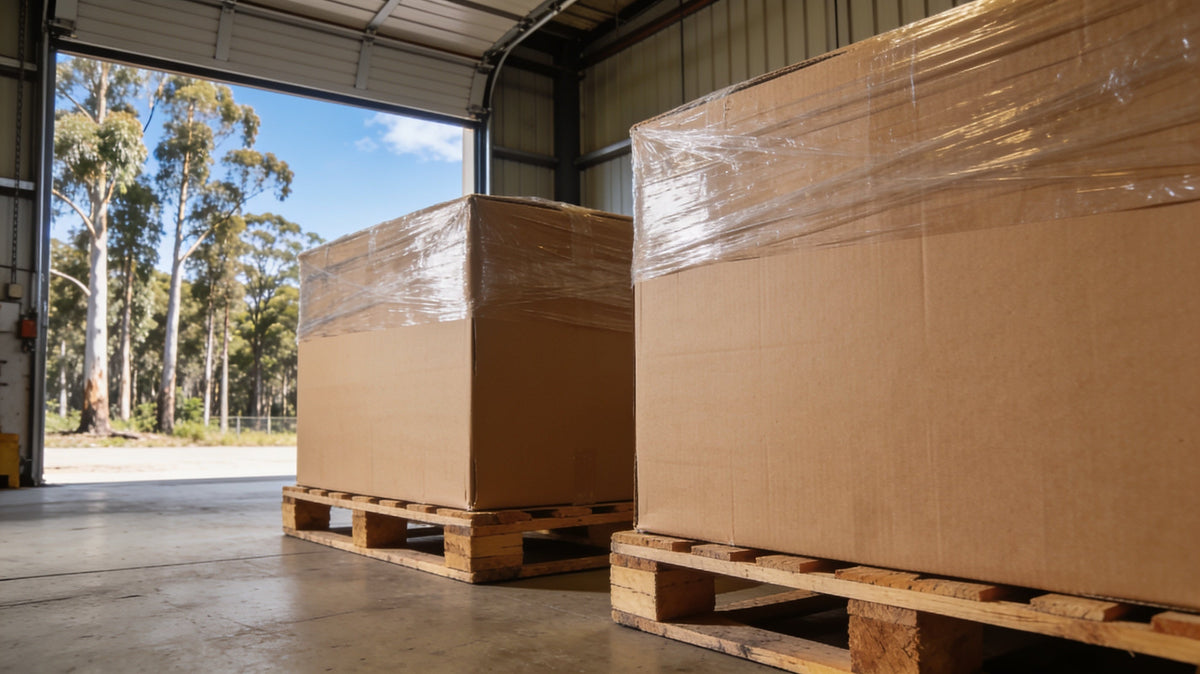
- Wooden pallets and packaging. Timber packaging must meet Australian requirements, usually by being treated and certified to the international standard for wood packaging. We ship on treated, certified pallets, marked accordingly.
- Clean containers and cargo. Containers and goods should be free of soil, seeds, insects and other contamination.
- Ingredients of plant or animal origin. Some may face checks or import conditions. Your broker can look up current conditions in the government's import conditions database.
- Documents. Packing declarations and treatment certificates should match the shipment exactly.
Biosecurity requirements change, so let your broker confirm what applies to each shipment.
Packing for the route
Australia's climates and distances test packaging. A shipment for a Sydney hotel may go straight from port to a city warehouse. A shipment for a Pilbara camp or a reef island may travel by sea, then road train, then barge, and sit in a hot storeroom on arrival.
- We pack refills and bottles to protect closures and labels in transit.
- Outer cartons and pallet build are planned for the full route, not just the sea leg.
- For humid or hot destinations, closures, label stock and carton board are chosen with the climate in mind; our article on hotel toiletries in tropical and coastal climates covers this.
- 5 L refills reduce the volume shipped per stay compared with minis.
Our fulfilment and export page explains how we pack and ship.
Planning lead time
We do not quote fixed delivery times, because the total depends on factors that vary shipment by shipment. Plan around these stages:
- Development and approvals. Scent, artwork, label checks and the importer's AICIS work. Longest for a first order or a new signature scent.
- Production and packaging. Including printed bottles and tubes, made and decorated in-house.
- Inland transport and export clearance in India.
- Ocean freight. Depends on the port of discharge and vessel schedules; some routes tranship.
- Australian clearance. Customs and biosecurity, faster when documents are clean.
- Onward delivery. From the port to the property, which can be the longest leg for remote sites.
The practical lesson is to order before you run low. Set a reorder point that covers the whole chain with a margin, and hold buffer stock of your fastest-moving products.
A documents checklist
Most clearance delays come from paperwork that does not match the goods. Before each shipment, check that:
- Product descriptions on the commercial invoice match the tariff classification your broker has agreed
- Quantities on the packing list match the cartons and pallets actually loaded
- Pallet treatment certificates and markings are present and correct
- Any certificate of origin your broker needs for the trade agreement is ready before arrival
- The importer's AICIS position is settled for every product in the consignment
- The consignee details match the importer of record
We send draft documents for review before the container sails, so your broker can raise questions while there is still time to fix them.
Remote and island properties
Mining camps, outback lodges and island resorts add steps after the port. Supply may depend on road trains, coastal shipping or barge schedules, and storage on site is often limited. What helps:
- Fewer, larger orders of 5 L refills rather than frequent small orders of minis
- A short range, such as 2-in-1, shower gel and hand wash, to simplify stock
- Pallets built to the dimensions the onward carrier accepts
- Clear labels so on-site staff can identify products quickly
See our Western Australia and Queensland pages for remote and island notes.
Always confirm current customs, biosecurity and duty requirements with your importer and customs broker.
Frequently asked questions
Do hotel amenity shipments from India need treated pallets?
Wooden pallets and other timber packaging must meet Australian biosecurity requirements, usually by being treated and certified to the international standard for wood packaging. We ship on treated, certified pallets.
Is there duty on hotel toiletries from India?
Duty depends on tariff classification and origin. A trade agreement between Australia and India may affect it, depending on whether the goods qualify and the right paperwork is supplied. Your customs broker should confirm.
Is GST charged on imported amenities?
Yes, GST applies on imports. How it is handled, and whether it can be claimed back, depends on the importer's own tax position, so ask your broker or accountant.
How long does shipping to Australia take?
It depends on the port, the vessel schedule, clearance and any onward leg. We do not quote fixed times here; we plan each shipment with you and your forwarder.
Planning a first shipment? Start with our Australia hotel amenities hub.
Related service: Hotel amenities supplier for Australian hotels →
Tell us your idea. An account manager replies within 1 business day.